ALLPCB


Introduction
Printed circuit board manufacturing involves numerous dimensional and electrical specifications that define how closely a finished board must match its design intent. When engineers specify tolerances tighter than standard industry capabilities, fabrication processes require additional controls, specialized equipment, and extended process times. These adjustments directly elevate material usage, inspection frequency, and overall production expenses. The relationship between tolerance precision and cost becomes especially pronounced in high-volume runs or designs that incorporate controlled impedance, fine features, or multilayer constructions. Understanding this dynamic helps design teams balance performance requirements against budget constraints from the earliest layout stages.
Understanding PCB Manufacturing Tolerances
Tolerances represent the allowable deviation from nominal dimensions or electrical parameters such as trace width, hole diameter, copper thickness, and impedance. Standard fabrication processes achieve typical tolerances through conventional etching, drilling, and plating sequences that align with widely accepted industry benchmarks. Tighter tolerances demand enhanced process stability, often necessitating slower feed rates, additional registration steps, or premium substrate materials with lower coefficients of thermal expansion. Specifying tolerances therefore influences every subsequent manufacturing decision, from artwork compensation to final electrical testing. The cost impact of tight tolerances grows nonlinearly once specifications exceed routine capability thresholds.

Why Tight Tolerances Increase Costs
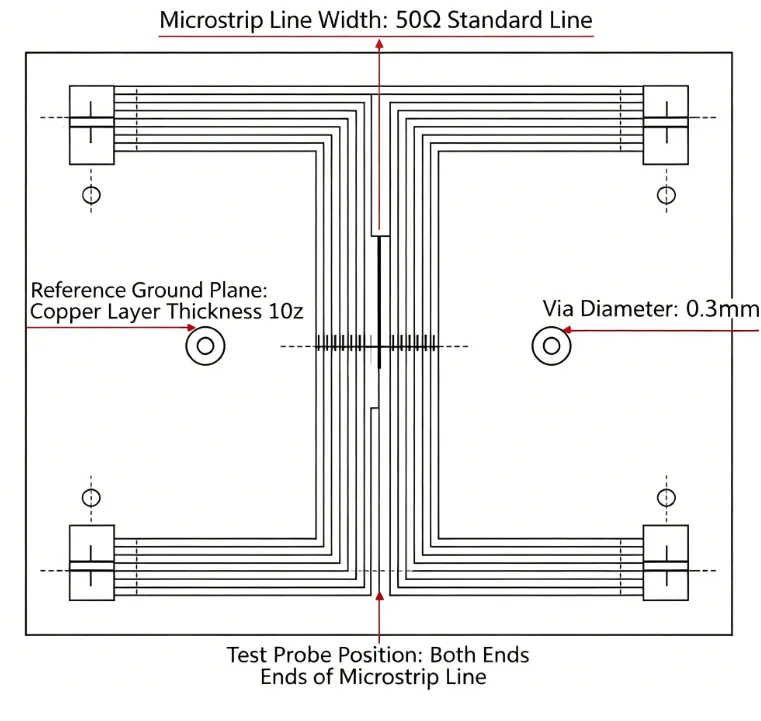
Achieving finer feature sizes or narrower impedance windows requires greater control over etching chemistry, exposure alignment, and plating uniformity. Each incremental reduction in allowable deviation typically increases the number of scrapped panels during qualification runs and raises the frequency of in-process metrology. Controlled impedance designs, for example, often necessitate dedicated test coupons and vector network analyzer verification on every production lot, adding both equipment time and labor. Material selection also shifts toward higher-grade laminates that maintain consistent dielectric properties across temperature and humidity ranges. These combined factors compound into measurable price premiums that procurement teams must anticipate when reviewing fabrication quotations.
Key Factors Influencing Tolerance-Related Costs
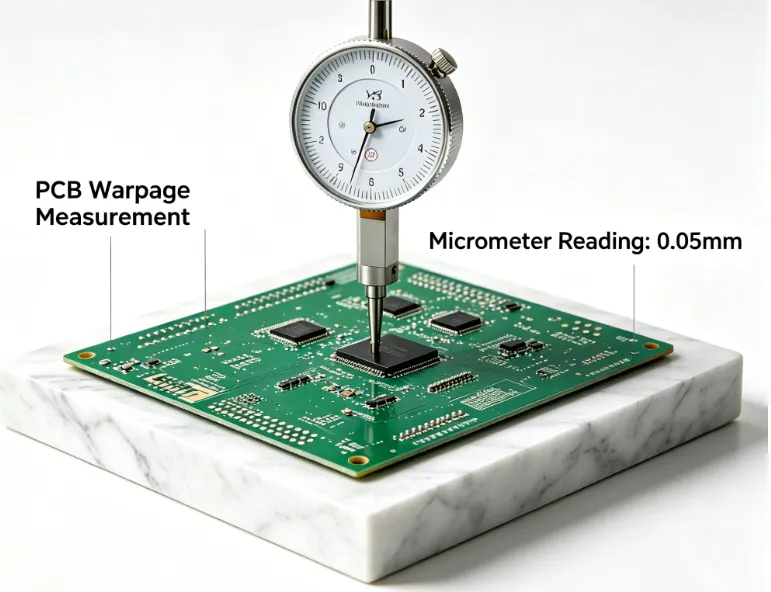
Several interrelated variables determine how significantly tight tolerances affect final pricing. Feature density plays a primary role, because closely spaced conductors or small annular rings leave less margin for process variation. Layer count and board thickness further amplify challenges, as registration accuracy between inner and outer layers becomes harder to maintain. Impedance control cost rises sharply when target values must be held within plus or minus five percent rather than the more common ten percent window, because dielectric thickness and trace geometry must be held to correspondingly tighter limits. Environmental and mechanical specifications such as maximum warpage also interact with tolerance requirements, sometimes forcing additional fixturing or post-process flattening operations.
Best Practices for Specifying Tolerances
Design teams achieve the most favorable cost-to-performance outcomes by reviewing tolerance requirements against actual functional needs rather than applying uniform precision across an entire board. Critical nets that carry high-speed signals or sensitive analog paths warrant tighter control, while power planes and low-frequency traces can often accept standard tolerances without performance degradation. Early collaboration between layout engineers and fabrication specialists helps identify which dimensions truly drive process difficulty. Documentation that clearly distinguishes between critical and non-critical features reduces ambiguity and prevents unnecessary tightening during quoting. Periodic tolerance reviews during design iterations frequently reveal opportunities to relax specifications that were carried over from previous revisions without re-evaluation.
Conclusion
Tight tolerances remain an essential tool for meeting demanding electrical and mechanical requirements, yet they consistently elevate PCB manufacturing costs through added process controls, inspection steps, and material premiums. Structured evaluation of which specifications are functionally necessary versus those that can remain at standard levels enables more economical outcomes. By aligning tolerance calls with documented industry expectations and actual circuit performance needs, engineering teams can optimize both reliability and budget. The principles outlined here provide a logical framework for making these decisions consistently across projects.
FAQs
Q1: How does specifying tolerances affect PCB manufacturing tolerances cost?
A1: Specifying tighter tolerances increases PCB manufacturing tolerances cost because fabrication processes must incorporate additional controls, slower production rates, and more frequent metrology to maintain the required precision. This often results in higher material waste during setup and extended test times, particularly for impedance-controlled designs. Procurement teams typically see these premiums reflected directly in fabrication quotations once tolerances move beyond standard capability ranges.
Q2: What should engineers consider when specifying tolerances on a new PCB layout?
A2: Engineers should evaluate each tolerance against actual circuit performance requirements rather than applying uniform precision. Critical dimensions that influence signal integrity or mechanical fit warrant tighter control, while non-critical features can remain at standard levels. Early review with manufacturing partners helps identify which specifications will drive the largest cost impact of tight tolerances before final artwork release.
Q3: Why does impedance control cost rise when tolerances become tighter?
A3: Impedance control cost increases with tighter tolerances because dielectric thickness, trace geometry, and copper weight must all be held within narrower windows, requiring premium laminates and dedicated test verification on production lots. The additional process monitoring and coupon testing add both equipment time and labor that standard boards do not require. These factors combine to produce measurable price differences once impedance windows move below typical industry allowances.
Q4: Can relaxing non-critical tolerances reduce overall project expense?
A4: Relaxing non-critical tolerances frequently lowers overall project expense by allowing conventional etching, drilling, and registration processes to be used without extra controls. This approach maintains required performance on functional nets while avoiding unnecessary premiums on dimensions that do not affect circuit operation. Systematic tolerance reviews during the design phase commonly uncover such opportunities without compromising end-product reliability.
References
IPC-6012E — Qualification and Performance Specification for Rigid Printed Boards. IPC, 2017
IPC-A-600K — Acceptability of Printed Boards. IPC, 2020
JEDEC J-STD-020E — Moisture/Reflow Sensitivity Classification. JEDEC, 2014