ALLPCB


Introduction
Building an audio amplifier as an electronic hobbyist brings excitement, but unwanted noise or distortion can ruin the listening experience. Resistors play a key role in audio circuit components, influencing signal paths, feedback networks, and biasing. Choosing the wrong type introduces hiss, hum, or subtle harshness that detracts from sound quality. Low noise resistors, particularly metal film types, help maintain clarity in audio amplifier design. This article explores how to select resistors that minimize these issues, offering practical guidance for hobbyist projects. By understanding resistor behavior, you can achieve cleaner amplification without complex measurements.
Why Resistor Selection Matters in Audio Amplifiers
Resistors are everywhere in audio circuits, from gain-setting in op-amp stages to volume controls and output coupling. Poor choices amplify noise floor, making quiet passages in music inaudible or adding graininess. In high-fidelity setups, resistor distortion becomes noticeable during dynamic swings, altering harmonics. Hobbyists often overlook this, assuming all resistors perform equally, but differences in construction affect performance. Standards like IEC 60115-1 define quality benchmarks for fixed resistors used in electronic equipment, ensuring reliability. Proper selection preserves the original signal integrity, letting your amplifier shine.
Noise from resistors competes with the audio signal, especially in low-level stages like preamps. Higher resistance values inherently produce more thermal noise, a fundamental limit in all resistors. Excess noise from certain materials further degrades performance. Distortion arises when resistors exhibit nonlinearity under voltage stress, common in feedback loops. For hobbyists prototyping on breadboards or PCBs, starting with audio resistors tailored for low noise pays off immediately. This focus elevates simple projects to professional-sounding results.
Understanding Noise in Resistors
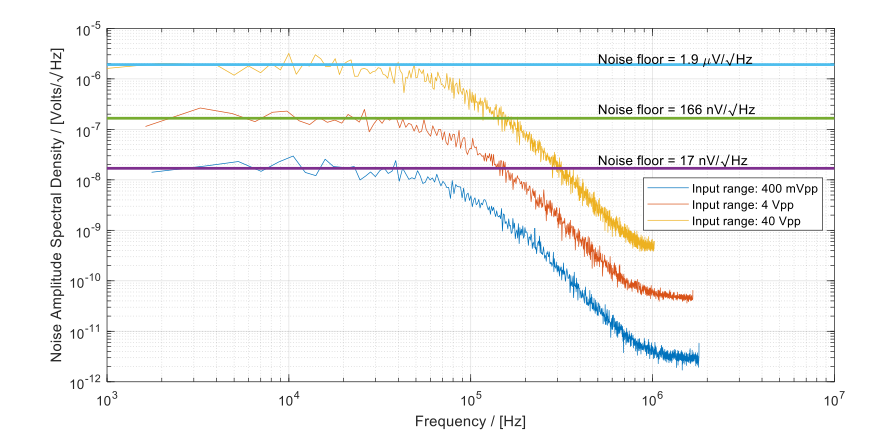
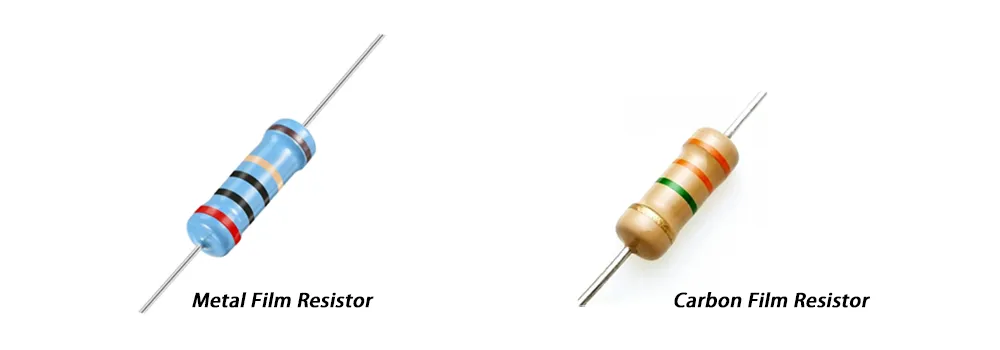
All resistors generate thermal noise, also called Johnson-Nyquist noise, due to random electron motion. This white noise has a spectral density proportional to the square root of resistance and bandwidth, making it unavoidable but manageable. In audio amplifier design, bandwidth spans 20 Hz to 20 kHz, so even small contributions add up across multiple resistors. Metal film resistors excel here with minimal excess noise beyond thermal levels. Carbon film types, popular for general use, introduce higher 1/f or flicker noise at low frequencies, muddying bass response.
Current noise, measured per IEC 60195, varies by resistor construction and manifests as voltage noise across the component. Thick-film resistors often show higher levels due to granular structure, unsuitable for sensitive audio paths. Thin-film metal resistors deposit a uniform layer, reducing these imperfections. Temperature coefficient of resistance (TCR) also plays a role; low TCR prevents noise modulation from thermal drift. Hobbyists measuring with an audio analyzer see clear differences: metal film stays quiet, while others hiss under load. Selecting based on these principles avoids trial-and-error frustration.
Resistor distortion stems from voltage-dependent resistance changes, quantified by voltage coefficient. In signal paths handling peaks up to several volts, this nonlinearity generates harmonics. Wirewound resistors, stable for power handling, may introduce inductance affecting high frequencies. For hobbyist amps, balancing noise, distortion, and cost means prioritizing metal film for critical spots. Parasitic effects like capacitance matter less in audio ranges but compound in high-gain circuits. Testing swaps in a prototype reveals audible improvements, confirming theory.
Types of Resistors for Audio Applications
Carbon composition resistors, once common, suffer high noise and poor stability, best avoided in audio circuits. Carbon film offers better tolerance but retains excess 1/f noise, fitting power supply bypasses rather than signals. Metal film resistors dominate audio use with low noise, tight 1% or 0.1% tolerances, and low TCR around 50 ppm/°C. Their evaporated metal layer ensures uniformity, minimizing distortion. For higher power, metal oxide film provides durability without excessive noise, though slightly higher than pure metal film.
Wirewound resistors shine in output stages needing wattage, generating only thermal noise due to smooth winding. Precision wirewound variants suit feedback networks demanding accuracy. Bulk metal foil resistors offer ultra-low noise and TCR under 5 ppm/°C, ideal for premium builds but costlier for hobbyists. SMD versions of metal film match through-hole performance in compact PCBs. Matching pairs for balanced circuits reduces differential noise. Availability in E24 or E96 series ensures design flexibility per standard value sets.
Best Practices for Minimizing Noise and Distortion
Place low noise resistors in the signal path: gain resistors, feedback dividers, and input attenuators. Use higher wattage ratings to stay below 50% power dissipation, curbing thermal noise rise. Parallel resistors can lower effective resistance and noise if series values prove noisy. Short leads and ground planes on PCBs shield against pickup, complementing resistor choice. In op-amp based amps, calculate total noise contribution; metal film often drops it below audible thresholds.
For distortion control, opt for 0.1% tolerance in precision spots, ensuring stable ratios. Avoid high-value resistors over 100kΩ in low-noise stages unless paralleled. Bulk foil for volume pots if budget allows, as their linearity shines under wiper movement. Test with a distortion analyzer or ear; subtle veiling lifts with upgrades. Prototype on perfboard first, then PCB for lowest parasitics. These steps make audio amplifier design approachable yet effective.
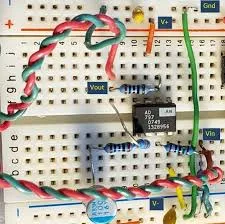
Layout influences resistor performance; keep analog sections separate from digital. Decoupling caps near power pins shunts resistor noise from supplies. Matched resistor networks for differential amps cancel common-mode noise. Aging stabilizes metal film after 100-1000 hours, so burn-in prototypes if critical. Cost-wise, metal film at pennies each beats endless troubleshooting.
Troubleshooting Common Issues
Hiss points to input stage resistors; swap to metal film and check grounding. Distortion on peaks suggests voltage coefficient; lower resistance or upgrade tolerance. Hum from power supply bleed calls for better decoupling, not signal path changes. Uneven channels? Mismatch in values or TCR; use 0.1% sets. Scope the output: excess low-frequency noise flags 1/f issues. Systematic swaps isolate culprits, building intuition.
Overheating warps TCR, amplifying noise; ensure ventilation. In valve amps, grid stoppers need low inductance types. Multistage designs sum noises, so front-end priority highest. Log measurements pre/post changes for patterns.
Conclusion
Selecting resistors for audio amplifiers boils down to prioritizing low noise metal film types in signal paths, backed by understanding thermal and excess noise mechanisms. This approach minimizes distortion while fitting hobbyist budgets. Practical swaps yield immediate sonic gains, from reduced hiss to tighter bass. Adhering to guidelines like IEC 60115-1 ensures component reliability. Experiment confidently; your next amp will sound remarkably clean.
FAQs
Q1: What are low noise resistors, and why use them in audio amplifiers?
A1: Low noise resistors, like metal film types, generate minimal thermal and 1/f noise compared to carbon variants. In audio amplifier design, they preserve signal fidelity, reducing hiss in quiet passages. Hobbyists notice clearer sound without complex shielding. Choose them for input stages and feedback for best results.
Q2: How do metal film resistors reduce distortion in audio circuits?
A2: Metal film resistors feature low voltage coefficient and uniform structure, minimizing harmonic generation under signal swings. This keeps audio circuit components linear, avoiding harshness. Paired with tight tolerances, they stabilize gain. Ideal for hobbyist op-amp or discrete amps.
Q3: What role does resistor value play in audio resistor noise?
A3: Higher resistance increases thermal noise voltage, per sqrt(4kTRΔf). In audio paths, keep values under 50kΩ where possible, or parallel for balance. Low noise resistors mitigate this inherently. Critical for preamp stages in hobby projects.
Q4: Can wirewound resistors work for audio amplifier design?
A4: Yes, wirewound resistors offer low noise for power handling in output or emitter circuits. Their thermal-only noise suits high current paths. Avoid in high-frequency signals due to inductance. Great for robust hobbyist power amps.
References
IEC 60115-1:2020 — Fixed resistors for use in electronic equipment. IEC, 2020
IEC 60195:1965 — Method of measurement of current noise generated in fixed resistors. IEC, 1965