ALLPCB


In the world of video processing Printed Circuit Boards (PCBs), via design plays a critical role in ensuring optimal performance. Whether you're focusing on via design video PCB, via placement video, minimizing via inductance video, signal integrity via design video, or high-speed via design video, mastering the art of via design can make or break your project. At ALLPCB, we understand the importance of precision in PCB design, especially for high-speed applications like video processing. This comprehensive guide dives deep into via design principles tailored for video processing PCBs, offering actionable insights to help you achieve superior signal integrity and performance.
Why Via Design Matters in Video Processing PCBs
Video processing PCBs handle high-frequency signals, often in the range of several gigahertz, to manage tasks like video streaming, rendering, and real-time processing. Vias, the small conductive pathways connecting different layers of a PCB, are essential for routing these signals. However, poorly designed vias can introduce signal loss, crosstalk, and electromagnetic interference (EMI), all of which degrade video quality and system performance.
Effective via design ensures minimal signal distortion and maintains impedance continuity, which is crucial for high-speed data transfer in video applications. By optimizing via placement, size, and type, you can reduce inductance and improve signal integrity, leading to smoother video output and reliable operation.
Understanding the Basics of Via Design for Video PCBs
Before diving into advanced techniques, let's cover the fundamentals of via design. A via is a plated hole that allows electrical connections between layers of a PCB. In video processing boards, where multilayer designs are common, vias are indispensable for routing high-speed signals and power distribution.
There are three main types of vias used in PCB design:
- Through-Hole Vias: These extend through all layers of the PCB. They are simple to manufacture but can introduce higher inductance, which may affect high-speed signals.
- Blind Vias: These connect an outer layer to an inner layer without passing through the entire board. They are ideal for high-density designs in video PCBs.
- Buried Vias: These are located entirely within inner layers, invisible from the surface. They help save space and reduce signal interference in compact video processing designs.
Choosing the right via type depends on your PCB's layer count, signal speed, and space constraints. For video processing applications, blind and buried vias are often preferred to minimize signal path length and inductance.
Key Considerations for Via Placement in Video Processing PCBs
When it comes to via placement video applications, strategic positioning is essential for maintaining signal integrity and reducing noise. Here are some critical tips for via placement in video processing PCBs:
- Minimize Via Stub Length: A via stub is the unused portion of a via that extends beyond the signal path. Long stubs act as antennas, causing signal reflections. For high-speed video signals operating at frequencies above 1 GHz, keep stub lengths below 0.5 mm to avoid resonance issues.
- Place Vias Close to Components: Position vias near the pins of high-speed components, such as video processors or memory chips, to shorten trace lengths and reduce signal delay.
- Avoid Vias in Differential Pairs: For differential signals commonly used in video interfaces like HDMI or DisplayPort, avoid placing vias directly in the signal path. If unavoidable, ensure symmetrical placement to maintain signal balance.
- Use Ground Vias for Shielding: Surround high-speed signal vias with ground vias to create a shielding effect, reducing crosstalk and EMI in video processing circuits.
By following these guidelines, you can optimize via placement to support the high-frequency demands of video processing systems.
Minimizing Via Inductance in Video Processing Designs
For engineers searching for insights on minimizing via inductance video, understanding inductance's impact on high-speed signals is vital. Inductance in vias can cause impedance mismatches, leading to signal reflections and degraded video quality. Here's how to minimize via inductance in your PCB design:
- Reduce Via Length: Shorter vias have lower inductance. Use blind or buried vias to connect only the necessary layers, avoiding full-board through-hole vias when possible. For instance, a via length of 1.6 mm in a standard PCB can introduce inductance of approximately 1.2 nH, while a 0.8 mm blind via reduces this to around 0.6 nH.
- Increase Via Diameter: Larger via diameters reduce inductance by providing a wider conductive path. However, balance this with space constraints in high-density video PCBs. A via diameter of 0.3 mm is often a good starting point for high-speed designs.
- Use Multiple Vias for Power Delivery: In power distribution networks for video processors, use multiple parallel vias to lower the effective inductance and ensure stable power supply at high frequencies.
- Optimize Pad and Antipad Sizes: Smaller pads and appropriately sized antipads (clearance holes in ground planes) around vias help maintain impedance control and reduce parasitic inductance.
By focusing on these techniques, you can significantly lower via inductance, ensuring cleaner signal transmission in video processing applications.
Ensuring Signal Integrity with Via Design in Video PCBs
Signal integrity is a top priority for anyone researching signal integrity via design video. In video processing, where data rates can exceed 10 Gbps for standards like 4K or 8K video, even small disruptions can lead to pixel errors or frame drops. Here’s how via design impacts signal integrity:
- Controlled Impedance: Vias must maintain consistent impedance with the traces they connect. A mismatch, such as a via with 60 ohms connecting to a 50-ohm trace, can cause reflections. Use PCB design software to simulate and adjust via dimensions for impedance matching.
- Minimize Crosstalk: High-speed video signals are prone to crosstalk when vias are placed too closely. Maintain a spacing of at least 3 times the via diameter between adjacent signal vias to reduce interference.
- Back-Drilling for Stub Removal: For through-hole vias in multilayer video PCBs, back-drilling removes unused stub portions to eliminate signal reflections. This is especially effective for signals above 5 GHz.
- Ground Plane Continuity: Ensure vias do not disrupt ground plane continuity, as this can create return path issues for high-speed signals. Place ground vias strategically to maintain a solid reference plane.
Implementing these practices in your via design will help preserve signal integrity, ensuring high-quality video output without glitches or delays.
Advanced Techniques for High-Speed Via Design in Video Applications
For those exploring high-speed via design video, advanced techniques are necessary to meet the demands of modern video processing systems. These systems often operate at frequencies where traditional via designs fall short. Consider the following strategies:
- Microvias for HDI Designs: High-Density Interconnect (HDI) PCBs, common in compact video devices, use microvias (vias with diameters less than 0.15 mm) to achieve finer routing. Microvias reduce inductance and enable tighter layouts, ideal for 5G-enabled video streaming hardware.
- Via-in-Pad Technology: Placing vias directly under component pads saves space and shortens signal paths. This is particularly useful for high-speed video ICs with fine-pitch BGA packages, reducing trace lengths to under 0.2 mm in some cases.
- Simulation and Modeling: Use electromagnetic simulation tools to model via performance at high frequencies. These tools can predict signal loss and reflection for frequencies up to 20 GHz, allowing you to refine via design before fabrication.
- Stitching Vias for Grounding: In high-speed designs, stitching vias connect multiple ground planes to create a low-impedance return path. Space these vias at intervals of λ/20 (where λ is the wavelength of the highest signal frequency) to prevent EMI in video circuits.
These advanced methods ensure that your via design can handle the rigorous requirements of high-speed video processing, from real-time rendering to ultra-high-definition streaming.
Common Challenges and Solutions in Via Design for Video PCBs
Designing vias for video processing PCBs comes with unique challenges. Below are some common issues and their solutions:
- Challenge: Signal Loss at High Frequencies
Solution: Use shorter vias and materials with low dielectric loss (e.g., Rogers or Isola laminates with a dissipation factor below 0.005) to minimize attenuation. - Challenge: Thermal Stress on Vias
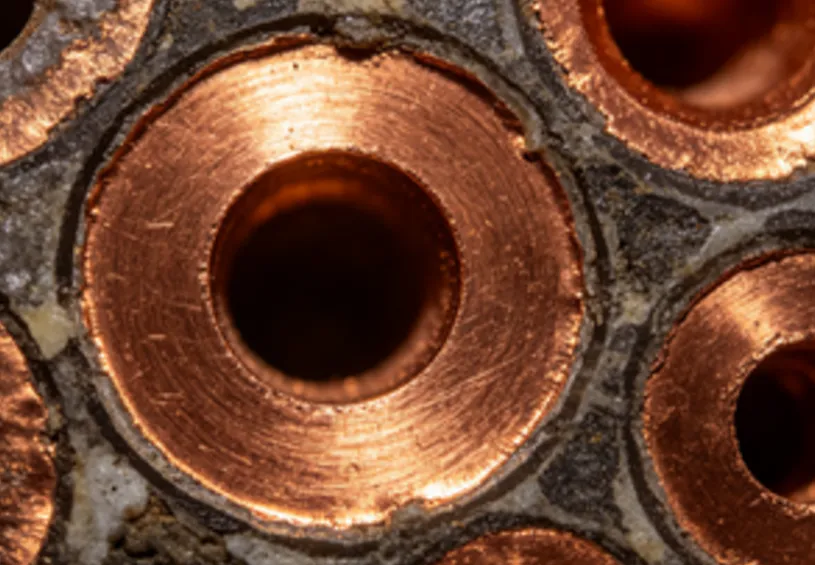
Solution: Ensure proper via plating thickness (typically 1 mil or 25 μm) to withstand thermal expansion during operation of power-hungry video processors. - Challenge: Manufacturing Constraints
Solution: Collaborate with your PCB manufacturer early to confirm via aspect ratios (depth-to-diameter ratio, ideally below 10:1 for reliability) and drilling capabilities for microvias.
Addressing these challenges during the design phase can prevent costly revisions and ensure your video processing PCB performs as intended.
Conclusion: Elevate Your Video Processing PCBs with Expert Via Design
Mastering via design is a game-changer for video processing PCBs, where high-speed signals and signal integrity are non-negotiable. By focusing on strategic via placement, minimizing inductance, ensuring signal integrity, and adopting advanced high-speed design techniques, you can create PCBs that deliver flawless video performance. Whether you're working on a 4K streaming device or a professional video rendering system, the principles of via design video PCB, via placement video, minimizing via inductance video, signal integrity via design video, and high-speed via design video are your roadmap to success.
At ALLPCB, we’re committed to supporting engineers with cutting-edge resources and manufacturing expertise. Apply these via design strategies to your next video processing project, and experience the difference that precision makes in high-speed PCB performance.