ALLPCB


Overview
The Internet of Things (IoT) uses RFID, wireless sensor technology, and positioning technologies to automatically identify, collect, and sense items' identity information, intrinsic attributes, and surrounding environmental data. Using various electronic communication methods, related information is aggregated into a unified information network. Intelligent computing techniques such as cloud computing, fuzzy recognition, data mining, and semantic analysis are then applied to analyze and fuse those data, enabling high-level situational awareness and automated decision control of the physical world.
IoT as a Foundation for Smart Grids
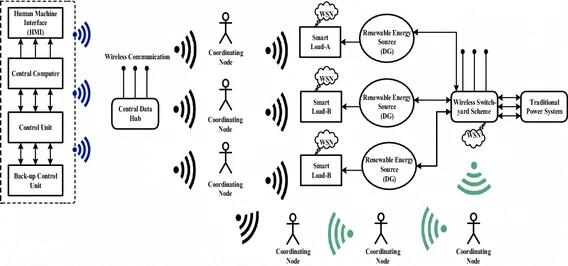
The realization of a smart grid depends on online monitoring and real-time visibility of key operational parameters across grid segments. As the information-perception edge, the IoT can be an important technical approach for advancing smart grid capabilities. Future smart grid deployments will integrate IoT technologies, and IoT applied to smart grids is likely to produce original technical advances.
Using existing network infrastructure, such as fault detectors, energy operators can cost-effectively build IoT applications for smart grids.
How Connecting Traditional Equipment Benefits Utilities
By connecting legacy equipment to smart grid IoT applications, utilities can:
1) Push real-time data — Relying on centralized polling introduces high latency and limited scalability. Many IIoT gateways locally poll data and create data models that can communicate with traditional SCADA systems as well as cloud-based platforms to leverage modern web services.
2) Use cellular infrastructure — IIoT gateways allow grid monitoring devices to use cellular connectivity to form secure connections to multiple back-end or cloud systems.
3) Enhance sensing with low-power sensors — IIoT gateways can convert LPWAN sensor data from legacy protocols (for example DNP3 or newer cloud protocols).
4) Leverage the cloud — As distributed grids become more complex and require management of more devices, IIoT gateways can connect to cloud infrastructures and share real-time data and analytics with users via cloud-managed dashboards.
5) Improve grid security — Traditional grid monitoring systems connected over IP are vulnerable to network attacks. They often lack robust cybersecurity features because legacy protocols were not designed for modern threats. IIoT gateways can employ current security methods to minimize risk and support updates and patches to address evolving cybersecurity threats.
Primary IoT Use Cases in Smart Grids
Smart grid IoT applications provide essential support for data acquisition, information transport, and device control. Key application areas include:
1. Intelligent monitoring and early warning: IoT-enabled sensors can perform real-time monitoring and data collection for power systems, providing immediate feedback and alerts to help operators address issues and prevent power incidents.
2. Intelligent device management: IoT enables remote control and management of devices, including switching, regulation, and monitoring, helping operators detect faults early, prevent failures, and improve operational efficiency and reliability.
3. Intelligent energy management: IoT can integrate multiple energy sources and optimize their configuration and management, enabling holistic energy ecosystem management.
4. Security assurance: IoT supports network-wide monitoring and centralized alerting to protect system security and stability, prevent unauthorized access, safeguard system operations and customer supply, and ensure data confidentiality and integrity.
Conclusion
IoT applications in smart grids significantly improve system integration, enable more intelligent and precise power management, and enhance overall performance and resilience. These capabilities support the power sector's modernization and sustainable energy development.