ALLPCB


Overview
Surface acoustic waves (SAWs) are elastic waves that propagate along the surface of a solid. They were first described by British physicist Lord Rayleigh in 1885 during studies of seismic waves. The electrode structure of SAW-based sensors typically consists of a pair of oppositely oriented interdigitated transducers (IDTs), with one acting as the input IDT and the other as the output IDT.
SAW Microfluidics and Biosensing
SAW propagation velocity strongly depends on surface temperature, viscosity, and mass loading, making SAW-based sensors well suited for biosensing in liquid environments. When combined with microfluidic techniques, SAWs can control fluids (mixing, jetting, translation, atomization) and manipulate particles ranging from nanometers to millimeters. The contactless nature of SAW manipulation reduces the risk of sample contamination.
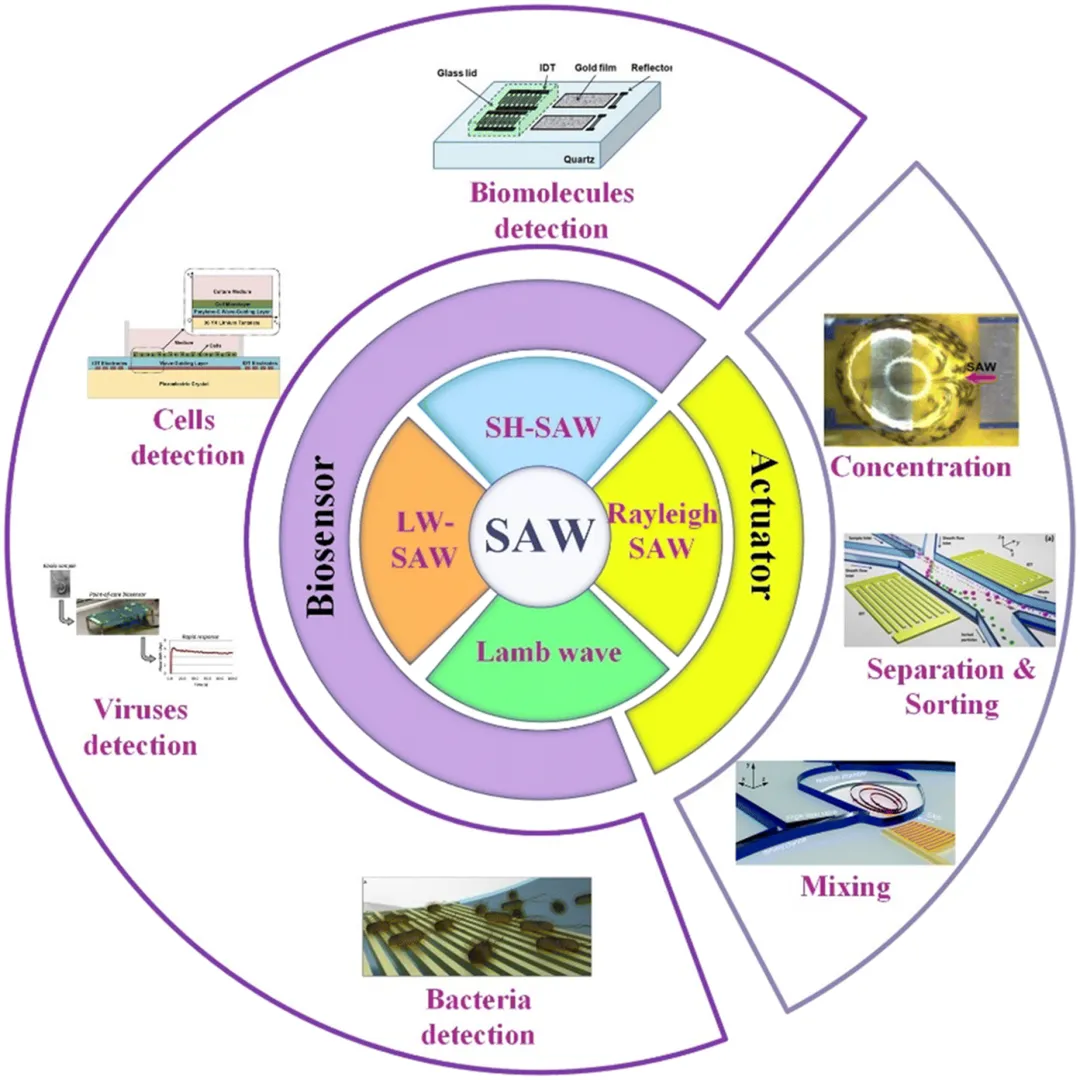
Figure 1: Applications of SAW-based microfluidic devices in biology
Recent Review and Device Classification
Researchers led by Professor Xueyong Wei at Xi'an Jiaotong University classified SAW microfluidic devices according to vibration modes and boundary conditions, and reviewed their applications in biological contexts. The review, titled "Surface acoustic wave based microfluidic devices for biological applications," was published in the Royal Society of Chemistry journal Sensors & Diagnostics.
The article introduces SAW fundamentals, including theoretical and physical principles, and then summarizes and discusses major device configurations, key features, advantages, and application challenges for different SAW categories. These include Rayleigh SAW, shear-horizontal SAW (SH-SAW), Love-mode SAW (LW-SAW), and Lamb waves.
Device Types and Applications
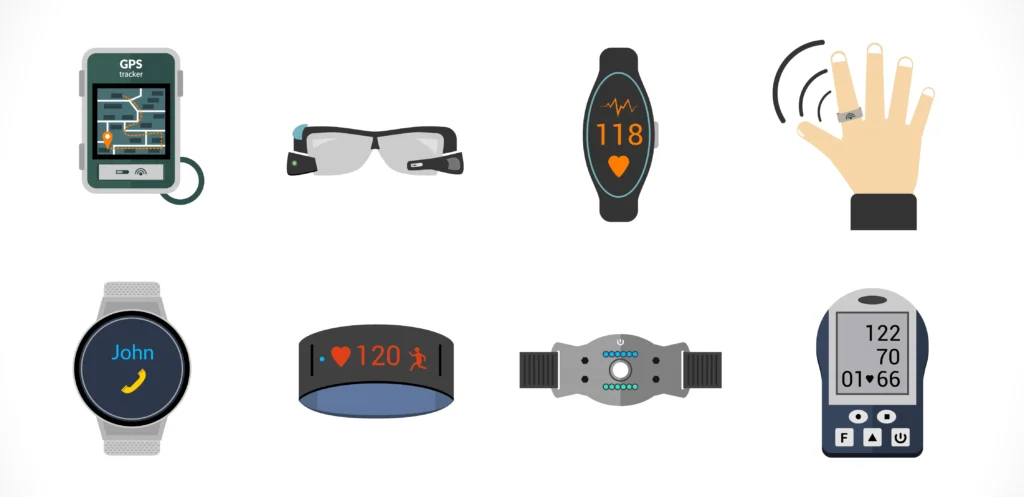
Rayleigh-wave-based SAW separation techniques offer good biocompatibility, noninvasiveness, and high sorting efficiency, making them a promising approach for sample preprocessing. SH-SAW or LW-SAW devices that include guiding layers between IDT regions can confine acoustic energy to the piezoelectric surface, providing high sensitivity to surface functionalization; these are commonly used as liquid biosensing platforms. Compared with conventional biological assays, SAW-based sensors can offer faster response, smaller footprint, and higher sensitivity. Flexible Lamb-wave devices built on thin-film structures have also been developed for liquid microfluidics and biosensing; their low cost, reusability, and potential for wireless monitoring give them application prospects in wearable devices.
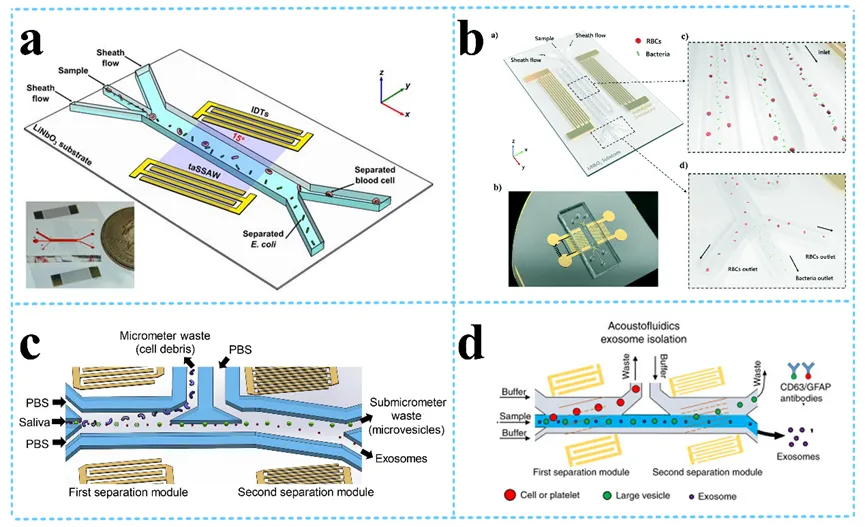
Figure 2: Rayleigh-wave-based SAW separation applied to particle separation in sample preprocessing
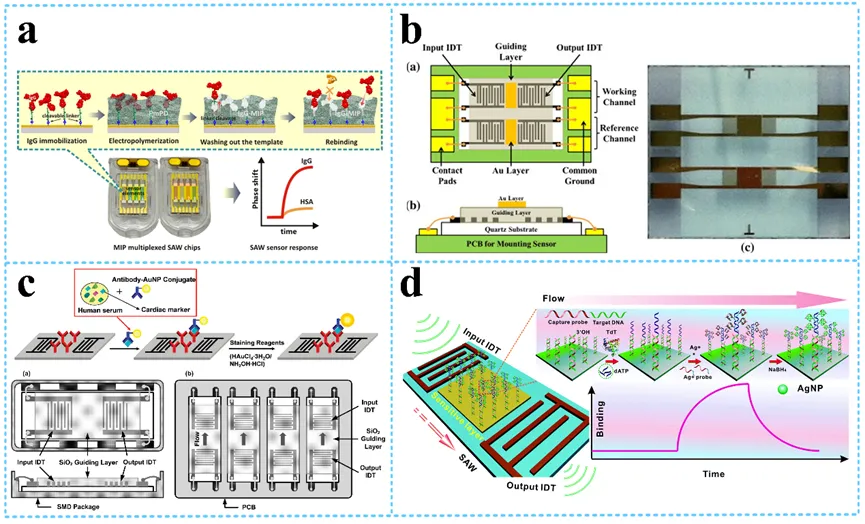
Figure 3: Love-mode SAW liquid biosensing platform for biomolecule detection
Summary
SAW-based microfluidic devices offer real-time, noninvasive, fast response, high sensitivity, and label-free operation. They show potential for integration into devices for rapid disease diagnosis and biomedical research.