ALLPCB


Overview
Recently, Chongqing's dog management regulations were enacted and will take effect on June 1, 2023. The regulations require an individual identification system to trace the source of each dog.
To resolve disputes over dog ownership and determine responsibility when a dog injures someone, the regulations establish an individual identification system. Before applying for dog registration, owners are required to identify the dog by electronic identification implantation or biometric identification according to the rules.
Why Dog Registration Has Become Necessary
Technologies for pet identity verification are already mature, and several jurisdictions in China have issued related regulations in recent years to assign "identity cards" to dogs.
According to 199IT data, the proportion of dog owners in China ranks second globally: at least six out of ten people own a dog.
Data released by the Shenzhen Center for Disease Control show that from February to August 2021 the city recorded 112,000 dog- and cat-related exposure incidents. More than 90% (103,000) of these were caused by cats or dogs, and 47,000 were dog bites, accounting for 41.7%.
According to incomplete statistics, China sees about 40 million people bitten by cats or dogs each year.
While most bite incidents are routine and are treated by wound care and rabies vaccination, identifying the responsible dog and owner in hit-and-run incidents has become a social issue.
Under Article 1245 of China's Civil Code, the keeper or manager of an animal that causes damage to others is liable for the resulting tort.
To address unavoidable disputes, many regions in China have been implanting electronic microchips in dogs to bind the animal's identity to its owner. Since 2008 Beijing promoted dog microchips, and between 2017 and 2020 cities such as Suzhou, Ma'anshan, Baotou, Hangzhou, and Shenzhen introduced regulations related to implanted dog microchips.
Another benefit of implanted chips is assisting owners in recovering lost pets. Dogs with implanted chips can be automatically identified by readers and synchronized with registration services, allowing retrieval of the dog's record so recovery teams can quickly reunite lost dogs with their owners.
Primary Identification Methods
There are two main approaches to pet identity verification. The first is the implanted chip mentioned above, which uses low-frequency RFID tags. The second is biometric methods such as nose-print or DNA recognition. Low-frequency RFID is used more widely.
Why Low-Frequency RFID?
Injecting microchips into animals has been common practice internationally since the 1980s, and is widespread in Europe, North America, and parts of China.
Pet microchip products usually consist of a glass capsule that contains a low-frequency RFID chip and is injected into the animal at the time of registration.
The animal tagging market represented by these products is the main focus for low-frequency RFID companies and has significant potential. As regulations and dog management measures are implemented, pet microchips will be a primary growth market for low-frequency RFID.
Low-frequency RFID offers the following advantages in this application:
- Good penetration. Because the chip is injected under the skin or into the body, the animal's tissues and fluids can attenuate signals. Low-frequency RFID's superior penetration is a clear advantage in this scenario.
- Less regulatory constraint. Low-frequency RFID operates in the 30–300 kHz range and is less affected by other signals compared with higher-frequency RFID or other communication technologies, giving it strong environmental adaptability.
- Expandable scenarios. Beyond identity recognition, low-frequency RFID can be integrated with sensors such as temperature sensors to monitor an animal's body temperature and health in real time. Accurate management enables additional business models, for example insurance products for accidental death or injury.
- Low cost. Annual RFID tag usage already reaches hundreds of billions, driving tag costs down. Compared with a tag cost of about 0.2–0.3 yuan, technologies such as Wi?Fi, Bluetooth, or UWB are not competitive for this use case.
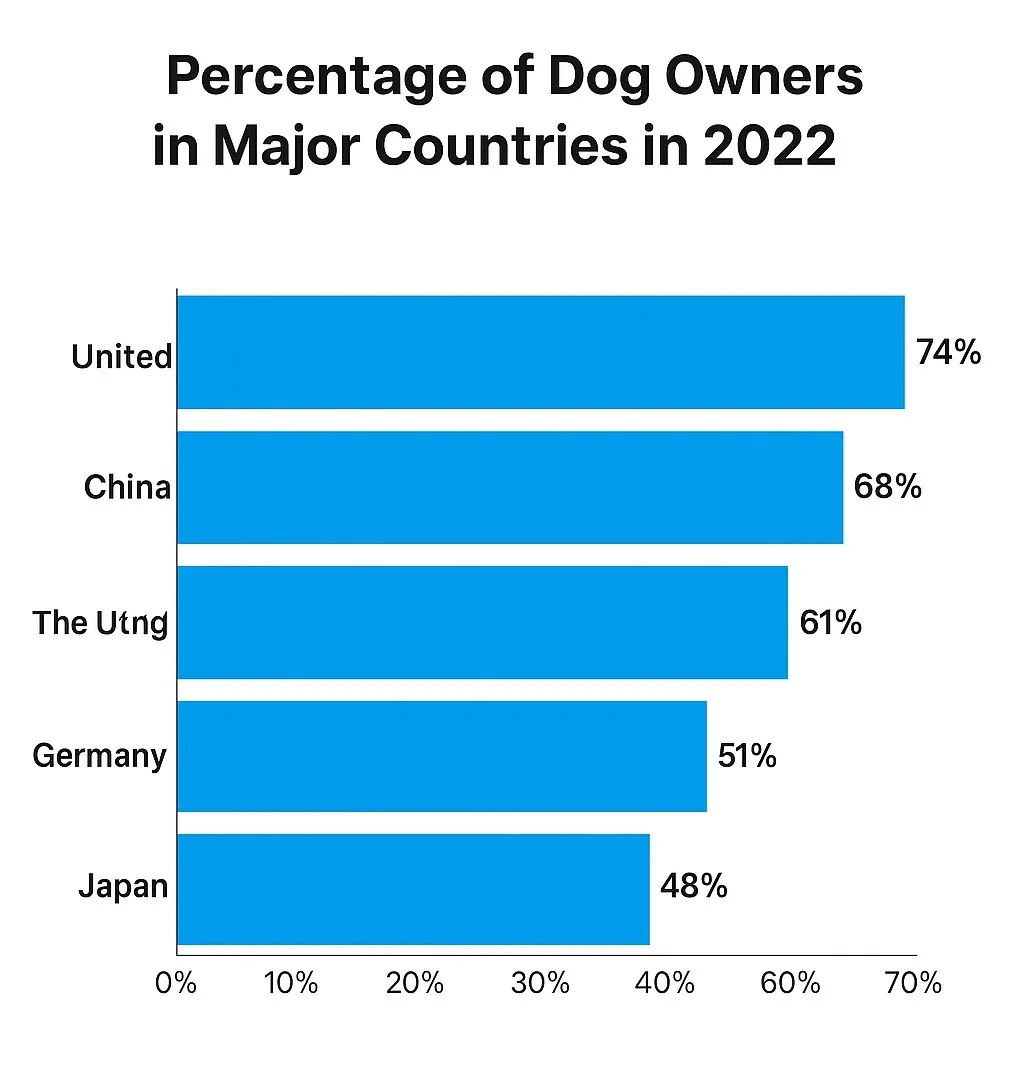
2022 proportion of dog owners in major countries
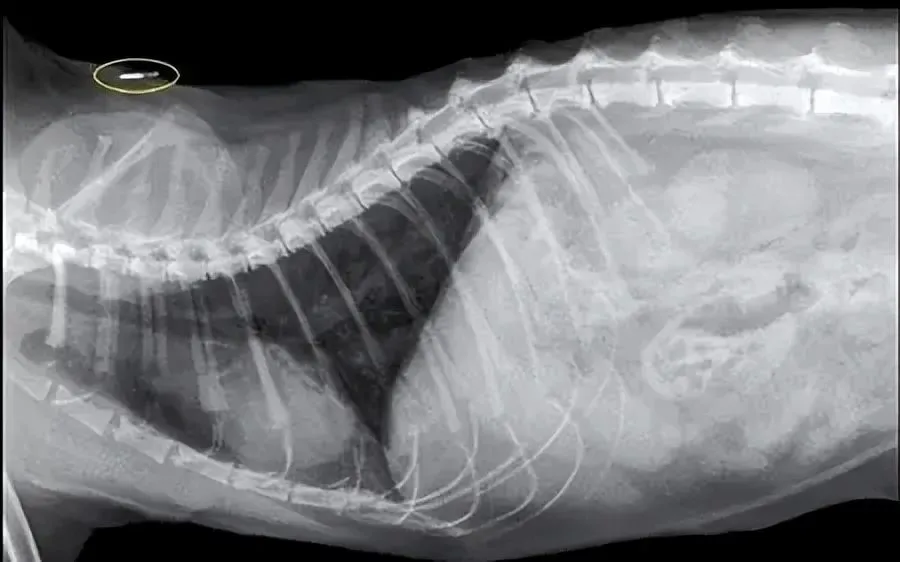
RFID tag implanted in an animal's body
Biometric Alternatives
Biometric methods such as nose-print recognition have also gained traction. In 2020, a major insurance platform enabled pet nose-print recognition. Nose-print recognition uses a pet's unique nose pattern for identity authentication, and the pattern does not change as the animal grows. The reported success rate for pet nose-print recognition has exceeded 99%, which meets commercial requirements.
However, the animal face/biometric recognition market is still developing, and its cost-efficiency is not yet comparable to RFID tags.
Conclusion
Beyond pets, demand for RFID tags has expanded into livestock and animal husbandry. With policy support for smart agriculture and smart farming, the market's acceptance of information technologies has increased. For large animals, ear tags and glass capsule tags enable more precise management.
Pigeon leg rings also require low-frequency RFID tags annually; industry sources report that this niche area added nearly three million shipments in 2019–2020.
Market feedback indicates that cats and dogs remain the main application market for low-frequency RFID. According to market data, annual live sales of cats and dogs in China, excluding adoption and gifting, exceed five million. As regulations and ordinances continue to be implemented, the pet tag market for low-frequency RFID looks promising.