ALLPCB


Background
Recently an article analyzed how errors in a star tracker and a gyroscope, combined with incorrect control code, damaged a $1.9 billion X-ray space telescope named "Tong". In practice, a star tracker and a gyroscope perform functions similar to optical positioning and pose capture used in VR. People often say VR positioning and motion capture are difficult; what makes them so challenging? This article examines that question.
I believe the true cause of Tong's failure is more complex than the article suggests. The purpose here is not to analyze Tong in detail, but to discuss technical issues raised by the incident.
"Tong" and VR Optical Tracking and Pose Capture
The star tracker on Tong is described as "an instrument on the satellite that determines its orientation... basically a small camera that tracks the positions of bright stars in the background to determine its pointing direction." The star tracker provides absolute orientation by imaging background stars, while the gyroscope detects the spacecraft's instantaneous attitude. Together, these functions are analogous to optical tracking and pose capture in VR systems.
Optical Tracking Techniques
Optical tracking in VR uses cameras to image a target object and, based on the captured images and camera pose, estimates the object's position and orientation. Depending on how markers emit or reflect light, optical tracking methods are classified as active or passive.
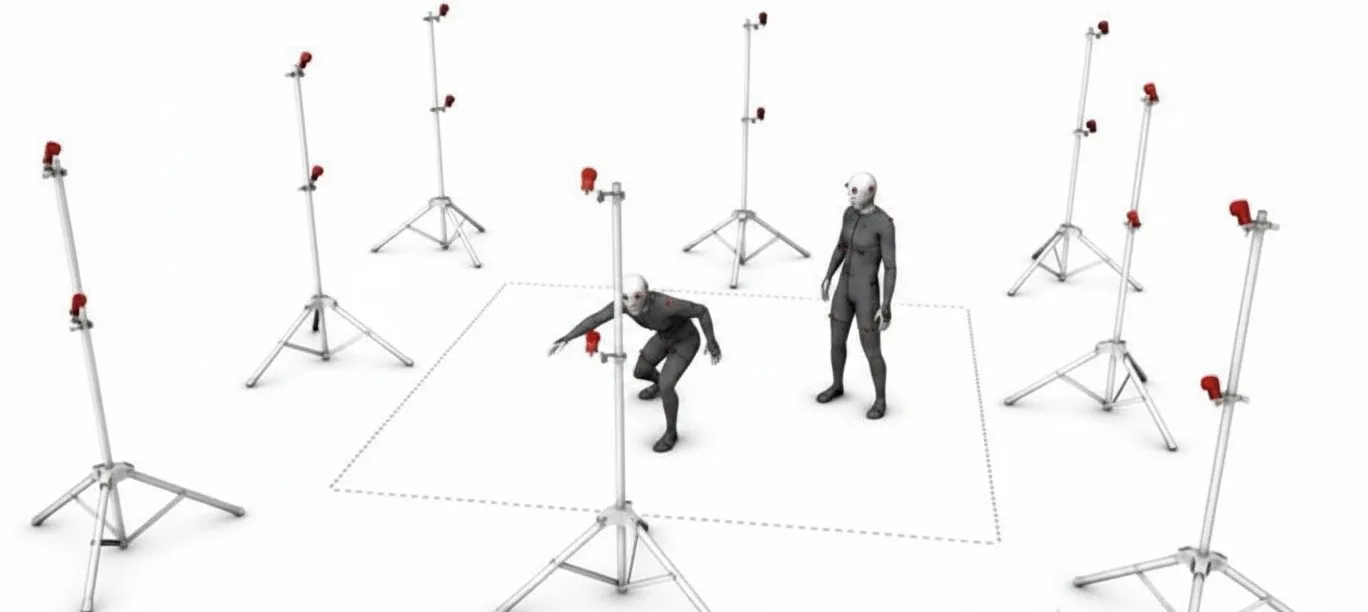
Implementation flow: the tracked object is populated with markers. Markers either emit light signals or reflect light from the tracking system so the markers are visually distinct from the environment. Multiple cameras capture images of the markers from different angles and send them to a computer. Vision algorithms filter out irrelevant information and extract marker positions. This method requires multiple CCD cameras to track the object and at least two images showing the same markers for subpixel extraction and matching to compute the object's 3D position. The implementation workflow is shown below.
Optical tracking implementation flow
Among commercial solutions, OptiTrack is widely recognized internationally. The OptiTrack system is used in game and animation production, motion tracking, biomechanical analysis, and projection mapping, and it has significant influence in the VR industry.