ALLPCB


Background
As technology has advanced, mobile phones have evolved rapidly. Over the course of that development, there were several major transitions: from early feature phones with physical keypads, to the rise of smartphones, and from press-based input to touch-based input. Modern phones predominantly use touchscreens that respond when the user’s skin makes contact. The reason for this behavior lies in how the screens are constructed.
Two common touchscreen types
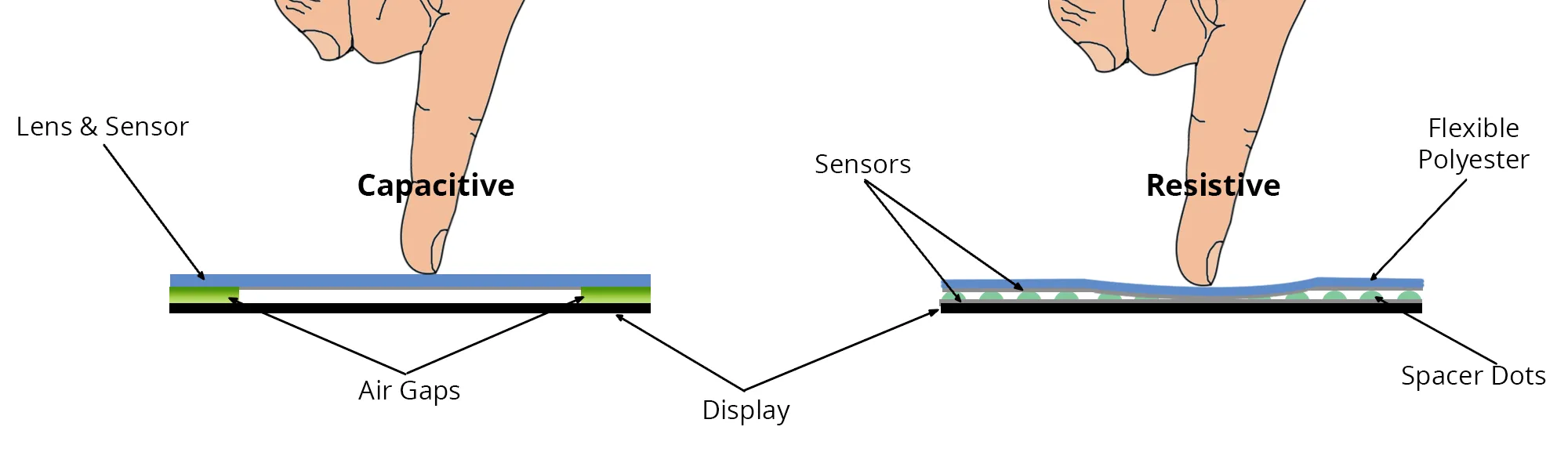
Common touchscreen technologies are resistive touchscreens and capacitive touchscreens. Resistive touchscreens were used early on by manufacturers such as Motorola, and they were also adopted by manufacturers focused on cost reduction. The capacitive approach became widely known after being used by Apple. The two types differ in sensing method and user experience, and most modern smartphones now use capacitive touchscreens.
Why resistive screens require pressure
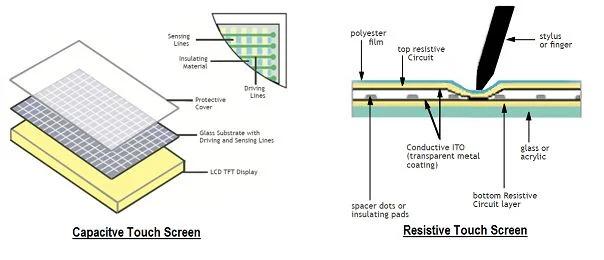
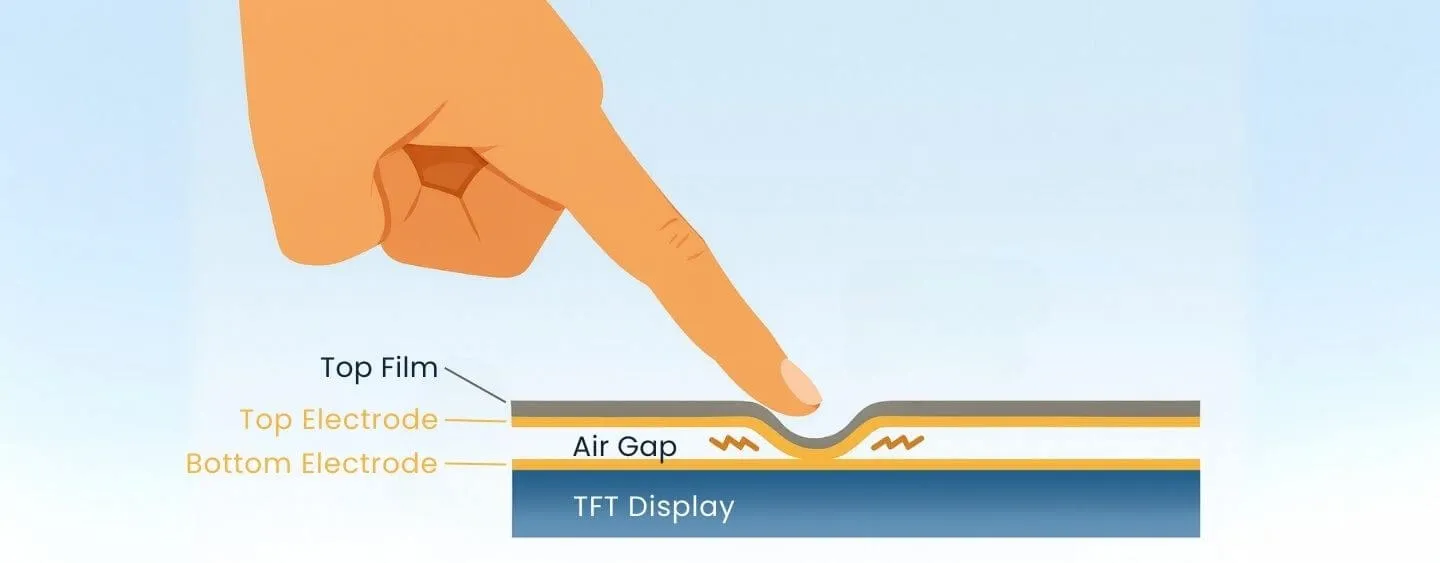
Resistive screens detect input by physical pressure. They generally require a firm press, such as with a fingernail or stylus, to bring layered conductors into contact. Because they do not rely on the conductivity of skin, simply touching them with a bare finger does not always work as expected. Although resistive panels are typically cheaper, their usability is less convenient than capacitive panels, which is a major reason capacitive designs have largely supplanted resistive ones in mobile devices.
How capacitive touchscreens work
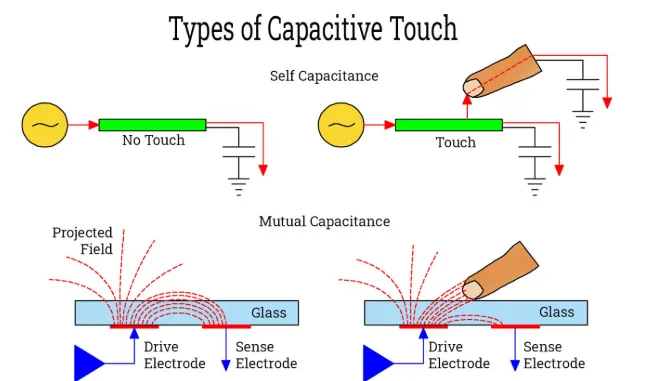
Capacitive touchscreens register input through the user’s body. When a finger touches the screen, the body’s electric characteristics interact with the screen to form a capacitive field. The touchscreen controller monitors changes in that field at several sensing points and calculates the touch location based on the detected changes. Because the sensing depends on conductive coupling, a fingernail, which is not conductive, cannot reliably form the necessary capacitive coupling and therefore usually will not register touches.
Why gloves and water affect touch response
When wearing gloves, the fingertip does not couple electrically to the screen, so the capacitive field is not formed and the screen may not respond. Conversely, when the finger surface is wet, water can create large-area conduction on the screen surface. The controller may then be unable to compute an accurate touch point, because it sees the water and the finger as similar conductive regions. This often results in touch drift or reduced touch accuracy and responsiveness.