ALLPCB


Introduction
For electronic products, especially consumer devices, converting complex user control actions into an intuitive, convenient, and manufacturable experience is a core user-interface challenge. Interface design must account for users' visual, auditory, gustatory, olfactory, and tactile senses, and also consider how those needs affect devices or systems. Most products on the market address visual and tactile interaction separately.
Why touchscreens matter
Aligning visual and tactile experience is technically challenging but has far-reaching implications for how users interact with electronics. The transparent nature of touchscreens lets users touch different elements directly on the display, which changes the way interfaces are perceived and used.
Direct interaction with applications
With touchscreens, users no longer need to search for external buttons such as a computer mouse, keyboard, or dialing keys on a mobile phone. They interact directly with applications embedded in the device's operating system. This direct interaction gives users immediate control over the operating system and applications via touch.
Evolution from single-point to multi-point interaction
Touchscreen functionality evolved from simple to complex. Early products supported the most basic interaction: a single finger touching a single point on the screen. Examples include POS terminals and airport check-in kiosks. Previously, control relied on mechanical buttons around the screen; single-point touchscreens represented a major user-interface improvement over that approach. Mechanical and capacitive tactile buttons remain widely used across phones, landlines, remote controls, televisions, computers and peripherals, game consoles, refrigerators, microwaves, ovens, radios, and automotive HVAC controls.
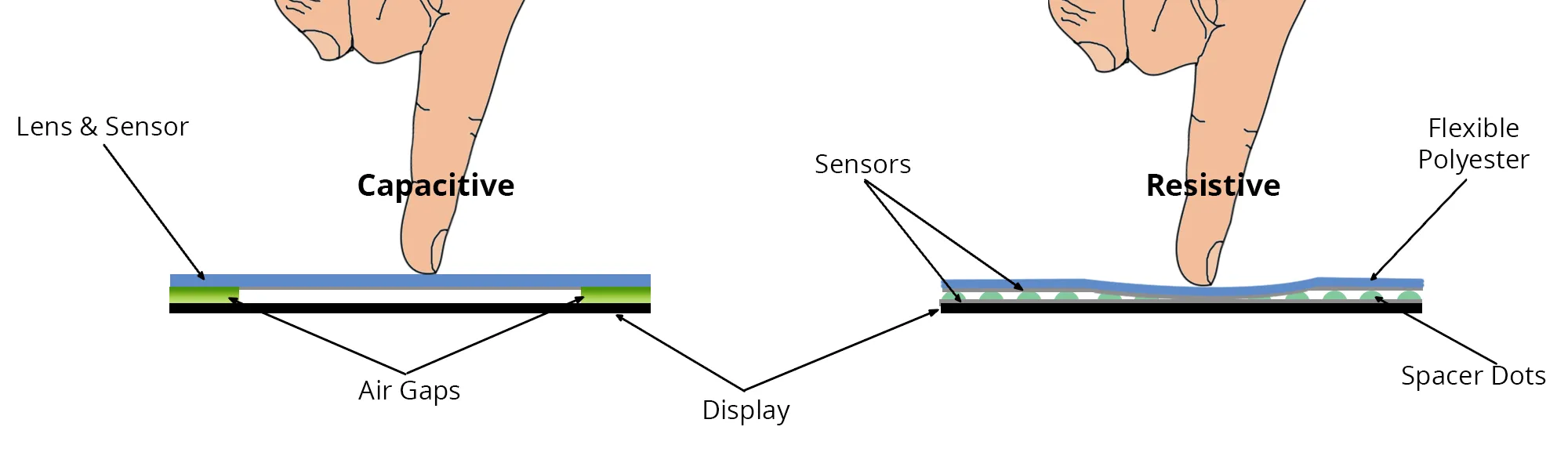
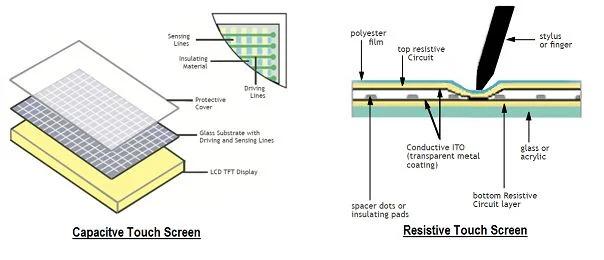
Touchscreens offer two main advantages. First, device layout can be optimized, which is especially beneficial for small devices because the screen and controls can occupy the same area. Second, because buttons can be associated with any application in the operating system, the number of possible on-screen controls is effectively unlimited. These features are primarily enabled by resistive touchscreen technology and have been widely adopted in consumer electronics, kiosks, grocery POS systems, and in-vehicle navigation units.
Limitations of resistive single-point touch
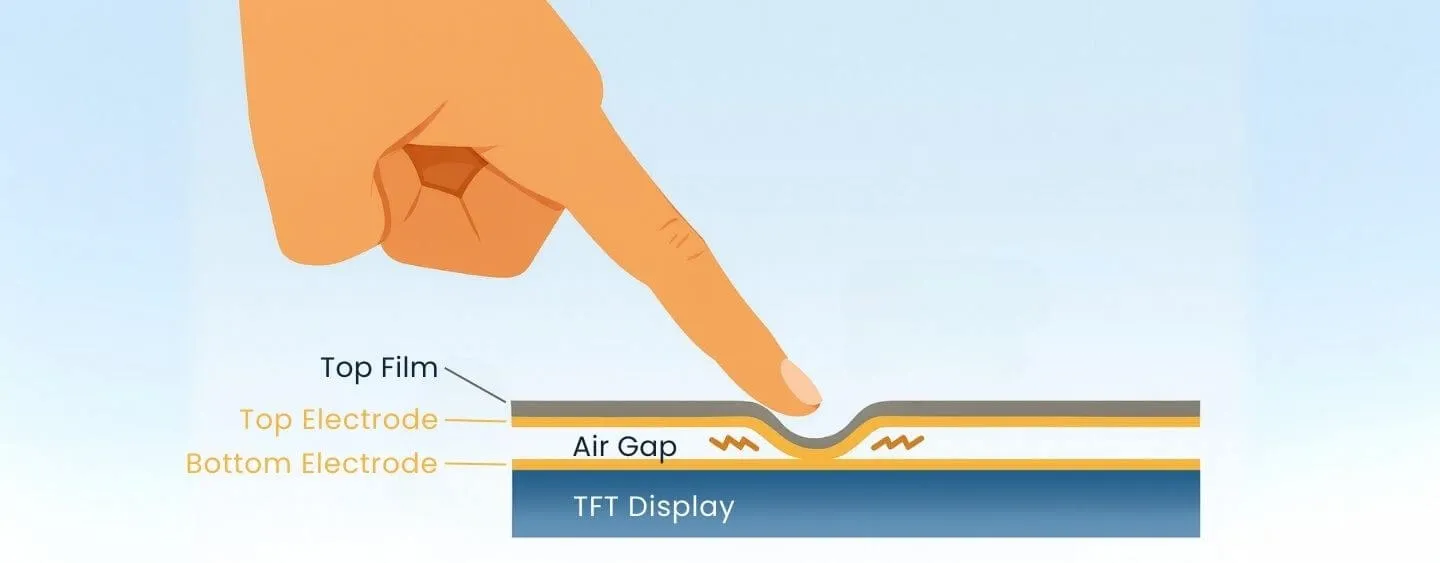
Despite the impact of single-point resistive touchscreens, there are two main drawbacks. Resistive technology depends on physical movement of the touchscreen layers, so although the effect is small, performance degrades with normal wear and aging. Second, resistive touch typically supports only single-point input, meaning only one finger can act on the screen at a time.
Capacitive screens and multi-touch
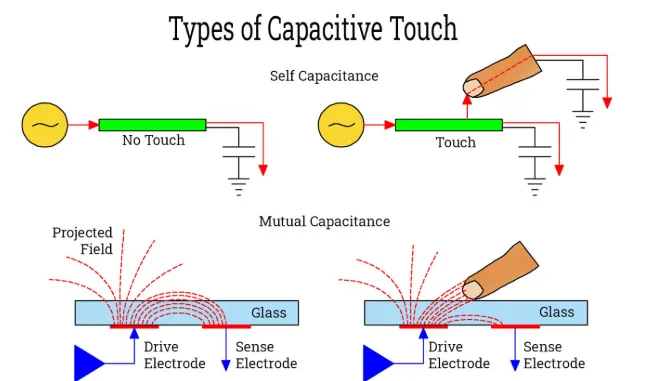
Why limit interaction to a single finger? Apple contributed significantly to this interface shift by introducing the iPhone with a sensing capacitive touchscreen. Even on small devices such as smartphones, multiple fingers are often needed to achieve optimal usability for applications and operating systems.
Other innovators adopted multi-touch on a range of devices, including the Google G1 and Blackberry Storm smartphones, MacBook Pro and HP TouchSmart desktops and laptops, portable media players, and various other applications. Users began expecting improved interaction methods, and manufacturers responded by implementing multi-touch capabilities across many product categories.
Full-area multi-touch and its benefits
Like single-point touchscreens, multi-touch systems that detect finger direction also have limits: they can recognize only a limited number of simultaneous touch points. The concept of full-area multi-touch extends this to more than two touch points so multiple fingers or hands can be detected concurrently.
Cypress describes this approach as multi-touch full-area input. It enhances touchscreen reliability and usability for feature-rich applications. Reliability means accurately capturing raw touch data across the entire screen with minimal confusion from imprecise touch localization. Usability means enabling powerful applications to benefit from two-handed or multi-finger interactions on screens of different sizes. Examples include 3D interactive games, keyboard input, and map manipulation.
Implications for OEMs and developers
Fundamentally, full-area multi-touch provides device and system OEMs with comprehensive touch data, enabling creative development of the next generation of practical interfaces and applications.