ALLPCB


Overview
Apple's Force Touch trackpad introduced new interaction possibilities, which is why some users prefer it to a traditional mouse. Force Touch enables a range of distinct operations and represents a change in input method. Apple combined the input concept with software optimization to achieve good results, but there has been little innovation in physical feedback. By physical feedback I mean vibration-like sensations.
Why physical feedback is needed
Physical feedback is more intuitive: often users do not need to look at the screen to understand the effect of their input. Historically, vibration was the primary feedback mechanism, but more refined approaches are emerging.
Applications
Refined vibration profiles can be an important trend beyond software tricks. Different touch gestures can trigger different vibration patterns, which extends the utility of haptic feedback.
Mobile gaming is a clear example. Many games already trigger brief device vibration for certain actions. More nuanced vibration could offer distinct sensations: for ball sports, users might feel differences when a basketball or soccer ball hits the ground. With precise control, it would be possible to convey that a basketball has greater elasticity and mass than a soccer ball.
Video playback can also incorporate varied feedback. For instance, a screen could deliver gradually intensifying vibrations during an airplane takeoff scene to provide an auxiliary sensation of takeoff. Key moments in visual content could be emphasized with specific feedback patterns to draw attention to important elements; this could be particularly noticeable in mobile advertising.
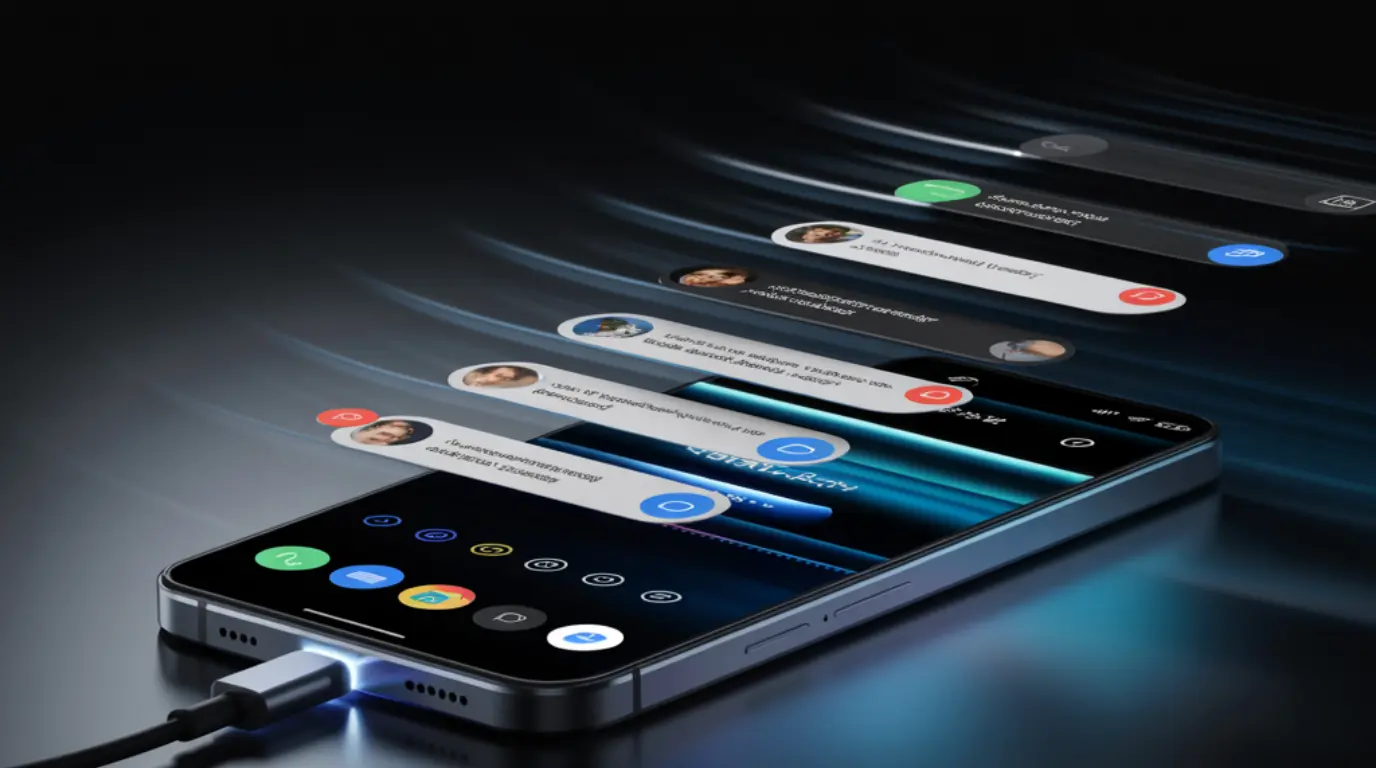
On wearables, different touch-feedback methods are useful. Devices can deliver precise vibration signals based on user settings, allowing users to distinguish, without looking at the device, whether they received a text message, an email, or another notification. The same mechanism can be used to send messages with distinct vibration patterns, improving interactive experiences.
Human perception and hardware
Human perception of touch on a screen relies on neurons. Research indicates that, with appropriate acceleration, fingertip neurons can detect very small motions. At accelerations above 1.5 g, motions as small as 0.1 mm can be perceived as a confirmed response.
However, 1.5 g is only a minimum; it does not produce the best tactile effect. Producing a noticeable haptic effect typically requires both sufficient acceleration and a displacement that provides stronger stimulation. That implies a need for dedicated hardware. The best approach is to use actuators designed specifically for haptic output. Eccentric rotating mass motors (ERM) and linear resonant actuators (LRA), the latter having a small mass that vibrates between two magnetic poles, are the mainstream solutions today.
Software and ecosystem
Hardware alone is not enough. Software must expose the haptic capability in a way that different applications can call it. Finally, a library of touch effects is needed so users can recognize distinct vibration patterns. Solving both hardware and software challenges is necessary for haptic feedback to advance further.