ALLPCB


Overview
From resistive touchscreens to modern 5- and 10-point capacitive touchscreens, capacitive touch technology now dominates due to its responsive, lightweight operation. Most mainstream tablets use capacitive touchscreens, but the materials and layer structure vary significantly.
Basic structure
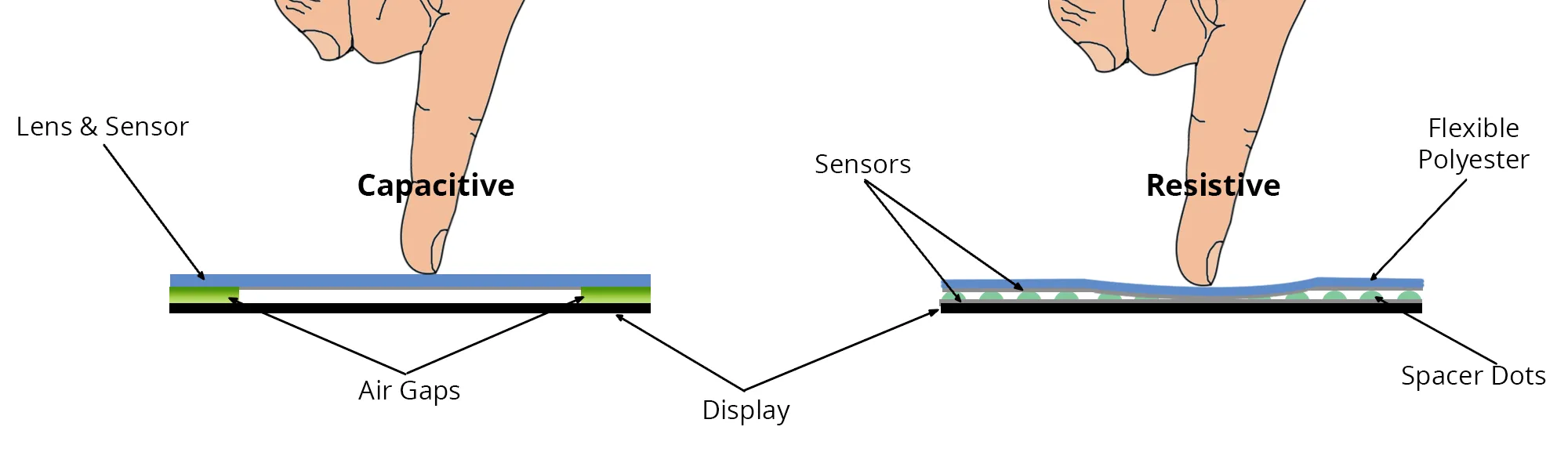
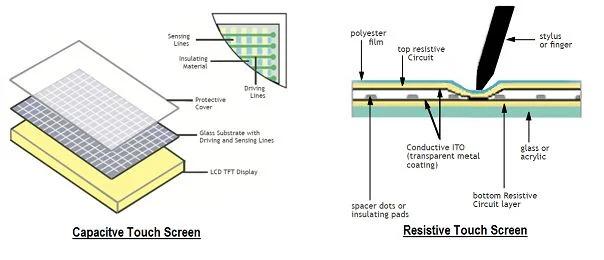
A capacitive touchscreen typically consists of a bottom sensor glass layer and a top cover. There are two common structures on the market:
- G+G: sensor glass + tempered glass cover
- G+P: sensor glass + PET plastic cover
Surface hardness and scratch resistance
The G+G construction uses tempered glass as the outer cover. Its surface hardness can reach above 8H, so ordinary use will not produce scratches unless exposed to extremely hard abrasives such as quartz or industrial-grade sanding materials. G+P uses PET plastic as the outer layer, with a typical hardness of 2–3H; it is relatively soft and prone to scratches during everyday use, so protective film or careful handling is generally required.
Chemical and environmental resistance
PET surfaces can harden, become brittle, or discolor when exposed to acids, alkalis, oily substances, or prolonged sunlight, so they require more careful handling. Improper exposure may cause fogging or white spots. Tempered glass surfaces used in G+G screens are far more chemically and UV resistant and are less affected by such substances.
Optical performance
G+G glass cover plates typically have higher light transmittance, around 91%, so the display image is less affected. PET covers in G+P constructions commonly transmit only about 83% of incident light, resulting in visible light loss and a dimmer appearance. PET transmittance may also degrade over time.
Touch feel and sliding friction
Glass surfaces in G+G designs are very smooth and provide a fluid sliding feel. PET covers are polymeric materials with higher surface damping, which can feel less smooth and reduce the perceived responsiveness during touch interactions.
Bonding and reliability
G+G assemblies typically use optical adhesive with vacuum lamination, producing high bond reliability and longer service life. G+P assemblies often rely on the PET's own adhesive layer or simpler chemical bonding processes, which are less robust. The mismatch in thermal expansion coefficients between tempered glass sensor substrates and PET covers in G+P constructions can lead to delamination or cracking under temperature extremes, increasing failure and repair rates compared with G+G designs.
Cost vs. performance
Aside from lower cost, G+P capacitive screens are difficult to match with G+G in areas such as durability, optical performance, and reliability. For that reason, many low-end tablets in the Chinese market use G+P to reduce manufacturing cost.
How to distinguish G+G and G+P
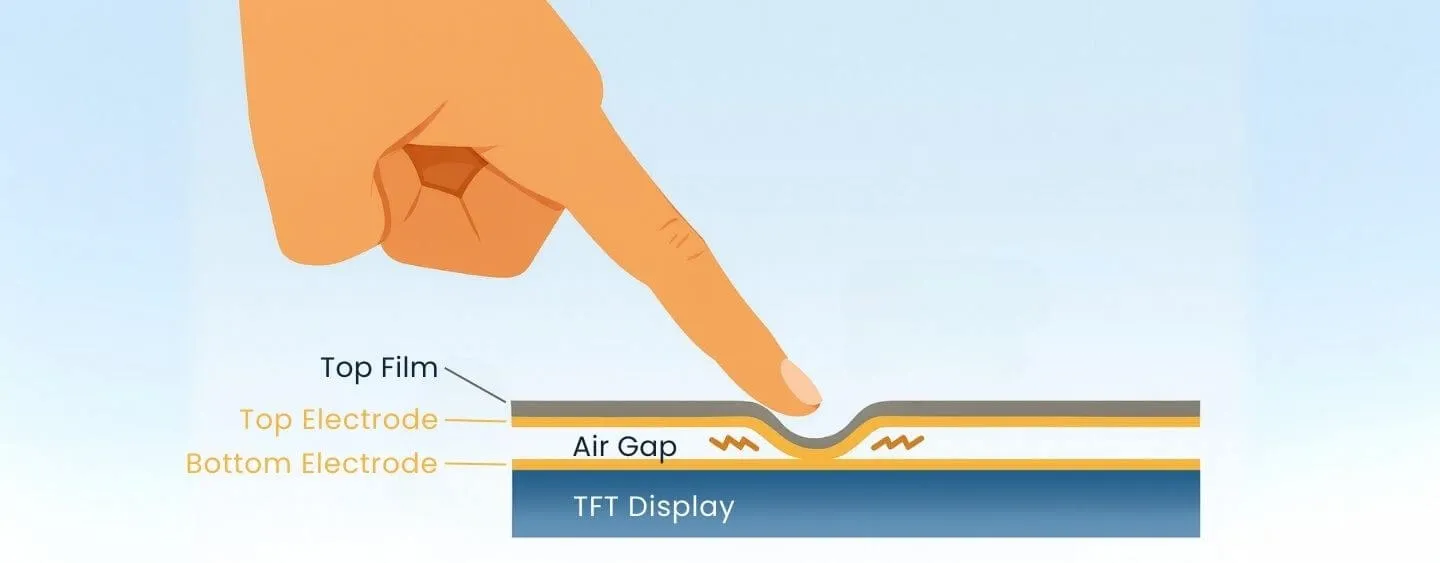
A simple way to tell them apart is to press near the outer edge where the screen meets the bezel with a fingernail or apply light pressure. The PET cover in a G+P screen is flexible and will deform slightly under pressure. A G+G screen with a tempered glass cover will not show visible deformation.