ALLPCB


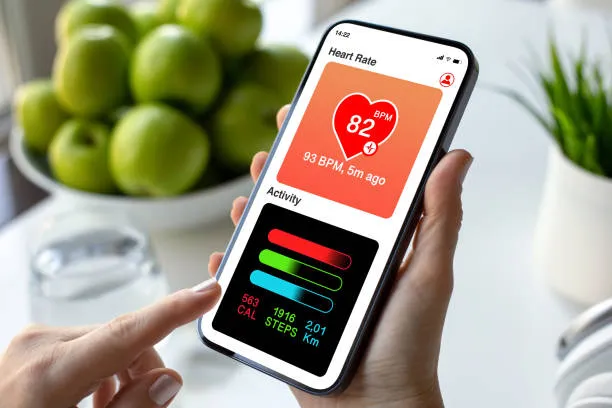
Wearable devices are computing devices that can be attached to people, animals, or objects to sense, transmit, and process information. Sensors are the core components of wearable devices; they extend human senses and augment perception.
With advances in biotechnology and the miniaturization and smart integration of sensors, wearable devices may evolve toward implanted smart devices.
All wearable devices include a critical element: the sensor. Sensors detect changes in the external environment, such as temperature and motion, and respond accordingly, much like human skin.
What sensors are used in wearable devices? Generally, sensors in wearables fall into the following major categories.
Motion Sensors
Motion control sensors convert non-electrical quantities (such as velocity or pressure) into electrical signals. Common examples include accelerometers, gyroscopes, geomagnetic sensors (electronic compasses), and barometric pressure sensors (used to calculate altitude by measuring atmospheric pressure).
These sensors support motion detection, navigation, entertainment, and human-machine interaction. An electronic compass can measure direction to enable or assist navigation. Monitoring motion is valuable because it allows continuous measurement, recording, and analysis of physical activity, so users can track step counts, swimming laps, cycling distance, energy expenditure, sleep duration, and even sleep quality.
Motion Sensor Functions and Principles
Motion sensors enable continuous measurement, recording, and analysis of human activity so users can obtain step counts, swimming laps, cycling distance, energy consumption, sleep time, and navigation and entertainment data.
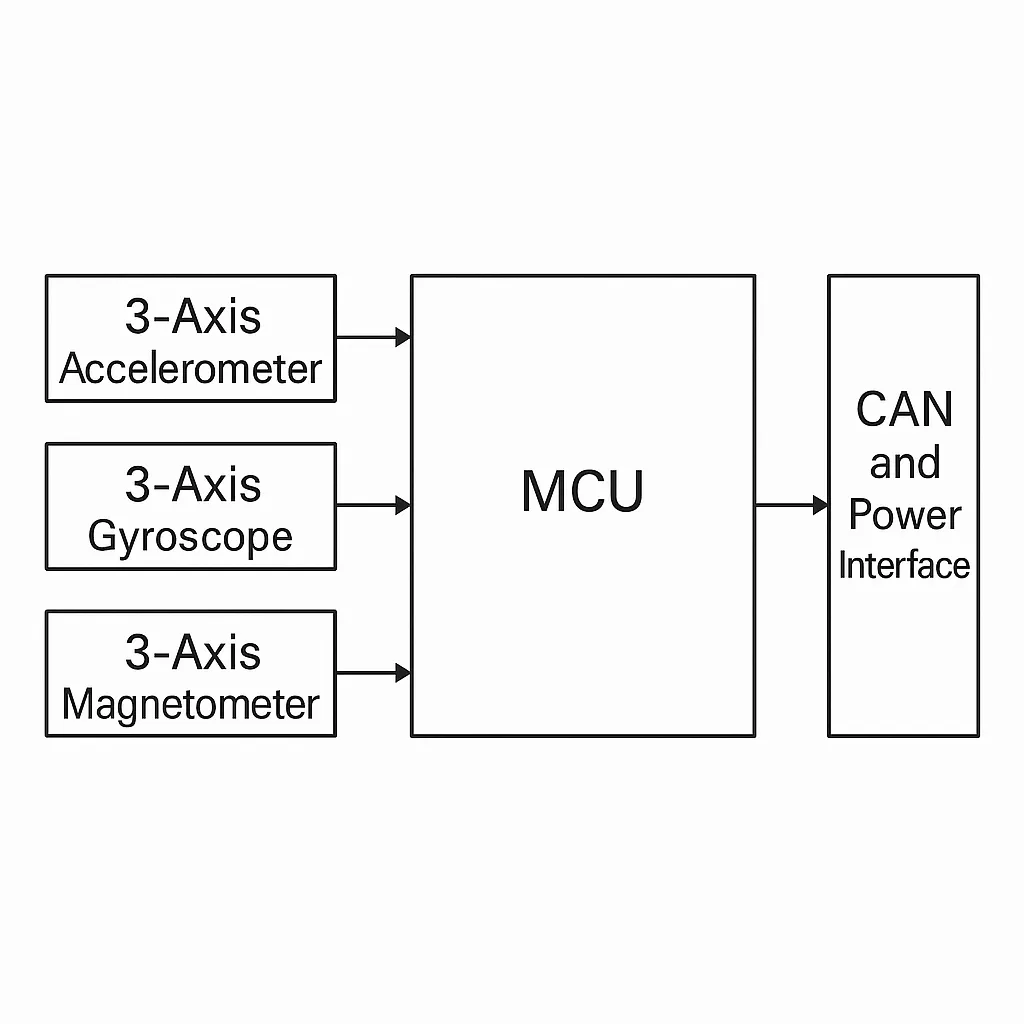
Required functions include acquiring data from three types of inertial devices, computing attitude angles, and wired communication. A motion sensor module typically includes an MCU, accelerometer, gyroscope, magnetometer, and a CAN interface. The MCU supports synchronous serial buses (I2C), asynchronous transceivers (UART), buttons, and other modules to control node operations. The node is powered by a wired supply; the MCU controls data acquisition from the three sensors, attitude calculation, and CAN transceiving.
Biological Sensors
Biological sensors respond to biological substances and convert their concentrations into electrical signals for detection. They consist of immobilized biological recognition elements (such as enzymes, antibodies, antigens, microbes, cells, tissues, or nucleic acids) combined with appropriate physicochemical transducers (for example, oxygen electrodes, photodiodes, field-effect transistors, piezoelectric crystals) and signal amplification circuitry. Biological sensors perform both recognition and transduction functions.
Examples include glucose sensors, blood pressure sensors, ECG sensors, EMG sensors, body temperature sensors, and EEG sensors. Their main applications are health and medical monitoring and certain entertainment uses.
Biological Sensor Functions and Principles
Wearable technology enables health alerts and condition monitoring, allowing clinicians to improve diagnostics and relatives to communicate better with patients.
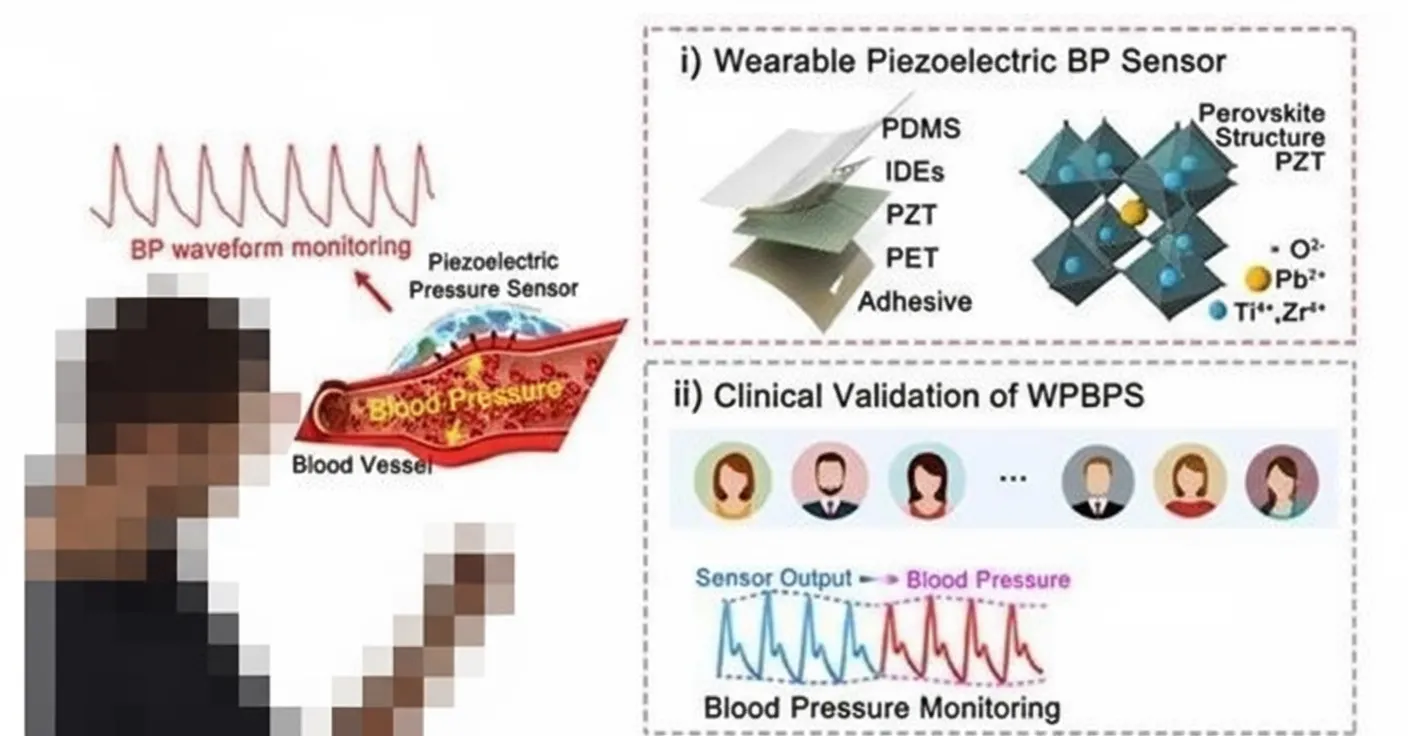
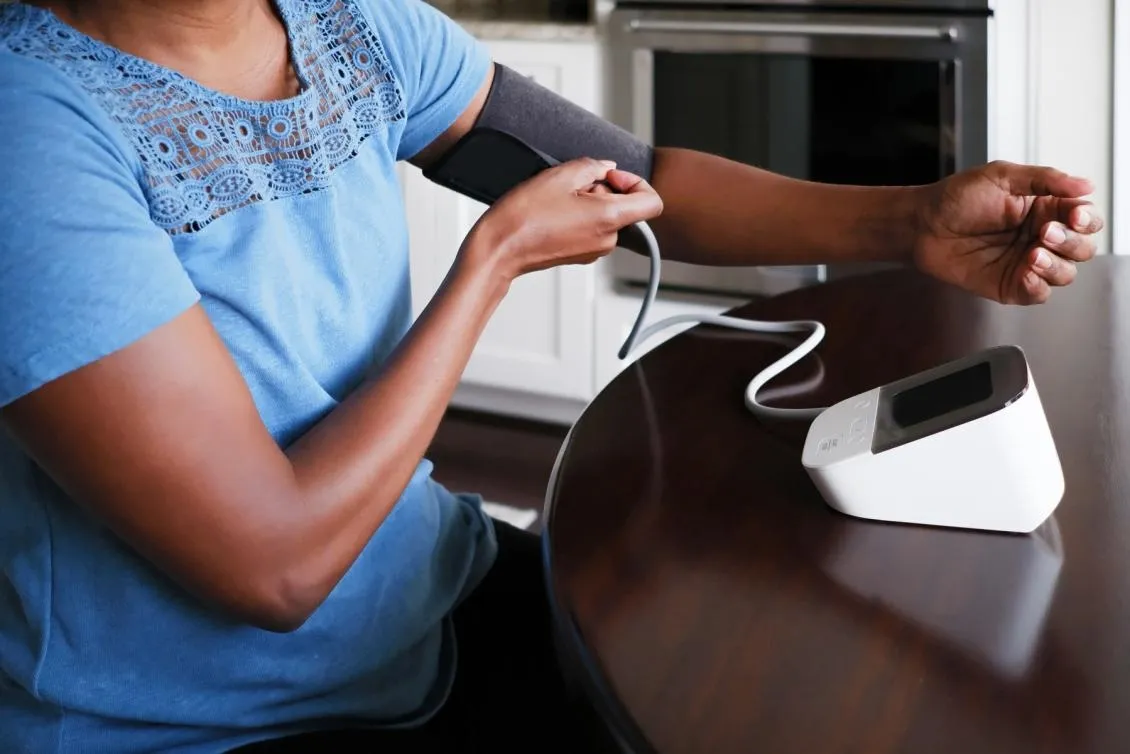
For example, wearable blood pressure monitoring devices track and monitor physiological data, extract diagnostic models, and predict health trends, providing personalized cardiovascular monitoring and health-management suggestions. A blood pressure monitor detects tiny pressure variations in a cuff caused by arterial wall vibrations. The most common method is the oscillometric technique: a cuff on the arm is inflated by a pump to occlude arterial pulsation, then gradually deflated. When blood flow resumes, oscillations appear and increase; as the cuff loosens further, oscillations decrease and the pressure and its fluctuations detected by the pressure sensor become smaller. The pressure sensor measures cuff pressure and fluctuations in real time.
The oscillations travel through the tubing to the pressure sensor in the device, where they are amplified, filtered, converted from analog to digital, and processed by a central processor to compute systolic, diastolic, and mean arterial pressures. Such ambulatory blood pressure monitors can connect to mobile devices via Bluetooth or USB to upload data to clinicians, and they provide 24-hour monitoring when worn externally.
Environmental Sensors
Environmental sensors include temperature sensors, humidity sensors, evaporative sensors, rain gauges, light sensors, and wind speed/direction sensors. They measure environmental parameters precisely and can be networked to host systems to record and store measured data, supporting research, teaching, laboratories, and agricultural or environmental monitoring departments.
Environmental Sensor Functions and Principles
People often face environments that threaten health, such as smog or elevated indoor formaldehyde. A PM2.5 portable air-quality monitor made from particulate sensors can be worn and used standalone or paired with a smartphone for sharing.
PM2.5 portable monitors use an air pump and dust sensor to draw aerosols into a detection chamber. The aerosol stream is split: one part passes through a high-efficiency filter to provide clean sheath air that protects sensor components from contamination, while the other part enters the sensor chamber as the sample. Particles and molecules scatter and absorb incident light; when monochromatic light passes through the sample, scattering and absorption attenuate the transmitted light. The relative attenuation correlates roughly linearly with particle concentration. The reduced light intensity is converted into an electrical signal by a photodetector; measuring that electrical signal yields the relative attenuation and thus particle concentration.
Skin Conductance Sensors
Everyone has experienced nervous sweating before an important task. That psychological response produces physiological changes that can be detected by skin conductance sensors.
Sensoree's mood sweater uses skin conductance responses to sense mood and reflects it with different colored lights.
Skin conductance sensors are important components of polygraphs, but they cannot directly determine specific emotions; they only detect changes in psychological state. From those changes, inferences can be drawn. For example, a polygraph sensor can detect psychological changes when a subject speaks and use that information to assess truthfulness.
Research shows that skin conductance tends to be lower upon waking and at bedtime, while certain periods in the morning or afternoon show higher skin conductance levels, coinciding with higher learning or work efficiency.
Heart Rate Sensors
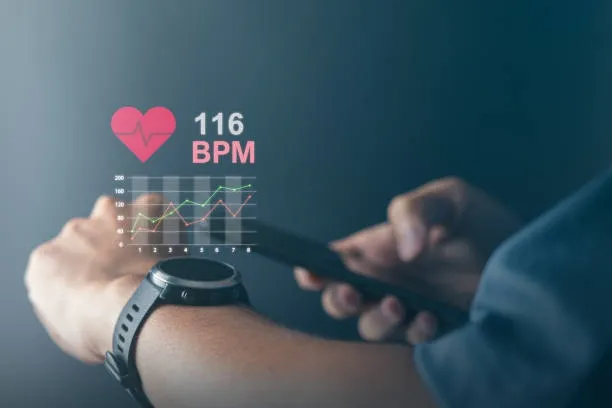
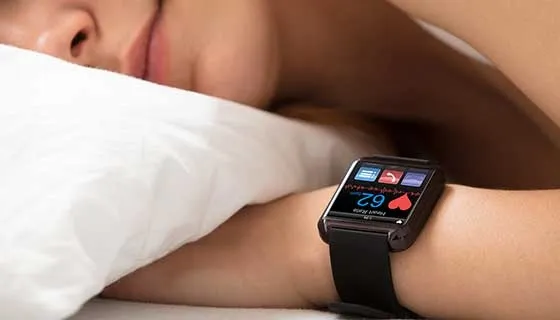
Heart rate sensors are widely used in personal health devices to track exercise intensity, training modes, and correlated health metrics such as sleep cycles.
There are two main types of heart rate sensors: photoplethysmography (PPG) sensors that measure via light reflection, and electrode-based sensors that measure electrical potentials at different body sites. PPG sensors are compact but less accurate, so they are commonly used in mobile devices. Electrode-based ECG measurements are more accurate but require simultaneous contact at two body sites, which is impractical for single-hand contact with phones or watches, preventing continuous monitoring in those scenarios.
Barometer
A barometer is a compact but useful sensor. It measures atmospheric pressure and can determine device altitude. Monitoring pressure changes over time yields altitude change data for further processing.
With a barometer, outdoor athletes can know elevation; future navigation systems could determine floor level as well as planar position, which is likely a future navigation trend. Current wearables track steps, but with a barometer they can also detect stair climbing, improving calorie-expenditure estimates.
The emergence of wearable smart devices has created new lifestyles. The capabilities of wearables rely on functional integration and innovation across multiple sensor types. Developing more accurate, smaller, and more integrated sensors will meet demand. As electronic and sensor technologies continue to advance, wearable devices will continue to evolve.