ALLPCB


Introduction
For electronic hobbyists diving into high-speed circuit design, ensuring signal integrity is a critical challenge. One key aspect of this is length matching, a technique used to synchronize signal arrival times on a printed circuit board (PCB). Typically, advanced design software automates this process with precision. However, many hobbyists lack access to such tools or prefer a hands-on approach using hand design methods. This raises an important question: can effective length matching be achieved without design software? In this article, we explore the fundamentals of length matching, its importance for signal integrity, and practical techniques for hobbyists to implement it manually. By understanding the principles and applying structured methods, achieving reliable results without software is indeed possible.
What Is Length Matching and Why It Matters
Length matching refers to the practice of equalizing the trace lengths of critical signals on a PCB to ensure they arrive at their destinations simultaneously. In high-speed designs, even small differences in trace lengths can cause timing mismatches, leading to data errors or signal degradation. This is particularly important for parallel data buses, differential pairs, and clock signals where synchronization is essential.
Signal integrity, the quality of an electrical signal as it travels through a circuit, directly depends on proper length matching. Without it, issues like skew, jitter, and crosstalk can compromise performance. For electronic hobbyists working on projects such as microcontrollers or memory interfaces, neglecting length matching can result in unpredictable behavior. Understanding and applying this concept ensures that signals maintain their intended timing, even in manually designed boards.
Technical Principles of Length Matching and Signal Integrity
At its core, length matching addresses the propagation delay of signals. Electrical signals travel through PCB traces at a finite speed, influenced by the dielectric constant of the board material. A difference in trace length means a difference in travel time, which can disrupt timing-critical applications.
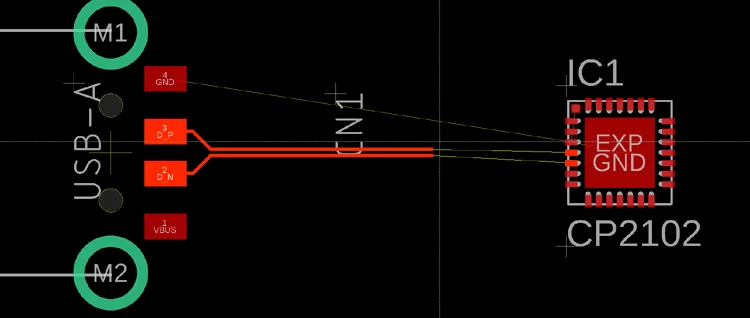
For instance, in a parallel data bus, if one data line is longer than others, the signal on that line arrives later, causing data misalignment. Similarly, in differential pairs, unmatched lengths can introduce noise and reduce signal quality. The goal of length matching is to minimize these timing differences, often to within a few millimeters or less, depending on the signal speed.
Signal integrity is further affected by factors like impedance mismatches and reflections, which can be exacerbated by poor length matching. While hobbyists may not deal with gigabit-speed signals, even moderate frequencies in modern microcontrollers demand attention to trace length for reliable operation. (Insert image: 'PCB Trace Length Measurement' · ALT: 'Measuring trace lengths on a PCB with a caliper')
Challenges of Length Matching Without Design Software
Using design software, length matching is automated through algorithms that calculate and adjust trace lengths with precision. Without such tools, hobbyists face significant hurdles. Manually calculating trace lengths requires meticulous measurement and planning. Errors in estimation can lead to significant timing issues, especially on complex boards with multiple critical signals.
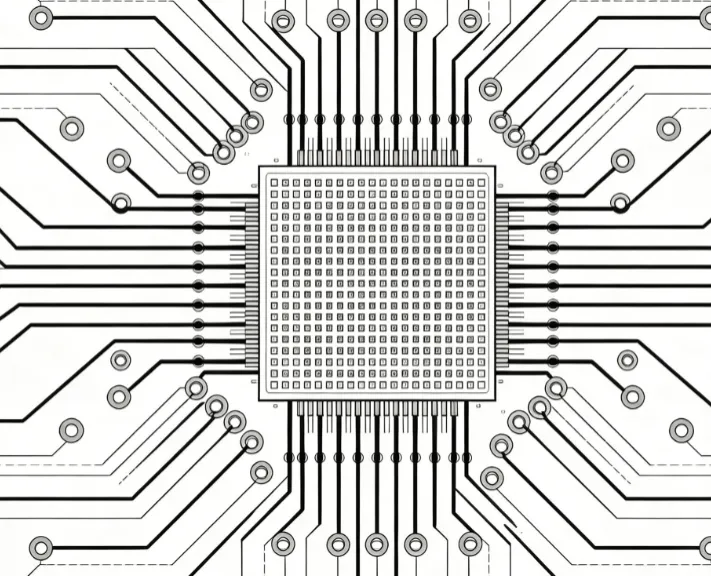
Additionally, without software, visualizing the layout and identifying length discrepancies becomes difficult. Hobbyists must rely on physical measurements or rough sketches, which lack the accuracy of digital tools. Routing traces to match lengths often involves adding serpentine patterns or loops, a process that is time-consuming and prone to mistakes when done by hand. Despite these challenges, with a structured approach, manual length matching remains feasible for simpler designs.
Practical Solutions for Hand Design Length Matching
Step 1: Identify Critical Signals
Begin by identifying which signals require length matching. Focus on high-speed lines such as clock signals, data buses, and differential pairs. For hobbyist projects, these are often associated with interfaces like SPI, I2C, or USB. Prioritize these signals over less timing-sensitive ones to simplify the process.
Step 2: Plan Trace Routing on Paper
Before laying out the PCB, sketch the board layout on graph paper or a similar medium. Estimate the paths for critical traces, aiming to keep their lengths as equal as possible. Use a ruler to measure approximate distances between components. This initial planning helps visualize potential discrepancies early on. (Insert image: 'Hand-Drawn PCB Layout Sketch' · ALT: 'Sketching a PCB layout with trace paths on graph paper')
Step 3: Use a Consistent Grid or Scale
When transferring the design to the actual PCB or prototyping board, maintain a consistent scale. If using perforated boards or manual etching, mark a grid to guide trace placement. This ensures that measurements remain proportional to the planned layout, reducing errors in length estimation.
Step 4: Measure and Adjust Trace Lengths
After routing traces, measure their lengths using a flexible ruler or string to follow the exact path. Compare the lengths of critical signals. If discrepancies exist, adjust by adding small loops or serpentine patterns to shorter traces. Be cautious to avoid sharp bends, as they can introduce signal integrity issues.
Step 5: Test and Iterate
Once the PCB is assembled, test the circuit for timing issues using an oscilloscope if available. Look for signal skew or unexpected behavior in data transmission. If problems arise, revisit the trace lengths and make adjustments. This iterative process is crucial for refining hand-designed boards. (Insert image: 'Oscilloscope Signal Testing' · ALT: 'Testing signal timing on a PCB with an oscilloscope')
Additional Tips for Hobbyists
Consider using PCB materials with known dielectric properties to estimate signal propagation speed more accurately. Keep traces on the same layer whenever possible, as transitioning between layers introduces additional delays due to vias. Finally, for very high-speed signals, consult industry guidelines such as those from IPC standards to understand acceptable tolerances for length matching.
Limitations of Hand Design for Length Matching
While manual length matching is possible, it has clear limitations compared to design software. Precision is often limited by the tools available to hobbyists, such as rulers or basic calipers. Complex designs with numerous signals become nearly impossible to manage without digital assistance. Additionally, hand design lacks the ability to simulate signal behavior, making it harder to predict and mitigate issues like crosstalk.
For hobbyists, these limitations mean that manual length matching is best suited for simpler projects with lower speed requirements. When dealing with advanced applications, investing in affordable or open-source design tools may be necessary to ensure signal integrity.
Insight for Hobbyists: Balancing Effort and Results
As a PCB design expert, I often see hobbyists overcomplicate length matching in projects where it may not be critical. Not every circuit demands perfect synchronization. For example, low-speed signals below a few megahertz often tolerate significant length differences without noticeable issues. Focus your efforts on interfaces where timing is paramount, and use manual methods as a learning tool to understand signal integrity concepts. This balance prevents frustration and builds valuable skills for future designs. (Insert image: 'Hobbyist PCB Project' · ALT: 'A hobbyist working on a small PCB project at a workbench')
Conclusion
Length matching without design software is indeed possible for electronic hobbyists, though it requires careful planning and patience. By understanding the principles of signal integrity and following structured hand design techniques, reliable results can be achieved for simpler high-speed projects. While manual methods have limitations in precision and scalability, they offer a practical learning experience and a deeper appreciation of PCB design challenges. For those ready to take on more complex designs, transitioning to software tools becomes a logical next step. Until then, these strategies provide a solid foundation for maintaining timing accuracy in hand-designed boards.
FAQs
QX: What is length matching, and why is it important for hobbyist projects?
AX: Length matching ensures that critical signals on a PCB arrive at the same time by equalizing trace lengths. For hobbyists, this is vital in high-speed projects like microcontroller interfaces to prevent timing errors. Poor length matching can lead to data loss or signal degradation, affecting circuit performance. Understanding this concept helps build more reliable designs even with basic tools.
QX: Can hand design achieve good signal integrity without software?
AX: Yes, hand design can achieve reasonable signal integrity for simpler projects by manually measuring and adjusting trace lengths. Hobbyists can use rulers or strings to estimate lengths and add serpentine patterns as needed. However, precision is limited, and complex designs may still face timing issues. It works best for low to moderate speed circuits.
QX: How do I start length matching without design software?
AX: Begin by identifying critical signals needing length matching, such as clock or data lines. Sketch the PCB layout on paper to plan trace paths. Measure lengths after routing and adjust shorter traces with loops. Test the circuit for timing issues and iterate as needed. This manual process builds a solid understanding of signal timing.
QX: What are the biggest challenges in manual length matching?
AX: The main challenges in manual length matching include achieving precise measurements and visualizing trace discrepancies without software. Adjusting lengths by hand is time-consuming and error-prone, especially on complex boards. Signal integrity issues like crosstalk are harder to predict without simulation. Hobbyists should focus on simpler designs to manage these limitations effectively.
References
IPC-6012E — Qualification and Performance Specification for Rigid Printed Boards. IPC, 2020.
IPC-A-600K — Acceptability of Printed Boards. IPC, 2020.