ALLPCB


Overview
IoT, AI and other advanced technologies have driven a new wave in smart home products. Smart locks have evolved from mechanical keys to passwords, then to fingerprint, face, and other biometric methods. As they become more secure, convenient, and intelligent, smart locks are increasingly a standard part of connected homes. Iris recognition, once rarely used in this space, is now being introduced to smart locks.
Smart lock technology matures
Smart locks are gaining popularity for their security and convenience, and many households are installing them. According to a report from RUNTO, over six years the Chinese smart door lock market expanded from under 8 million units in 2017 to 17.6 million units in 2022, more than doubling in size.
Although smart locks have only recently entered many households, the industry in China has a development history of about 30 years. Over time the industry has continued to explore new approaches, iterate technologies, and deliver increasingly mature products.
DESSMANN R&D director Sang Shengwei told a reporter from China Electronics News that before 2010, passwords and RFID cards were common unlocking methods. Fingerprint modules already existed then but were mainly optical and relatively easy to replicate, so security was limited. Locks subsequently evolved toward smart locks: manufacturers introduced products combining fingerprint, password, RFID card, mobile app, and key-based unlocking. The "smart lock + app" combination became common. After 2017, many manufacturers adopted higher-security biometric technologies such as face recognition and finger-vein recognition for residential locks. Leading brands introduced 3D face recognition combined with financial-grade algorithms, semiconductor fingerprint or finger-vein sensors, and smart peepholes. Unlocking technologies grew more mature and security improved significantly.
RUNTO online data show that in 2022 sales of face-recognition door locks online rose 100% year-on-year, with market share increasing from 3.2% in January 2021 to 13.5% in December 2022. DESSMANN and Kaadas led the face-recognition lock market, with a combined share exceeding 40%. In the same period, finger-vein lock sales increased 144% year-on-year, and market share rose from 0.4% in January 2021 to 3.4% in December 2022. From 2022, several brands completed their product layouts, breaking a previous single-brand dominance.
When buying a smart lock, security is the core concern for consumers. Each technological leap—from mechanical keys to electronic passwords and IC cards, then to biometric methods such as fingerprint, palm or finger vein, and 3D face recognition—reflects a demand for higher security.
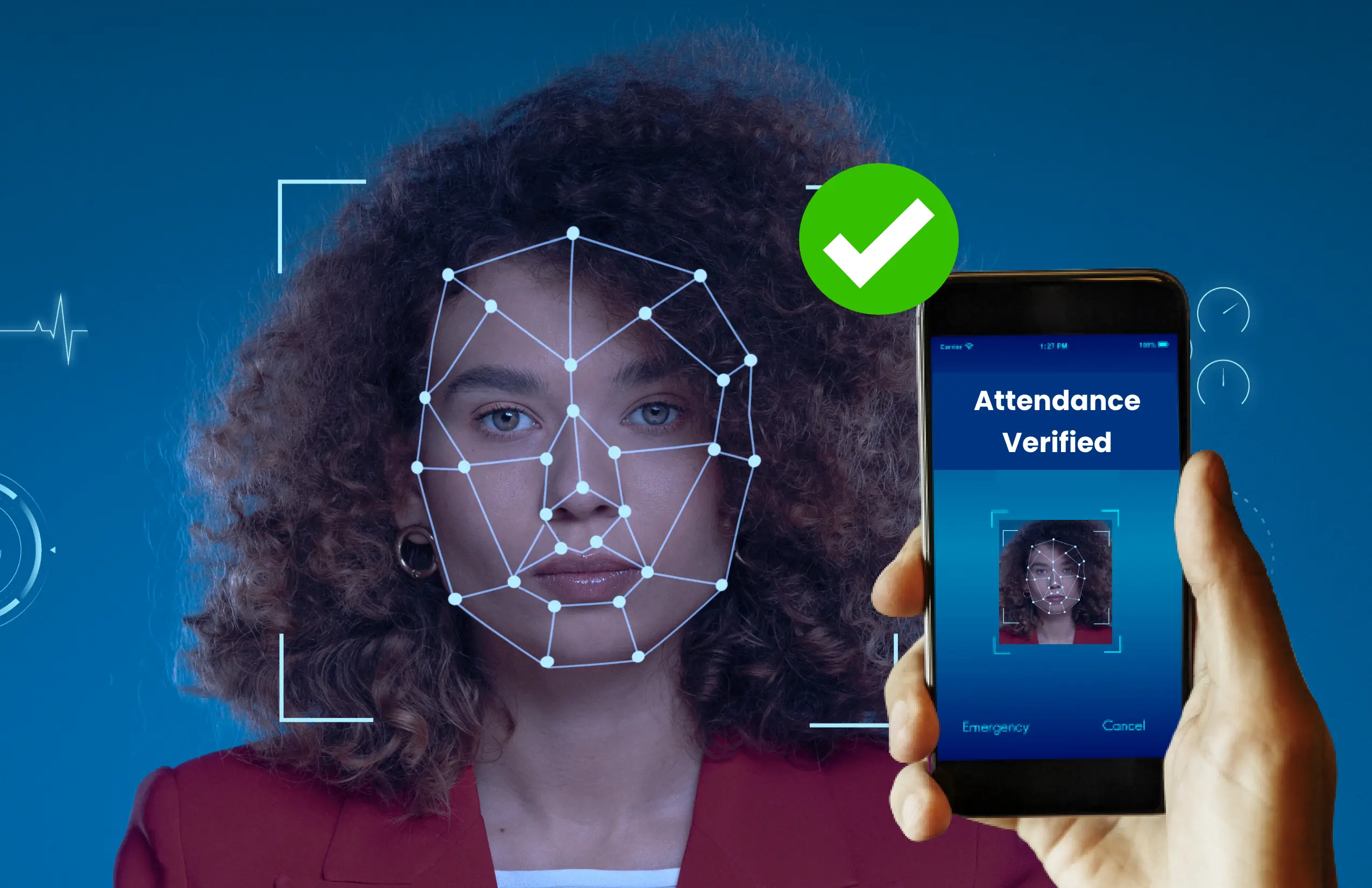
However, current fingerprint and face recognition techniques have limitations: fingerprints can be replicated, and faces can be spoofed. These shortcomings have raised consumer doubts about the security of fingerprint and face recognition.
Higher security needs drive iris technology
Compared with other methods, iris recognition offers higher security and convenience, and it has begun to attract the attention of smart lock manufacturers. Recently, DESSMANN developed a smart door lock that incorporates iris recognition. Although iris recognition has been widely used in finance and security, this is its first application in residential smart locks.
According to RUNTO senior analyst Zhai Liyuan, the iris is the ring-shaped area between the dark pupil and the white sclera, containing rich textural information including blood vessels, muscle tissue, and spots. Iris recognition typically uses up to 266 feature points, producing very high accuracy and a false acceptance rate below one in a million. The rich iris texture also makes forgery exponentially more difficult, meeting higher security requirements. Iris recognition is a contactless biometric technique, offering fast and convenient identification. The pandemic has further accelerated adoption of contactless biometrics.
Historically, iris recognition faced two major technical barriers for consumer smart locks: a narrow effective recognition distance—about 10 cm—which made it sensitive to being too close or too far; and a narrow recognition height that required precise alignment of the eye with the camera. These limitations prevented traditional iris recognition from meeting consumer-level needs.
Those two challenges have now been addressed. To extend the effective recognition distance, DESSMANN used optical lens technology to increase the range from 10 cm to 45 cm, expanding the effective recognition zone fourfold for greater user convenience. To address the narrow recognition height, DESSMANN developed an iris self-tracking recognition system that tracks the face to quickly determine vertical position, enabling the camera to automatically find the user and then use autofocus to lock onto and recognize the iris.
In addition, DESSMANN introduced dynamic matching tailored to iris characteristics, substantially improving anti-spoofing and anti-attack capabilities. Regarding concerns about higher product cost, Sang Shengwei noted that iris technology requires higher-performance hardware and software than face recognition, so the overall product cost is indeed higher, but it remains within consumers' price expectations for smart locks.