ALLPCB


Introduction
FPGA (field-programmable gate array), originally used to prototype ASICs before mask processing and volume manufacturing, has evolved into a parallel computing device comparable to GPUs. With lower component count and favorable power characteristics compared with CPUs and GPUs, FPGA-based SoC platforms and accelerator cards have become competitive in data center and edge applications.
FPGA Roles in Healthcare
Global per-capita healthcare spending continues to rise, driven by aging populations and higher expectations for care and cost. The COVID-19 pandemic highlighted the need for early detection and rapid diagnostic analysis, increasing demand for lower-cost medical instruments with greater compute capability. FPGA devices provide programmability that avoids the high one-time engineering costs associated with ASICs and removes minimum order constraints and multi-chip iteration risks. As FPGAs iterate, they enable new devices and influence treatment methods and clinical workflows.
According to Subh Bhattacharya, Xilinx categorizes FPGA applications in healthcare into three main areas: clinical environments, medical imaging, and diagnostic analytics.
1. Clinical Environments
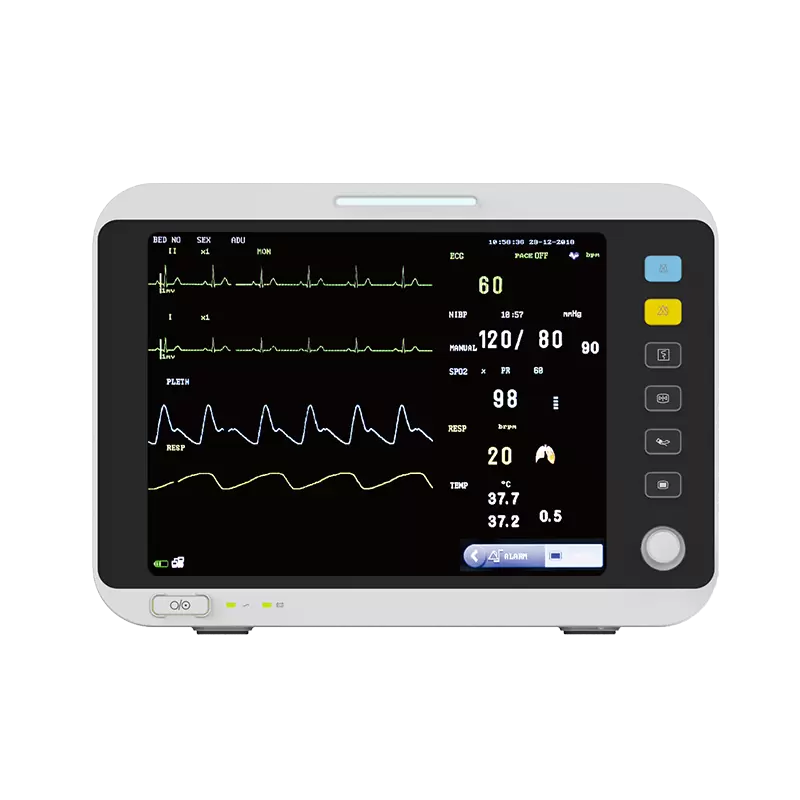
Clinical equipment is diverse and often requires highly flexible FPGA solutions. Some devices directly affect patient safety and thus demand extremely fast startup, reliability, and low latency. Other devices prioritize portability, requiring low power consumption and small form factors.
Xilinx positions the Zynq UltraScale+ MPSoC (referred to here as ZU+ MPSoC) as a highly integrated platform that combines multiple processors, programmable logic, and built-in information and functional safety features. This platform is suitable across clinical settings, from cloud to edge.
Examples of ZU+ MPSoC deployments include:
- A collaboration between Xilinx, Spline.AI, and AWS to develop medical AI using the ZCU104 as an edge device. The solution runs low-latency deep learning models for chest X-ray classification to predict conditions including COVID-19 and pneumonia, and supports custom clinical models. ZCU104 supports development with the PYNQ framework and can be extended with AWS IoT Greengrass for deployment.
- Support for Olympus endoscope core technologies, leveraging ZU+ MPSoC advantages in fast startup, low power, and low latency.
- A design for Clarius ultra-portable, high-performance ultrasound systems, using the ZU+ MPSoC on a small form-factor package with dual on-chip ARM processors and FPGA logic to achieve portability.
Zynq SoC, introduced in 2011 as the first product integrating an ARM core with FPGA fabric, was presented as a scalable processor platform for embedded applications. Integrating ARM cores, GPU capabilities, data security processors, and functional safety processors on a single chip helped Xilinx accelerate revenue growth from roughly 5–6% annually to 14–15% annually.
In addition to functional features, the ZU+ MPSoC supports medical device security needs. With over 100 million installed medical IoT devices globally and growing adoption, privacy, legacy system integration, and security are major barriers. The programmable platform allows for evolving security measures that include certification, encrypted boot, secure boot, measured boot, secure communications, and cloud-based monitoring.
2. Medical Imaging
FPGA devices are widely used in large medical imaging systems, including CT, ultrasound, X-ray, PET, and MRI scanners. Zynq UltraScale+ MPSoC applies in these use cases, while the Versal ACAP family represents a next-generation MPSoC with additional advantages for imaging.
Versal ACAP integrates multiple ARM processors, programmable logic, DSP, and AI engines that include SIMD and VLIW-like units for parallel operations. Xilinx showcased ultrasound image reconstruction and computer-aided diagnosis solutions that reduce power and thermal load, lower solution cost, extend device lifetime, and enable low-latency edge inference, improving productivity in a complex market.
3. Diagnostic Analytics
Besides SoC and FPGA devices, Xilinx offers plug-and-play Alveo accelerator cards. As PCIe-based solutions, Alveo cards reduce development time and can be used in standard servers to accelerate general CPU tasks or tasks normally run on GPUs, delivering high throughput and very low latency. Their compute flexibility accelerates many medical applications.
United Imaging, a medical imaging company based in China, found that replacing traditional GPUs with the Alveo U200 lowered cost and power consumption without sacrificing performance or project timelines.
FPGA vs. CPU & GPU
CPU and GPU designs follow the von Neumann architecture and typically use SIMD to execute memory, decoding, arithmetic, and branch logic. FPGAs define each logic unit's function at synthesis time and therefore do not require instruction fetching. CPUs and GPUs share memory and require arbitration and cache coherence mechanisms between execution units; FPGAs implement explicit communication during design, avoiding shared-memory overhead.
These architectural differences give FPGAs strong floating-point multiply performance with lower latency compared with GPUs. FPGAs combine pipeline parallelism and data parallelism, while GPUs primarily provide data parallelism.
Xilinx has integrated FPGAs into SoC architectures for acceleration and adaptability. Scalar engines include ARM application and real-time processors. The adaptive engine is the programmable FPGA fabric, and the intelligent engine currently comprises DSP resources. On the Versal ACAP platform, dedicated AI engines further accelerate and adapt workloads.
For latency-sensitive clinical applications such as endoscopy, sub-millisecond processing is required. From camera capture through pipeline processing to display, latency can be on the order of tens of microseconds. CPUs and GPUs typically cannot match FPGA latency in such scenarios, making FPGAs advantageous for these use cases. Xilinx SoC-based FPGA solutions also offer benefits in power, cost, and system integration.
While GPUs have been dominant in visualization for many years, FPGAs remain suitable where data movement is confined and predictable rather than in workloads dominated by intermittent memory transfers.
Deployment and Software
Xilinx supplies both hardware platforms and software to reduce FPGA development barriers. The Vitis unified software platform supports hardware engineers familiar with HDL, software developers using common programming languages, and algorithm engineers working with TensorFlow, Caffe, or PyTorch. This flexibility enables startups and innovators to adopt FPGA-based solutions without deep hardware design experience.
Use Cases and Market Trends
Xilinx solutions have been used to accelerate genomic analysis for critically ill newborns, to speed eye-tracking communication tablets for ICU patients, and to support clinical partners during the COVID-19 response. FPGAs have become notable contributors across these applications.
FPGA SoC solutions combine high-performance acceleration with adaptability. Integration of FPGA fabric with ARM processors, application and real-time processors, DSP, and AI engines increases compute and extensibility. FPGA intrinsic low latency aligns well with stringent real-time requirements in medical devices.
The pandemic drove increased demand for medical equipment, including devices requiring large-scale data analysis or extreme portability, both of which align with FPGA SoC characteristics. With continued improvements in energy efficiency and lower power, demand for FPGAs in medical applications is expected to persist.
Outlook
Xilinx intends to continue increasing integration and reducing package sizes for medical products while advancing heterogeneous computing to improve efficiency and performance.