ALLPCB


Telemedicine is becoming a new approach to improve quality of life, and the widespread use of wireless technologies presents significant challenges for interaction between personal health and medical devices. These challenges arise from the need for instruments with wireless capabilities to communicate with endpoint devices, and using common protocols is important to preserve data integrity. This article discusses general interoperability issues related to wireless technologies and outlines guidelines for selecting appropriate wireless standards for different scenarios.
Telemedicine use cases
Telemedicine is one of the fastest-growing interdisciplinary fields, using a variety of technologies to deliver health and medical information over wired and wireless networks both remotely and locally. It acts as a catalyst for information-service innovation in health care. Telemedicine enables new modes of communication among patients, clinicians, and other providers, allowing patients with chronic conditions to obtain higher quality of life at lower cost, for example those with cardiovascular disease, diabetes, chronic respiratory disease, or cancer. Short-range wireless connectivity remains key in health, fitness, and sports markets. Two examples illustrate the impact of wireless connectivity on telemedicine:
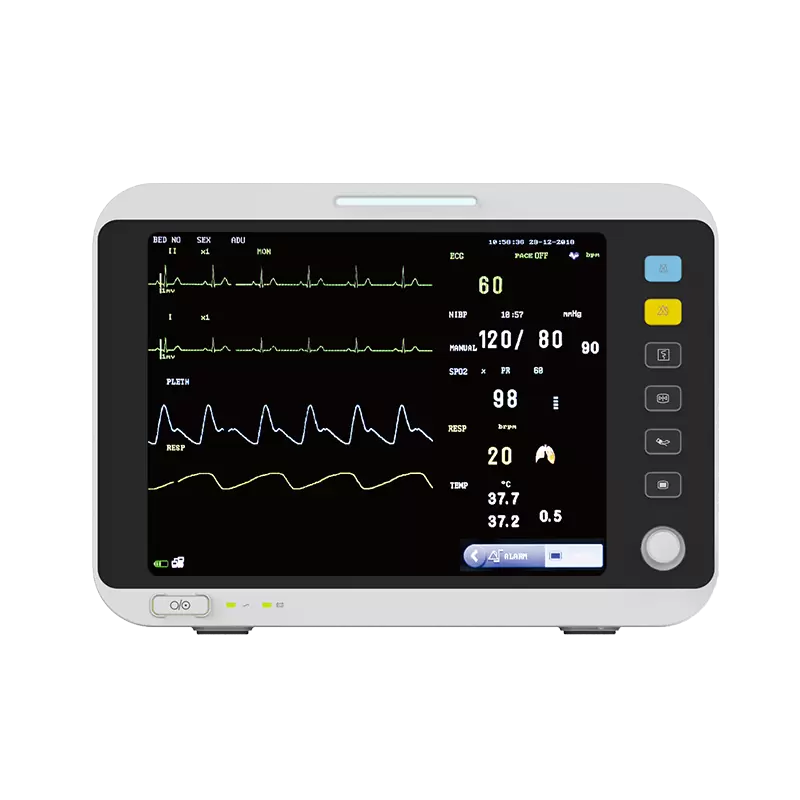
A jogger can carry multiple sensors to monitor vital signs (including heart rate, blood pressure, and SpO2), skin moisture, and other performance metrics such as running speed, calories burned, and stride length. These parameters can be collected during the run on a mobile device such as a watch or smartphone, and then downloaded or transmitted to a personal computer, coach, or clinician. After analysis, the clinician or coach can recommend training adjustments to improve endurance and performance.
In another example, an ambulance at an accident scene allows emergency medical teams to begin treatment en route to the hospital. Vital signs and diagnostic data for critically injured patients can be monitored immediately and transmitted to the hospital emergency department. Sending this information in advance helps nurses and physicians prepare for the patient’s arrival so appropriate care can begin immediately, saving valuable time and potentially saving lives.
These examples show the important role wireless connectivity plays in telemedicine by:
- enabling more accurate, frequent, and lower-cost data collection
- providing new channels of communication between patients and healthcare professionals
Continua Health Alliance
The Continua Health Alliance is a nonprofit, open industry organization of more than 230 companies that addresses interoperability issues for telehealth products and services during deployment and use. Its mission is to establish an ecosystem for personal healthcare so consumers and organizations can better manage health. The alliance does not develop new communication standards; instead, it selects existing standards and defines interoperability guidelines. Successful interoperability requires three detailed focus areas:
- chronic condition health management
- medical and wellness applications
- extension of healthy lifespan
The end-to-end system architecture defined by the alliance consists of four main components:
- personal healthcare devices: monitor basic vital signs such as blood pressure, weight, pulse, oxygen levels, and blood glucose, and send data via wired or wireless connections
- integrated manager: records data from personal health devices in an electronic health record format for access by home or hospital systems. This manager can be implemented on a smartphone, personal computer, or other dedicated device
- health service hub: a centralized location that stores and analyzes patient information. This could be a clinician’s office, a home hub, or a healthcare institution
- health record: storage for collected data, such as a personal health record (PHR) or an electronic health record (EHR)
The architecture defines four types of networks; this article focuses on the personal area network (PAN) and wide area network (WAN).
Because PANs are typically low-power (usually battery-powered), Bluetooth and ZigBee were chosen as wireless standards for Continua-compatible remote healthcare systems. Bluetooth is commonly used for connections between mobile integrated managers (for example, smartphones) and sensors or medical devices, while ZigBee is used for low-power sensor networking, such as sensors that allow patients to remain independent at home. PAN connections typically range from 1 meter to 10–20 meters, and most devices that join a PAN are battery powered.
For longer-range data transmission (greater than 30 meters) and higher bandwidth, WAN access is preferred. Continua selected W3C-based standards for WAN, enabling data transport from managers or hubs to backend software over any IP-based network. This allows solutions such as Wi?Fi and many 3G network services to carry data to backend systems.
Note that authorized use of the Continua certification mark requires adherence to the alliance’s certification process when certification is needed. If certification is not required, system or product architectures may choose other network access standards such as IEEE 802.15.4, ANT, 6LoWPAN, or proprietary radio standards in the 2.4 GHz or 900 MHz bands.
Key metrics for choosing wireless standards
Choosing a specific wired or wireless standard involves trade-offs and optimization across multiple criteria. Standards can be compared across parameters such as defined data rates, network topology, transmission distance, and so on. These parameters are the metrics used to evaluate options. Not all metrics apply to every application; the number and type of metrics depend on the endpoint use case.
Operating frequency is another important metric. Spectrum used for data transmission is regulated by national authorities. Spectrum requirements and regulations vary by region and by the intended market, for example clinical settings versus consumer markets. Network topology can affect software stack size and current consumption, especially for protocols that require full mesh topologies such as ZigBee.
Conclusion
Wireless technologies have greatly benefited telemedicine and fundamentally changed how healthcare services are delivered. Rapid development of wireless technologies, however, has created interoperability challenges among disparate wireless devices and systems, complicating the choice of the correct wireless standard. Many wireless standards are available for telemedicine applications, and engineers and developers must select the one that best fits the specific endpoint use case. Appropriate technical choices enable better outcomes for patients, clinicians, healthcare providers, and other participants in the healthcare ecosystem.