ALLPCB


Large office buildings and commercial complexes see significant daily movement of employees, clients, suppliers, and visitors, making access management more complex than for typical residential sites. Access control systems serve as the first line of defense for building security.
01 Rapid growth in the biometric access market
Advances in digital and sensor technology have reshaped the access control landscape. From traditional locks and keys to advanced biometric systems that analyze human features, the goal of this evolution is to improve security and efficiency while enhancing user experience.
Common digital access solutions for smart buildings include smart cards, biometric access control, voice recognition, and others. Smart card solutions embed a microchip and antenna in the card, allowing contactless reading of personnel or visitor information. Biometric access control systems compare and verify unique physiological and behavioral features, representing a leading approach in the access industry.
Extracted biometric features may include fingerprints, facial characteristics, iris patterns, and voiceprints. These unique data points are difficult to replicate, so biometric access systems are often regarded as highly secure solutions. Voice recognition, while less common than other biometric methods, has applications in voice assistants and mobile-based secure access.
The integration of IoT and AI has accelerated market adoption of biometric access control. IoT devices enable remote control and monitoring of access points, while AI enhances security by detecting anomalous user behavior. According to a study, implementations of biometric access systems for building entry increased by 60% over the past three years. In new constructions, biometric access installations have become a dominant method for access control.
02 Integrating face recognition into edge devices
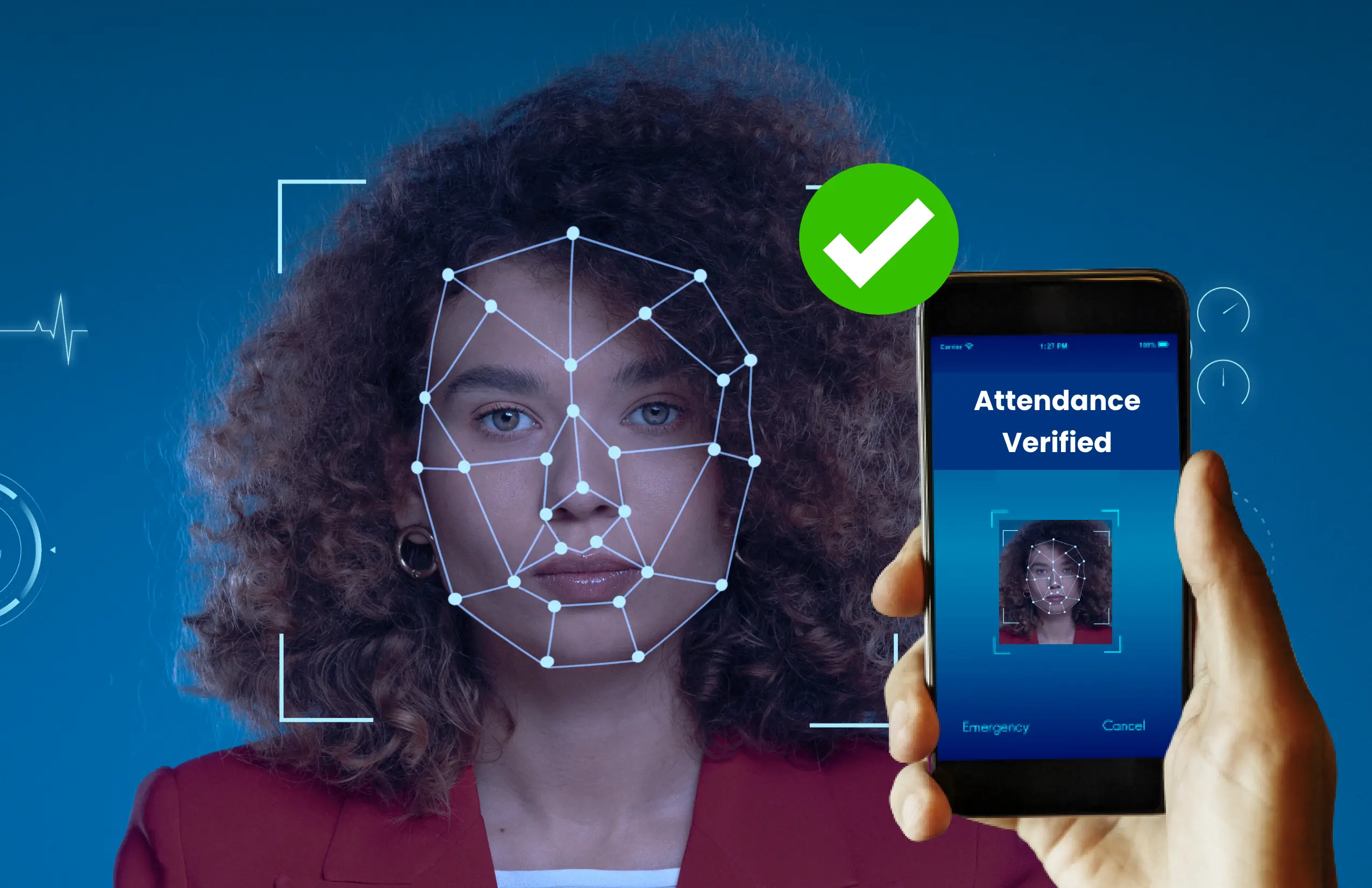
Face recognition uses AI algorithms and mathematical models to create a personal template by measuring facial variables such as nose depth and width, forehead length, and eye shape. The generated template is compared against templates in a database; a match confirms identity.
Face-based access systems can range from simple smart devices like smartphones or tablets to low-power edge and AIoT devices, and even to GPU-accelerated servers with large 2D and 3D camera arrays. Faster face recognition requires hardware platforms with neural network accelerators to improve inference performance. When building edge face-recognition devices, choose a chipset appropriate for the intended use case.
High-end NVIDIA GPUs can handle hundreds of video channels concurrently, reducing the number of required workstations. Lower-cost CPU/SoC solutions provide limited performance—around five frames per second and generally frontal-face recognition—but are inexpensive and easier to integrate into existing edge devices, making them suitable for many smart-building access deployments.
Many deployments favor edge-based face-recognition solutions because edge devices can run models locally for faster, secure, and accurate recognition while offering lower cost, flexibility, and scalability.
Face feature extraction typically uses two verification approaches:
- 1:1 frontal matching: Answers "Is this the person you say they are?" The face engine performs a 1:1 match by extracting a template from a live camera view and comparing it to the stored template for that person. For unregistered individuals or for official ID verification, the engine can extract a template from an ID document photo and perform a 1:1 match.
- 1:N face search: Answers "Who is this?" The subject's facial template is compared against a database of stored faces; a match identifies the person. Face search is commonly used in security and surveillance systems.
Cyberlink's FaceMe face-recognition technology can detect multiple faces simultaneously, count the number of people present, and process each face independently. The FaceMe SDK achieved top results in NIST FRVT 1:1 and 1:N evaluations, with a 1E-6 accuracy of 99.83%, implying a false match rate of one in a million.
FaceMe SDK is a cross-platform facial recognition engine optimized to run on a wide range of hardware configurations, from high-end workstations to low-power chipsets commonly used in IoT devices.
01 Discrete GPU configurations
GPUs provide large onboard memory, high memory bandwidth, and substantial floating-point compute capacity, which supports high-performance face recognition. For workstation requirements, FaceMe recommends NVIDIA RTX A5000 and RTX A6000 GPUs for balanced compute capability and cost. When using an NVIDIA RTX A5000 in a single workstation, FaceMe can process 489 to 727 frames per second, equivalent to handling approximately 48 to 72 concurrent 10-fps video channels per GPU.
02 CPU/SoC-based configurations
CPU/SoC chips are commonly used to embed compact face-recognition systems into smart edge devices. These solutions are cost-effective and straightforward to deploy, and several FaceMe models can run on AIoT devices built with such chipsets.
NXP's i.MX8M Plus is an example of an application processor for this use case. The SoC integrates a neural processing unit (NPU) to enhance AI performance. Inside the i.MX 8M Plus are four Arm Cortex-A53 cores, and the NPU enables up to 2.3 TOPS of inference throughput. An 800 MHz Cortex-M7 core handles real-time control tasks. The dual image signal processors and dual camera interfaces support advanced vision system designs.
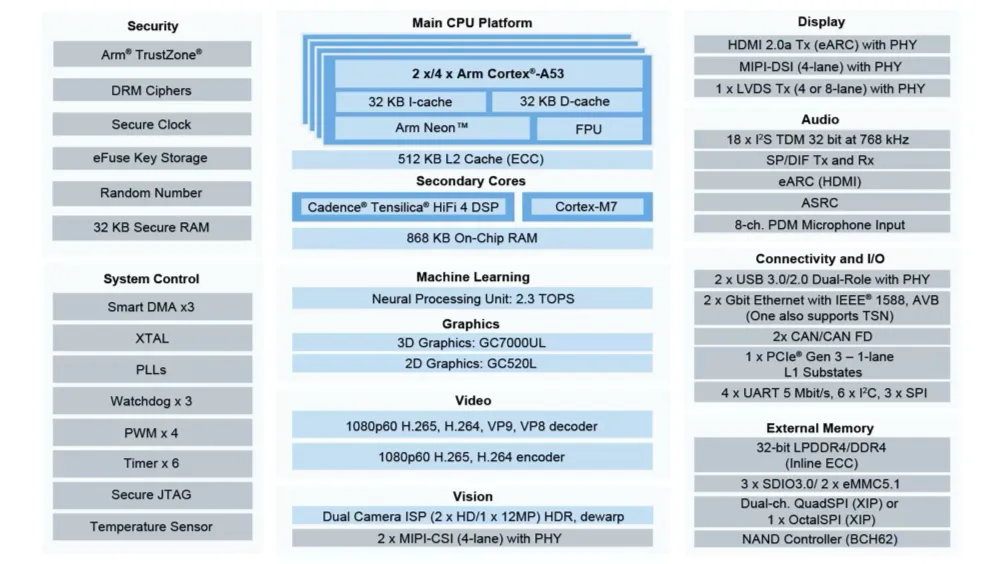
Figure: i.MX8M Plus application processor
03 Market outlook for smart access control
Independent market research reports estimate near-double-digit annual growth for the access control market, with much of the demand driven by smart-building investments.
Memoori's analysis estimated the building IoT market at around $53.5 billion in 2022 and forecasted growth to $96.5 billion by 2028 at a 10.33% compound annual growth rate (CAGR) from 2022 to 2028.
Future Market Insights reported a global smart-building access-control market value of $11.8 billion in 2023 and projected a 14% CAGR for 2023–2033. These positive market forecasts reflect rapid development in digital access solutions.
In a fast-moving world, security and convenience are essential. Access control systems have progressed from basic locks and keys to complex biometric systems that analyze unique human features. This evolution enhances building security and intelligence while improving user experience.
Digital access systems that integrate multiple advanced technologies are expected to deliver more secure, efficient, and user-friendly access control environments and to further advance building intelligence.