ALLPCB


Touchscreen object recognition technologies
The following are several common touchscreen object recognition technologies:
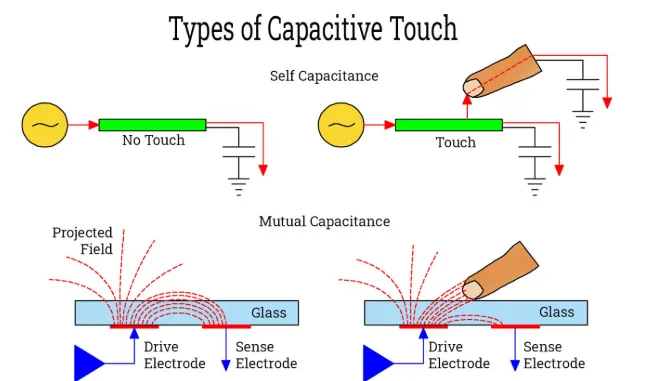
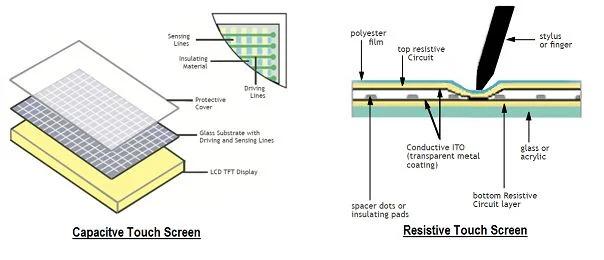
1. Capacitive touchscreens: Capacitive touchscreens detect and track touch objects by sensing changes in the electric field. Common types include surface capacitive and projected capacitive touchscreens.
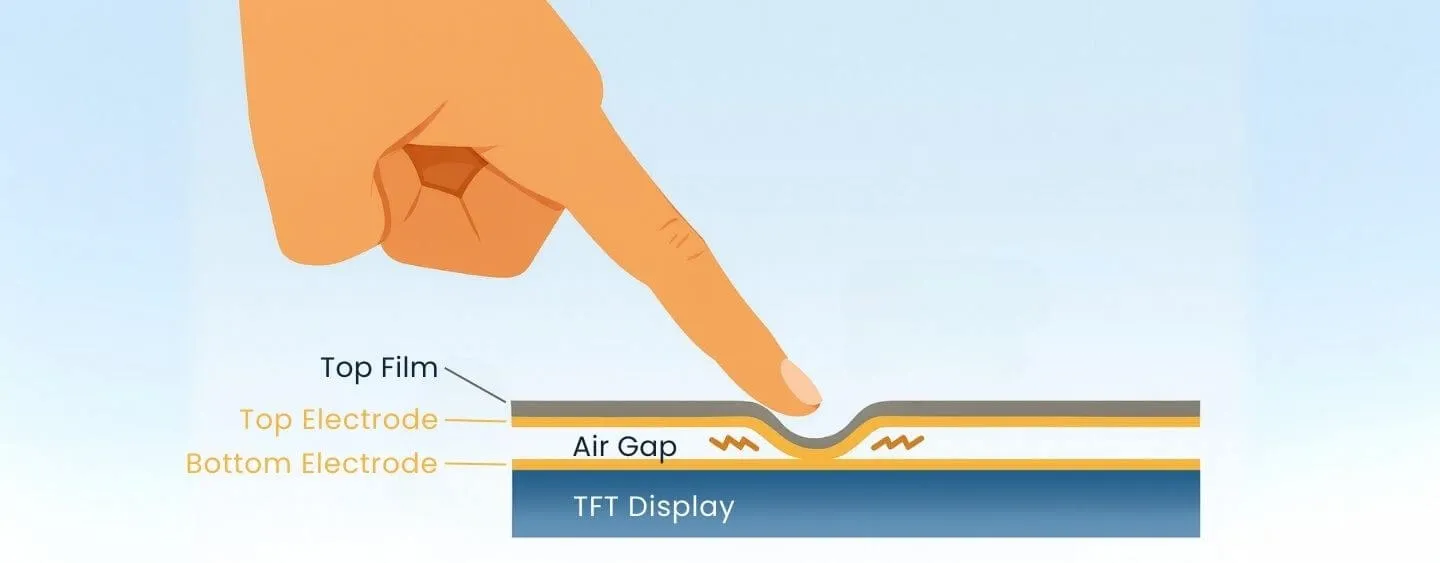
2. Resistive touchscreens: Resistive touchscreens detect pressure by contact between two conductive layers, thereby identifying the touch location. It can detect multi-point touch.
3. Surface acoustic wave touchscreens: Surface acoustic wave touchscreens use sensors to generate acoustic waves on the screen and identify touch location by detecting reflections of those waves.
4. Laser grid touchscreens: Laser grid touchscreens use infrared or laser beams to form a visible optical grid. When a touch object contacts the grid, its position and movement are detected and tracked.
5. Inductive touchscreens: Inductive touchscreens use electromagnetic induction. An object carrying electric current placed on the touchscreen is detected by sensing changes in current to determine the touch location.
Different touchscreen technologies are suited to different applications and device types, each with its own advantages and limitations. In practical use, choose the appropriate touchscreen technology based on requirements and budget.
How to distinguish capacitive and resistive screens
There are several methods to distinguish capacitive screens from resistive screens:
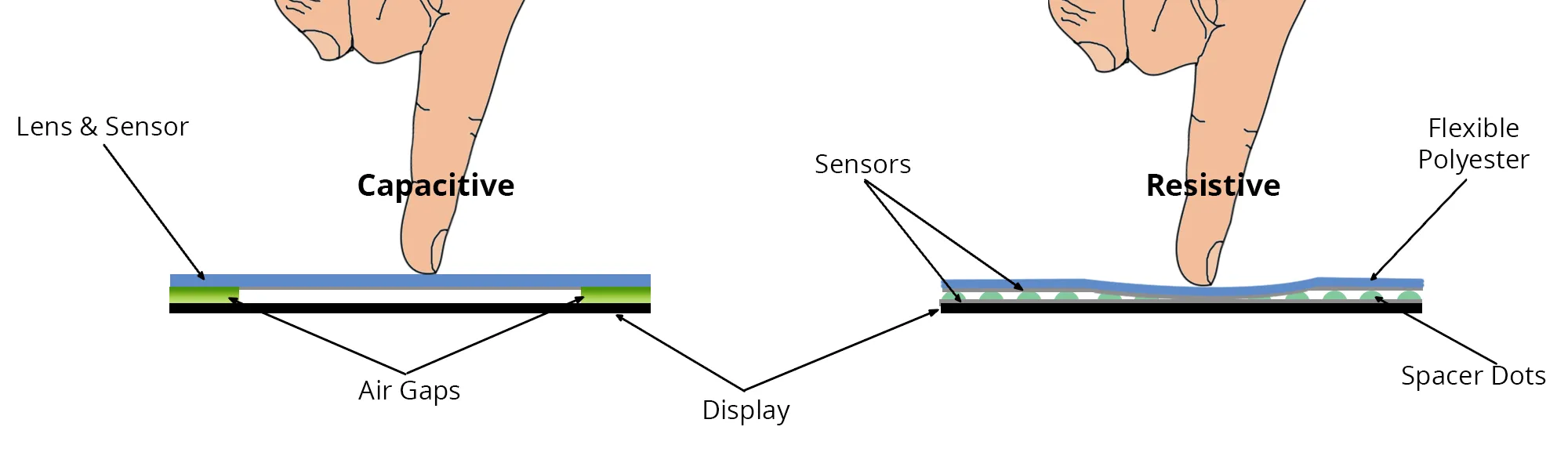
1. Working principle: Capacitive screens use capacitance sensing, relying on changes in capacitance between the human body or other charged object and the screen to detect touch position. Resistive screens rely on pressure sensing, where the touch pressure causes two conductive layers to contact and determine the touch position.
2. Multi-touch: Capacitive screens typically support multi-touch and can recognize multiple touch points and related gestures. Resistive screens, without special techniques, can only perform single-point touch, i.e., one position at a time.
3. Transmittance: Generally, capacitive screens have better transmittance than resistive screens. A capacitive screen more accurately transmits color and brightness information, while a resistive screen may have some visual degradation.
4. Sensitivity: Capacitive screens have higher sensitivity, can respond quickly to touch actions, and support more gesture operations. Resistive screens are comparatively slower in response and lower in sensitivity.
How to test a touchscreen
Perform touchscreen testing using the following steps:
1. Touch point test: Tap or swipe randomly on the screen and observe whether the screen responds accurately to touch input. Test single-point and multi-point touch where applicable, for example pinch-to-zoom or rotate gestures, to ensure all touch points are correctly recognized and tracked.
2. Edge test: Check whether the screen edges respond accurately to touch. Gently swipe along the screen edge and observe whether the screen precisely captures the swipe action.
3. Response speed test: Test the touchscreen response speed. Quickly swipe a finger across the screen and observe whether the screen tracks the finger movement in real time without noticeable delay.
4. Touch accuracy test: Use small icons or buttons to perform precise tap tests and observe whether the touchscreen accurately captures the tap location. Try tapping targets of different sizes to ensure the touchscreen provides accurate touch precision in different scenarios.
5. Multi-touch test: If the device supports multi-touch, perform multi-touch testing. Try using multiple fingers simultaneously to tap, swipe, or pinch, ensuring the touchscreen correctly recognizes and processes multi-touch input.
6. Repeat tests: Repeat the above test steps to ensure stability and reliability of the touchscreen during prolonged use or continuous touch operations.