ALLPCB


Introduction
The metaverse has cooled somewhat in public discussion, but related technologies continue to advance. XR (Extended Reality) is considered an important gateway to the metaverse and a likely candidate for the next generation of computing platforms after the personal computer and the smartphone. In the early stages of development, however, XR devices have not yet produced a breakout consumer hit, and products such as VR, AR, and MR have not achieved widespread market adoption.
The often-confused XR family
XR technologies are a key carrier for metaverse scenarios. Within the XR family, three frequently confused members are VR, AR, and MR.
XR (Extended Reality) is an umbrella term that describes immersive environments combining computer graphics and wearable devices to enable human-machine interaction across virtual and real worlds. It encompasses representative forms such as AR, VR, and MR. As the technology matures, VR, AR, and MR may converge from differentiated product forms toward more integrated solutions.
Definitions: VR, AR, MR
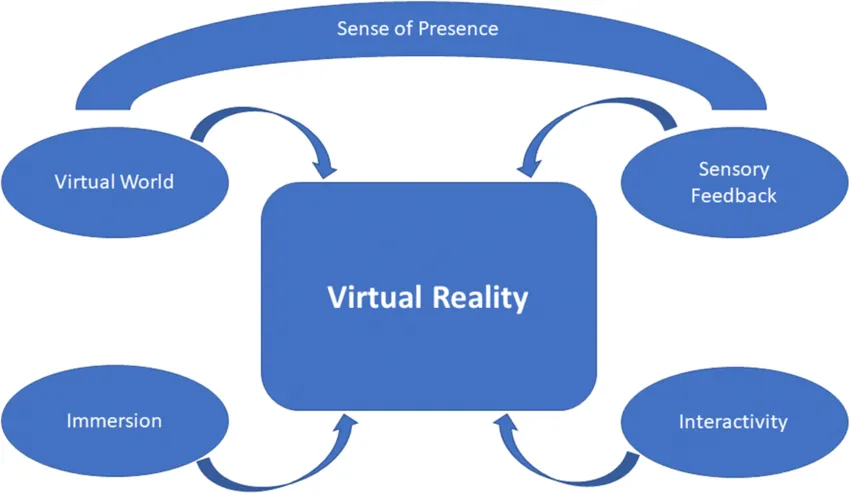
VR (Virtual Reality) produces a fully virtual digital environment. AR (Augmented Reality) overlays digital content on top of the unaided view of the real world. MR (Mixed Reality) blends digital information with the real environment, combining elements of VR and AR by adding virtual visual information into the physical world so that users perceive virtual elements as part of the real scene, enabling interactive fusion of virtual and real objects.
VR, AR, MR are all part of XR
Since the birth of computing, systems have trended toward miniaturization, intelligence, and personalization. Hardware evolved from mainframes to minicomputers, from personal computers to smartphones, and human-machine interaction evolved from punched cards to keyboards, mice, and touchscreens. Computers are increasingly an integral part of daily work and life.
A new wave of technology represented by 5G mobile communications and AI is giving rise to a new computing paradigm: spatial computing. Building on personal and mobile computing, spatial computing integrates physical space into the computing environment, freeing interaction from screen constraints and surrounding users with stereoscopic interfaces that enable real-time interaction among people, devices, and environments. XR is one of the representative technologies changing how humans interact with computers and is considered a strong candidate for spatial computing platforms. According to IDC market data, global XR consumer spending was USD 13.8 billion in 2022 and is projected to grow to USD 50.9 billion in four years, a compound annual growth rate close to 40%.
What should XR chips look like?
Base compute chips are critical for XR devices to perform control and data processing. Although XR devices come in various form factors, they all require a powerful chip. Current XR device chip requirements do not depart entirely from conventional smartphone computing, yet they also introduce new computational characteristics. Similar to automotive cockpit chips, many current XR devices reuse smartphone chip platforms, but development is expected to move toward dedicated XR chips. These dedicated chips must improve data processing and power management to support multi-sensor data fusion, high-quality image processing, multimodal human-machine interaction, and comfortable long-duration wear.
Dr. He Ning, senior vice president and CTO at Yiswei Computing, noted that the XR industry is still in its early stages and user experience has significant room for improvement. General-purpose chips cannot fully meet XR device requirements, creating demand for chips and solutions tailored to XR-specific needs. Advances in spatial computing, mobile communications, and AI, together with improvements in chip performance, efficiency, and algorithm support, will accelerate XR device experience upgrades and scaling, supporting higher shipments and ecosystem development.