ALLPCB


What is the current state of the XR market? Compared with the early XR boom, have there been technical breakthroughs? Is the XR market on the verge of rapid expansion? What other factors are constraining the industry?
Core viewpoints: technology, value, and industry
1. Technical development
Various AR technologies have reached a certain level of maturity, but fundamental breakthroughs at the base layer are still in progress.
Specifically, display, 5G communications, and multimodal interaction technologies can already meet the needs of low-requirement AR applications such as remote communication and audio-visual entertainment.
Near-eye display and other base technologies, along with full-device design, will be key for the next stage of AR development. At the same time, the downstream ecosystem will be an important opportunity for the industry to enter a new growth phase.
2. Current scenarios and deployment pace
In terms of application value, AR has relatively mature use cases in manufacturing, healthcare, and education, and its technical value is recognized to some extent. In the consumer space, AR has produced multiple high-profile applications in gaming and social use.
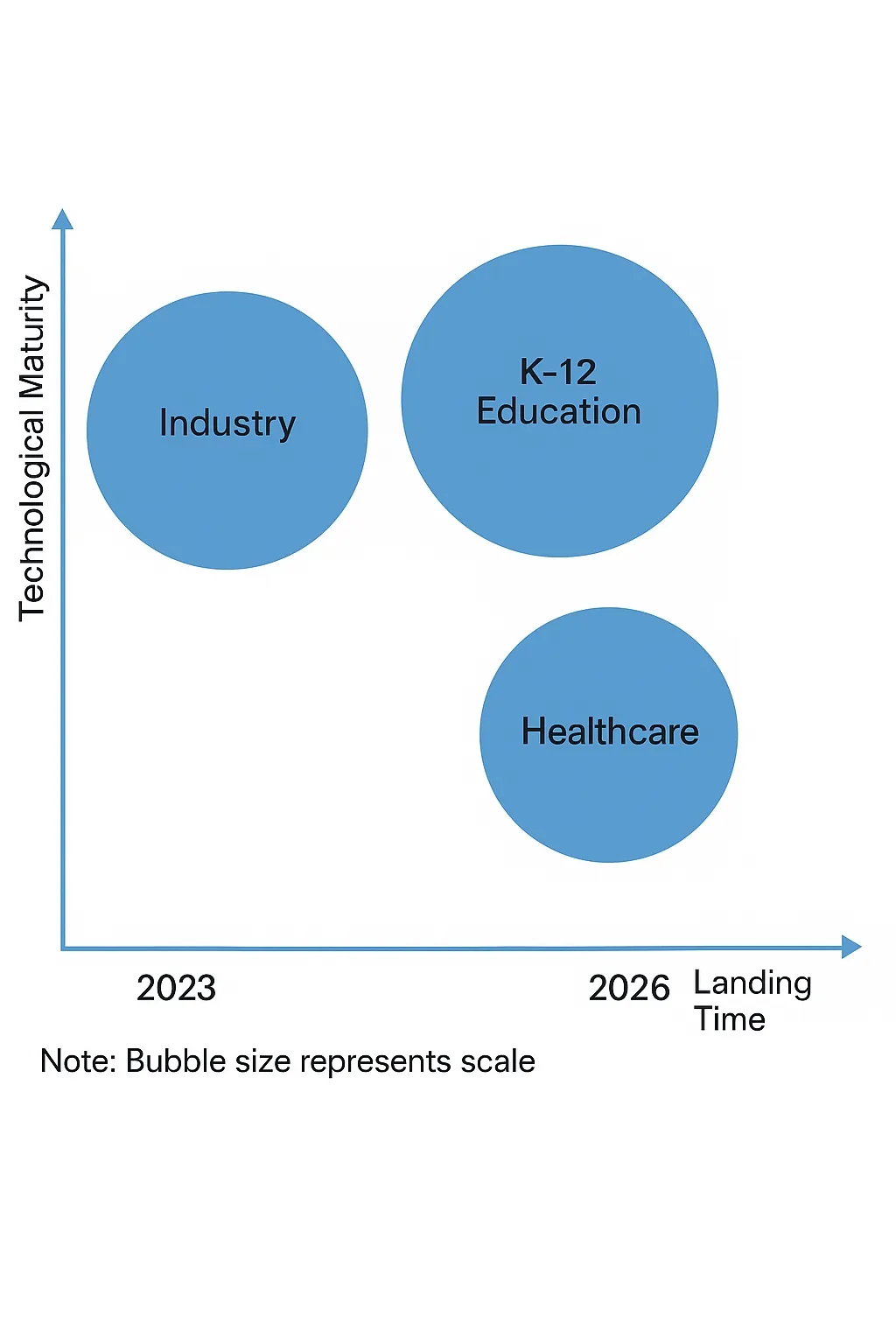
For enterprise applications, the likely order of large-scale deployment is: industrial production — broad education (including instruction and exhibition navigation) — healthcare.
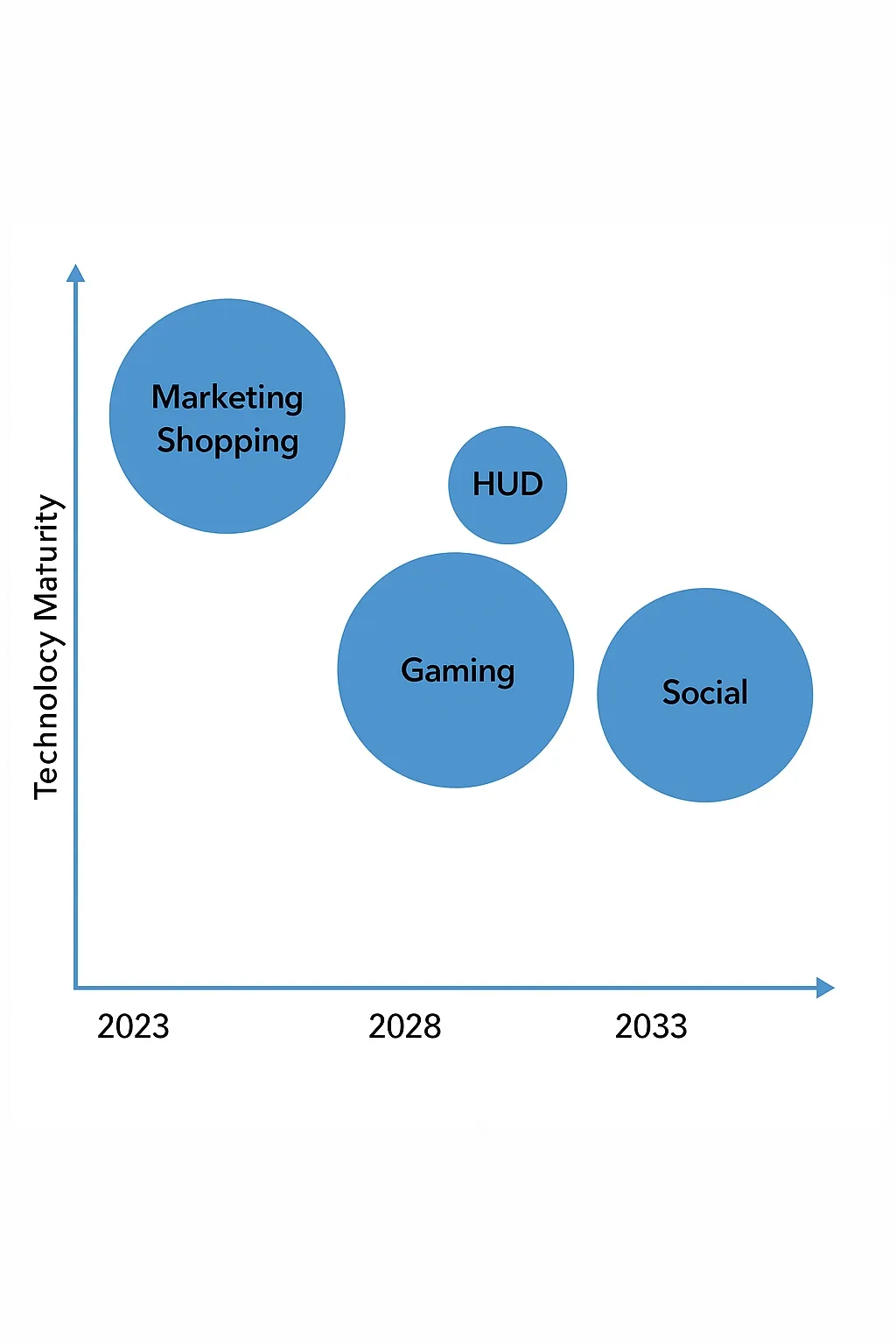
For consumer commercial deployment, the likely order is: AR marketing/shopping — AR gaming — AR-HUD — AR social.
3. Industry stage and market size
Since Google launched Google Glass in 2012, AR technology has moved from an initial phase into a steady growth phase.
In the consumer market (To C), consumers currently lack strong purchase incentives for AR glasses, so building a downstream ecosystem is an important means to drive consumer adoption.
In the enterprise market (To B), industrial scenarios show the strongest and most mature demand for AR technology, followed by exhibition guidance and education, which have lower technical requirements and focus on user experience. In healthcare, the most widely used scenario today is remote medical services, which is among AR’s most advanced application areas.
Analysts expect that as products and technologies are iteratively optimized, AR glasses sales will gradually increase and may replace devices such as smartwatches, earphones, tablets, projectors, and smartphones in some use cases. In sports scenarios, AR glasses could replace outdoor cycling glasses, swim goggles, and ski goggles in high-end segments.
Market scale:
Currently, over 80% of AR shipments are To B products. A significant increase in AR product shipments still depends on consumer products. As products and supporting ecosystems mature, AR is expected to rapidly expand in the consumer market and could mirror or exceed the current market penetration pattern of VR headsets.
It is estimated that by 2026 the consumer AR market will reach approximately RMB 15 billion.
Waveguide optics plus Micro-LED manufacturing processes and full-color display will become feasible, and increased chip compute will support AR functions such as heads-up information, subtitles, and simple wearable media playback. AR cycling glasses, AR swim goggles, and AR ski goggles are expected to mature and occupy premium market segments.
By 2028, the consumer AR market is expected to reach RMB 46 billion.
AR glasses will gradually mature, with reduced weight and volume and integrated long-battery-life designs becoming mainstream. The downstream ecosystem will improve, and consumer applications such as AR gaming, AR video, and AR shopping will mature, increasing AR glasses penetration.
By 2033, the consumer AR market is expected to reach RMB 120 billion.
Further maturation of chips, batteries, and interaction devices could make AR glasses a viable successor to smartphones as a personal computing terminal.