ALLPCB


In the fast-evolving world of medical technology, surgical robots are revolutionizing healthcare with precision and efficiency. At the core of these advanced systems lies the printed circuit board (PCB), a critical component that must be designed and assembled with utmost care. If you're searching for insights on surgical robot PCB assembly, you've come to the right place. This blog dives deep into designing for manufacturability (DFM) and explores key techniques for creating reliable, high-performance PCBs for surgical robots. We'll cover everything from the PCB manufacturing process to medical device PCB soldering and automated PCB assembly, ensuring you have actionable knowledge to optimize your designs.
Why Designing for Manufacturability Matters in Surgical Robot PCBs
Designing for manufacturability is a cornerstone of creating PCBs for surgical robots. DFM focuses on simplifying the production process while maintaining high quality and functionality. In the context of medical devices, where reliability can be a matter of life and death, DFM ensures that PCBs are not only functional but also cost-effective and easy to produce at scale.
Surgical robots operate in high-stakes environments, requiring PCBs to handle complex tasks like real-time data processing and precise motor control. A poorly designed PCB can lead to signal interference, overheating, or even complete system failure. By prioritizing DFM, engineers can minimize manufacturing errors, reduce production costs, and ensure compliance with strict medical standards like ISO 13485.

Key Challenges in Surgical Robot PCB Assembly
Before diving into specific techniques, let’s explore the unique challenges of surgical robot PCB assembly. These challenges stem from the demanding nature of medical applications and the need for precision in every step of the PCB manufacturing process.
- Miniaturization: Surgical robots often require compact designs to fit within small, intricate systems. This means PCBs must be densely populated with components, leaving little room for error in placement or soldering.
- High Reliability: Any failure in a surgical robot can have catastrophic consequences. PCBs must withstand rigorous testing and maintain performance under stress, such as temperature fluctuations or mechanical vibrations.
- Signal Integrity: With high-speed data transmission critical for real-time control, maintaining signal integrity is a must. Engineers often target impedance values around 50 ohms for high-speed signals to prevent data loss or delays.
- Regulatory Compliance: Medical PCBs must meet stringent standards for safety and performance, requiring thorough documentation and testing at every stage of production.
Understanding these challenges sets the stage for implementing effective DFM strategies tailored to medical PCB SMT (Surface Mount Technology) and assembly processes.
Core Techniques for Surgical Robot PCB Assembly
Let’s break down the essential techniques for designing and assembling PCBs for surgical robots, focusing on manufacturability and reliability. These approaches ensure that the final product meets the high standards of medical applications.
1. Optimize PCB Layout for Manufacturability
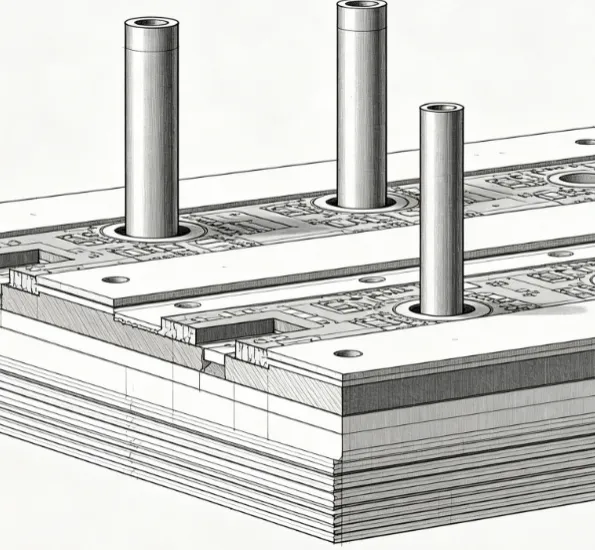
The foundation of a successful surgical robot PCB assembly lies in the layout design. A well-thought-out layout reduces manufacturing errors and improves performance. Here are some key tips:
- Component Placement: Place components logically to minimize trace lengths, especially for high-speed signals. For example, keep critical components like microcontrollers close to power sources to reduce noise.
- Trace Width and Spacing: Use appropriate trace widths to handle current loads without overheating. For power traces, a width of 20-30 mils is often recommended for currents around 1-2 amps, depending on the copper thickness (typically 1 oz or 2 oz).
- Avoid Acute Angles: Sharp angles in traces can cause signal reflection or manufacturing defects. Opt for 45-degree angles or curves to maintain signal integrity.
- Panelization: Design the PCB to fit efficiently on a manufacturing panel, reducing waste and lowering production costs.
By focusing on these layout principles, you can streamline the PCB manufacturing process and avoid costly redesigns.
2. Leverage Automated PCB Assembly for Precision
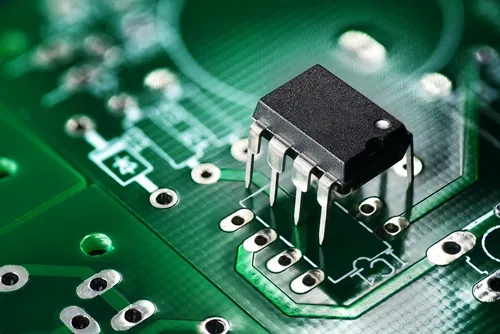
Automated PCB assembly is a game-changer for medical devices, offering unmatched precision and consistency. In surgical robot production, where even a 0.1mm misalignment can cause issues, automation is essential.
- Pick-and-Place Machines: These machines can place thousands of components per hour with accuracy down to 0.01mm, ensuring perfect alignment for medical PCB SMT processes.
- Automated Optical Inspection (AOI): AOI systems use high-resolution cameras to detect defects like misaligned components or solder bridges, ensuring quality control during assembly.
- Robotic Soldering: Automated soldering robots provide consistent solder joints, reducing the risk of human error. This is especially critical for fine-pitch components with lead spacing as small as 0.4mm.
Automation not only improves quality but also speeds up production, allowing manufacturers to meet tight deadlines for medical device rollouts.
3. Master Medical Device PCB Soldering Techniques
Soldering is a critical step in medical device PCB soldering, as poor solder joints can lead to electrical failures or intermittent connections. Here are best practices tailored to surgical robot PCBs:
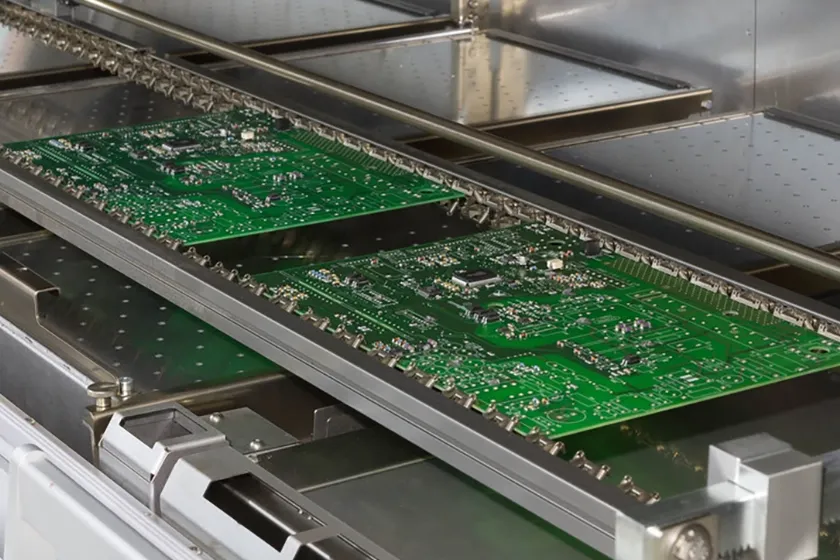
- Reflow Soldering for SMT: Use reflow soldering for surface mount components, ensuring precise temperature profiles (typically peaking at 245°C for lead-free solder) to avoid thermal damage. A well-controlled reflow process prevents issues like tombstoning, where components lift off the board.
- Wave Soldering for Through-Hole: For through-hole components, wave soldering offers efficiency. Maintain solder bath temperatures around 260°C to ensure strong, reliable joints.
- Lead-Free Solder: Medical devices often require lead-free solder to comply with RoHS standards. SAC305 (Sn96.5Ag3.0Cu0.5) is a common alloy, offering good mechanical strength and thermal resistance.
- Solder Paste Inspection (SPI): Use SPI machines to verify the volume and alignment of solder paste before reflow, reducing defects by up to 70% in high-density designs.
Proper soldering techniques are vital for ensuring long-term reliability, especially in environments where surgical robots face constant use and sterilization processes.
4. Material Selection for Durability and Compliance
The choice of materials in surgical robot PCB assembly directly impacts performance and compliance with medical standards. Here’s what to consider:
- Substrate Material: FR-4 is a common choice for its cost-effectiveness and thermal stability, with a glass transition temperature (Tg) of around 130-140°C. For high-frequency applications, consider materials like Rogers RO4350B with lower dielectric constants (around 3.48).
- Copper Thickness: Opt for 1 oz or 2 oz copper for standard designs, but increase to 3 oz for high-current applications to prevent overheating.
- Surface Finish: Electroless Nickel Immersion Gold (ENIG) is preferred for medical PCBs due to its corrosion resistance and excellent solderability, ensuring reliable connections over time.
Selecting the right materials not only enhances performance but also ensures the PCB can withstand the harsh conditions of medical environments.
5. Testing and Validation for Reliability
Testing is non-negotiable in the PCB manufacturing process for surgical robots. Comprehensive validation ensures that the PCB meets performance and safety standards before deployment.
- In-Circuit Testing (ICT): ICT checks for shorts, opens, and component functionality, identifying up to 90% of manufacturing defects.
- Functional Testing: Simulate real-world conditions to verify the PCB’s performance in a surgical robot system, ensuring signal speeds meet requirements (e.g., data rates of 1-5 Gbps for high-speed interfaces).
- Environmental Testing: Subject the PCB to temperature cycling (e.g., -40°C to 85°C) and humidity tests to confirm durability under stress.
- Compliance Testing: Verify adherence to medical standards like IPC-6012 Class 3 for high-reliability electronics, ensuring the PCB is safe for use in critical applications.
Robust testing protocols build confidence in the PCB’s ability to perform flawlessly in life-critical scenarios.
Benefits of DFM in Surgical Robot PCB Assembly
Implementing DFM principles in surgical robot PCB assembly offers several advantages that directly impact production and performance:
- Cost Reduction: Optimized designs reduce material waste and rework, cutting manufacturing costs by up to 20-30% in some cases.
- Faster Time-to-Market: Streamlined processes and automated PCB assembly shorten production cycles, allowing quicker deployment of surgical robots.
- Improved Quality: DFM minimizes errors during assembly, resulting in fewer defects and higher reliability in the field.
- Scalability: A manufacturable design supports high-volume production without sacrificing quality, essential for meeting growing demand in the medical sector.
Partnering with Experts for Surgical Robot PCB Assembly
Navigating the complexities of medical PCB SMT and assembly requires expertise and precision. Collaborating with a trusted manufacturing partner can make all the difference. Look for a provider with experience in medical device production, a commitment to quality, and advanced capabilities in automated PCB assembly. Such a partnership ensures that your PCBs are built to the highest standards, from design to final testing.
Conclusion: Building the Future of Surgical Robotics with DFM
Designing for manufacturability is the key to unlocking the full potential of surgical robot PCB assembly. By focusing on optimized layouts, leveraging automation, mastering medical device PCB soldering, and prioritizing rigorous testing, engineers can create PCBs that power the next generation of surgical robots. These techniques not only enhance reliability and performance but also ensure compliance with the stringent demands of the medical industry.
Whether you're refining the PCB manufacturing process or exploring innovative assembly methods, the principles outlined in this guide provide a roadmap for success. Embrace DFM, and build PCBs that drive precision and innovation in surgical robotics.