ALLPCB


What is radar?
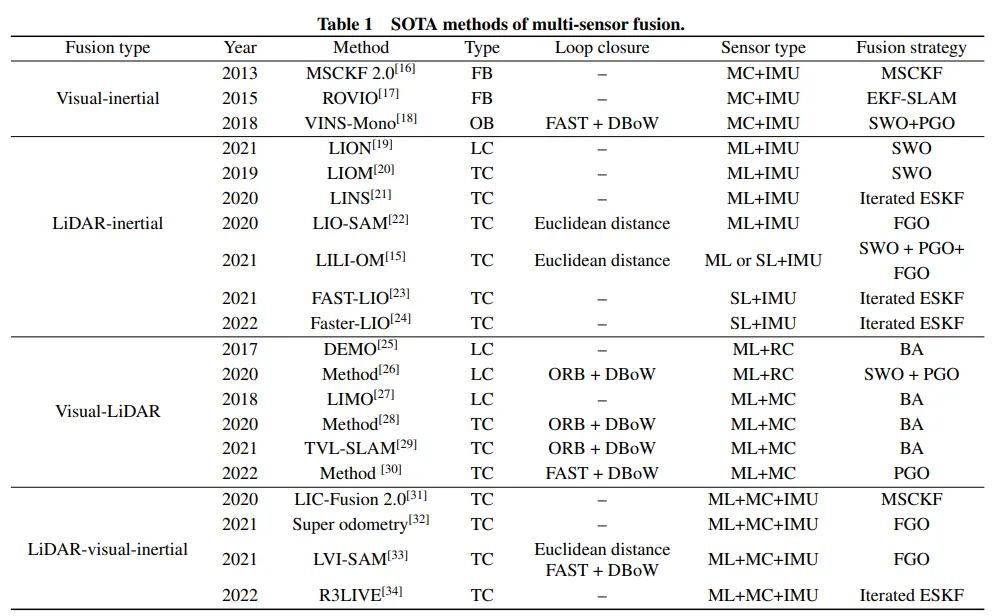
Radar is an English acronym for Radio Detection and Ranging. In essence, radar uses radio waves to detect targets and measure distance. With advancing technology, radar functions have expanded beyond basic detection and ranging to include speed measurement, angle measurement, target recognition, target imaging, and battlefield reconnaissance. Any sensing technique that uses electromagnetic waves for detection is generally referred to as radar.
Radars operate using radio waves, a widely used portion of the electromagnetic spectrum. The broader electromagnetic spectrum also includes infrared, visible light, ultraviolet, X-rays, and gamma rays.
Within the radio portion of the spectrum, wavelengths are commonly categorized as long wave, short wave, meter wave, centimeter wave, millimeter wave, and submillimeter wave. Millimeter-wave radar uses wavelengths from 10 mm to 1 mm, corresponding to frequencies from 30 GHz to 300 GHz. Other radar bands include centimeter-wave and meter-wave radars.
At a basic level, a radar system works as follows: a transmitter generates a radar signal that is radiated by an antenna. A target intercepts and reflects part of the signal. The radar receiver collects the returned echo via the antenna, amplifies and filters the signal, and forwards it to signal and data processing units for analysis and display.
Radars can be classified in several ways. By signal type they include pulse radar, continuous-wave (CW) radar, and frequency-modulated continuous-wave (FMCW) radar. By application they are divided into military and civilian radars. By antenna configuration they include monostatic, bistatic, and electronically scanned array (phased array) radars. By carrier or operating band they include centimeter-wave radar, millimeter-wave radar, lidar, and wideband radar. Different radar types have different capabilities and application scenarios.
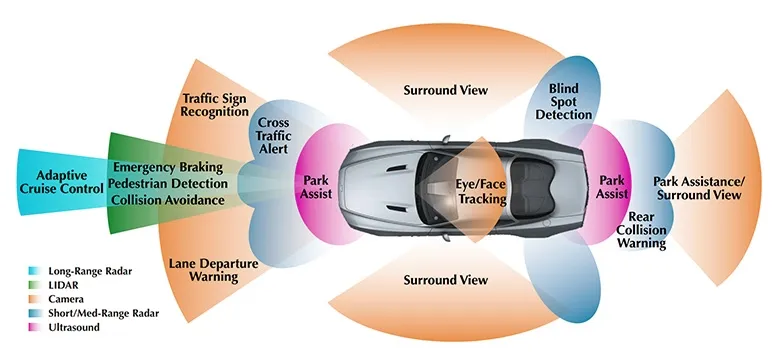
In automotive sensing architectures, radar is one of several key sensors alongside lidar and ultrasonic sensors. Vehicle sensing suites can combine sensors in various configurations, for example using one high-precision lidar, several millimeter-wave radars, and multiple ultrasonic sensors to support advanced driver assistance and autonomous driving features.