 ALLPCB


Introduction
Surface finishes form a protective layer over the exposed copper on printed circuit boards, preventing oxidation and enhancing solder joint reliability during assembly processes. In thin PCBs, where board thickness is minimized to meet space constraints in compact electronics, the selection of an appropriate thin PCB surface finish gains paramount importance. These boards face unique challenges such as increased warpage risk from thermal expansion mismatches and the need for exceptional planarity to support fine-pitch components. Poor finish choices can lead to assembly defects, signal integrity issues, or premature failures in high-reliability applications. Engineers must evaluate finishes based on assembly methods, environmental exposure, and performance requirements aligned with IPC standards. This guide delves into HASL, ENIG, immersion silver, and OSP, providing factory-driven insights for optimal selection in thin PCB designs.
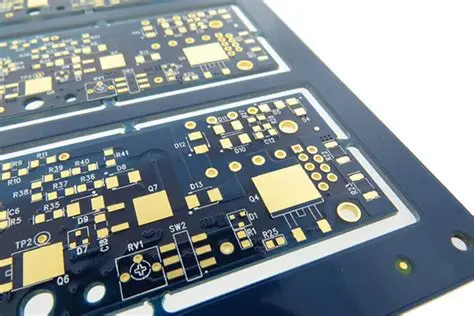
What Are PCB Surface Finishes and Why Do They Matter for Thin PCBs?
PCB surface finishes replace the bare copper on pads and traces after etching, serving as a solderable, corrosion-resistant barrier until components are attached. They must accommodate multiple reflow soldering cycles, electrical testing probes, and long-term storage without degrading. For thin PCBs, the stakes are higher because reduced material thickness amplifies mechanical stresses during manufacturing and operation. Warpage becomes a primary concern, as uneven finishes can exacerbate bowing under heat, violating planarity tolerances outlined in IPC-6012E for rigid printed boards. A suitable thin PCB surface finish ensures coplanarity, vital for surface-mount technology (SMT) pick-and-place accuracy and wire bonding in advanced packages. Factory experience shows that mismatched finishes lead to higher reject rates in quality control, underscoring the need for application-specific choices.
The relevance extends to electrical performance, where finishes influence impedance control and contact resistance in high-speed circuits. Thin boards often integrate into multilayer stacks with tight tolerances, making finish uniformity essential for via reliability and signal propagation. Standards like IPC-A-600K guide acceptability criteria, emphasizing solderability and appearance post-fabrication. Engineers benefit from understanding how each finish interacts with thin substrates, balancing cost, shelf life, and assembly compatibility.
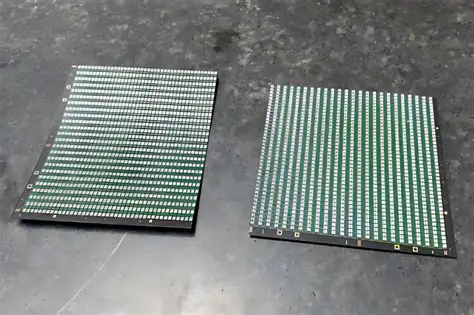
Overview of Common Surface Finishes for Thin PCBs
Several surface finishes dominate PCB manufacturing, each with distinct deposition methods and characteristics suited to varying demands. Hot Air Solder Leveling (HASL) involves dipping the board in molten solder followed by air knives to remove excess, creating a tin-lead or lead-free coating. Electroless Nickel Immersion Gold (ENIG) deposits a nickel barrier layer topped with thin gold via chemical displacement, as detailed in IPC-4552 specifications. Immersion silver applies a silver layer directly onto copper through immersion plating, offering high conductivity. Organic Solderability Preservative (OSP) coats copper with an organic film to inhibit oxidation temporarily. For thin PCBs, flatness and thermal stability dictate preference over traditional thicker-board options.
HASL for Thin PCBs
HASL remains a cost-effective choice for many applications due to its robust solderability and long shelf life exceeding one year. The process provides a thick, self-leveling solder deposit that withstands multiple handling steps in assembly lines. However, on thin PCBs, HASL introduces uneven topography from the dipping and leveling action, potentially causing pad non-coplanarity that hinders fine-pitch SMT. This finish suits through-hole dominant designs where slight irregularities pose less issue. Factories note HASL's resilience in harsh environments, but for thin profiles, it demands precise control to minimize thermal shock-induced warpage. Engineers should consider HASL thin PCB only when budget constraints outweigh planarity needs.
ENIG for Thin PCBs
ENIG delivers a flat, uniform surface ideal for high-density interconnects on thin PCBs, with the nickel layer acting as a diffusion barrier and gold ensuring oxidation resistance. Its electroless deposition avoids mechanical stresses, preserving board flatness critical for thin substrates prone to deflection. This finish excels in multiple reflow processes and wire bonding, common in RF and automotive modules. Drawbacks include higher cost and potential black pad issues if process controls lapse, though modern plating mitigates this per IPC-4552 guidelines. ENIG thin PCB configurations shine in environments requiring long-term reliability and probe testing repeatability. Production insights reveal its consistency across thin multilayer stacks, reducing assembly yields variability.
Immersion Silver for Thin PCBs
Immersion silver provides a thin, highly conductive layer that promotes excellent solder wetting and electrical contact performance. Applied via chemical immersion, it maintains exceptional planarity, making immersion silver thin PCB a strong contender for high-frequency applications where low insertion loss matters. The finish supports fine-pitch leads and press-fit connectors effectively. Sensitivity to humidity and sulfur exposure shortens shelf life to months, necessitating nitrogen-purged storage in factories. It balances cost and performance between OSP and ENIG, with good compatibility for edge plating on thin boards. Engineers value its promotion of void-free solder joints in lead-free processes.
OSP for Thin PCBs
OSP forms a molecular organic monolayer on copper, offering the flattest profile among common finishes and preserving the copper's natural solderability. This thin PCB surface finish suits high-volume consumer electronics with single reflow assembly, minimizing material costs. Its ultra-thin nature avoids adding weight or stress to fragile thin boards. However, the organic film degrades with handling, flux exposure, or thermal cycling, limiting shelf life to weeks under ambient conditions. Factories recommend OSP for just-in-time assembly lines to leverage its planarity for 0.3mm pitch components. While economical, it requires rigorous cleanliness protocols during production.
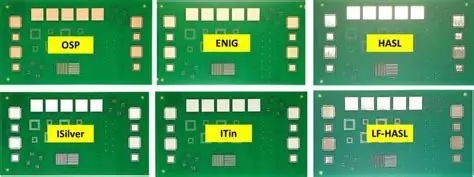
Comparison of Surface Finishes for Thin PCBs
- HASL: Planarity: Moderate; Shelf Life: Long; Cost: Low; Solderability: Excellent; Best applications: Through-hole, budget designs.
- ENIG: Planarity: Excellent; Shelf Life: Long; Cost: High; Solderability: Very good; Best applications: Fine-pitch SMT, wire bonding.
- Immersion Silver: Planarity: Excellent; Shelf Life: Medium; Cost: Medium; Solderability: Excellent; Best applications: High-speed, edge connectors.
- OSP: Planarity: Superior; Shelf Life: Short; Cost: Low; Solderability: Good; Best applications: Single reflow, high-volume builds.
This comparison highlights trade-offs, aiding engineers in matching finishes to project constraints. Planarity ranks highest for thin PCBs to mitigate warpage per IPC-A-600K criteria.
Practical Guidance: Selecting and Implementing the Best Surface Finish
Selection starts with assembly process: multiple reflows favor ENIG or immersion silver, while single-pass suits OSP. Environmental factors like humidity push toward HASL or ENIG thin PCB options. Cost analysis weighs initial plating against rework risks in thin board production. Prototype testing via thermal cycling and solder float validates choices against J-STD-020 guidelines for reflow sensitivity. Factories advise specifying finishes early in design to align etching and plating sequences, preventing compatibility issues. Cross-section analysis post-plating confirms uniformity, essential for thin profiles.
Best practices include vendor qualification for IPC compliance, especially IPC-4553 for immersion silver consistency. Implement bake-out for moisture control before finishing to avert delamination in thin laminates. During assembly, optimize reflow profiles to match finish tolerances, monitoring for head-in-piston defects. For troubleshooting warpage, pair finishes with low-CTE materials and controlled cooling ramps. Engineers should document rationale in design files, facilitating scalability from prototype to volume.
Conclusion
Choosing the right thin PCB surface finish hinges on balancing planarity, solderability, and longevity against application demands. HASL offers affordability for robust needs, ENIG reliability for precision, immersion silver conductivity for signals, and OSP economy for speed. Adhering to standards like IPC-6012E ensures manufacturability and performance. Electric engineers gain from factory perspectives emphasizing process controls and testing. Ultimately, informed selection enhances thin PCB reliability, reducing field failures and assembly costs.
FAQs
Q1: What is the best thin PCB surface finish for fine-pitch SMT assembly?
A1: ENIG thin PCB stands out for its flat topography and multiple reflow tolerance, minimizing defects in high-density placements. It complies with IPC-4552 for uniform nickel-gold layers, supporting 0.4mm pitches effectively. Factories report lower voiding compared to uneven alternatives, though cost requires justification for volume.
Q2: Why avoid HASL on thin PCBs?
A2: HASL thin PCB suffers from non-uniform solder deposits that induce warpage and coplanarity issues on fragile boards. The hot-dip process stresses thin substrates, per IPC-A-600K planarity specs. Opt for it only in low-density, through-hole designs where flatness is secondary.
Q3: How does immersion silver thin PCB perform in high-frequency circuits?
A3: Immersion silver thin PCB excels with low signal loss and superior probe contact due to high conductivity. It maintains planarity vital for impedance control in thin high-speed boards. Shelf life management via dry storage ensures reliability, aligning with IPC-4553 standards.
Q4: When should OSP be chosen for thin PCBs?
A4: OSP thin PCB suits high-volume, single-reflow production needing maximum flatness at minimal cost. Its organic protection preserves copper until assembly, ideal for compact consumer devices. Handle promptly to avoid degradation, following factory cleanroom protocols.
References
IPC-6012E — Qualification and Performance Specification for Rigid Printed Boards. IPC, 2018.
IPC-4552B — Specification for Electroless Nickel/Immersion Gold (ENIG) Plating for Printed Circuit Boards. IPC, 2022.
IPC-4553 — Specification for Immersion Silver Plating for Printed Circuit Boards. IPC, 2005.
IPC-A-600K — Acceptability of Printed Boards. IPC, 2020.





