ALLPCB


Why can infrared be used for temperature measurement?
Infrared radiation exists as electromagnetic waves between visible light and radio waves, with wavelengths roughly from 0.76 μm to 1000 μm. In simple terms, any object above absolute zero (?273.15 °C) continuously emits infrared radiation.
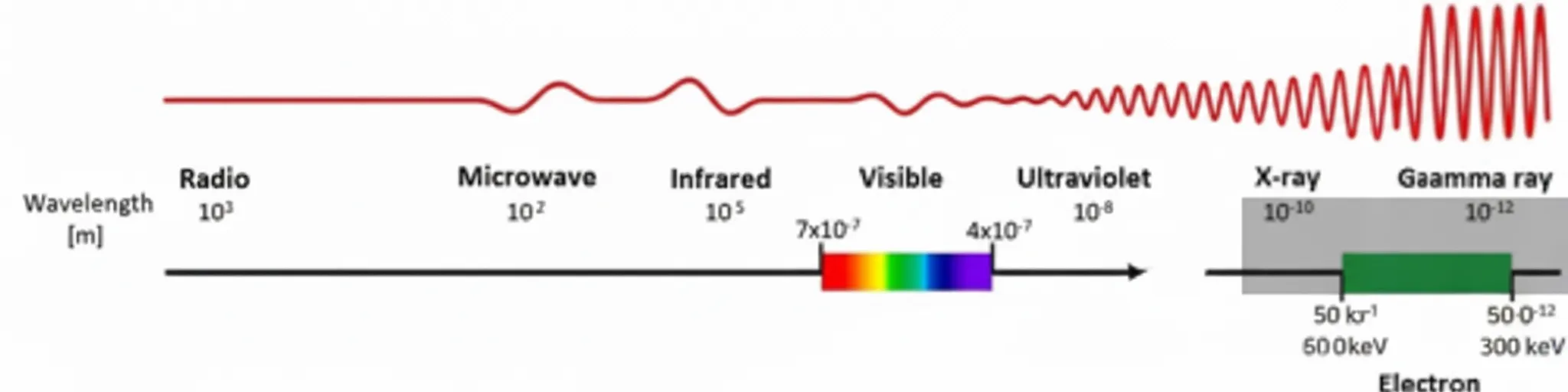
Atoms and molecules in matter undergo random motion; changes in their motion state cause continuous emission of energy, known as thermal radiation. Infrared radiation is the physical manifestation of thermal radiation. In many cases, the intensity and spectral composition of thermal radiation depend on an object's temperature and material properties. When material differences are small, temperature becomes the dominant factor, and under certain conditions there can be a near one-to-one correspondence between temperature and emitted radiation. If a sensor can sensitively capture that infrared thermal radiation, the measured radiation level can be used to infer temperature.
Types of medical infrared thermometers
From the perspective of contact with the measured object, thermometers are commonly classified as contact and non-contact. In scientific terms, contact thermometers include devices like mercury clinical thermometers, which measure at locations such as the armpit or oral cavity with precision up to 0.1 °C. Non-contact thermometry typically refers to infrared methods, including ear thermometers, forehead thermometers, and handheld infrared thermometers, which offer wide measurement ranges, fast response, and high sensitivity but are susceptible to atmospheric conditions, ambient temperature, and target surface emissivity. Note that ear thermometers are often considered contact devices in daily use because they touch the ear canal during measurement; scientifically they are non-contact with respect to detecting emitted infrared from the tympanic membrane.
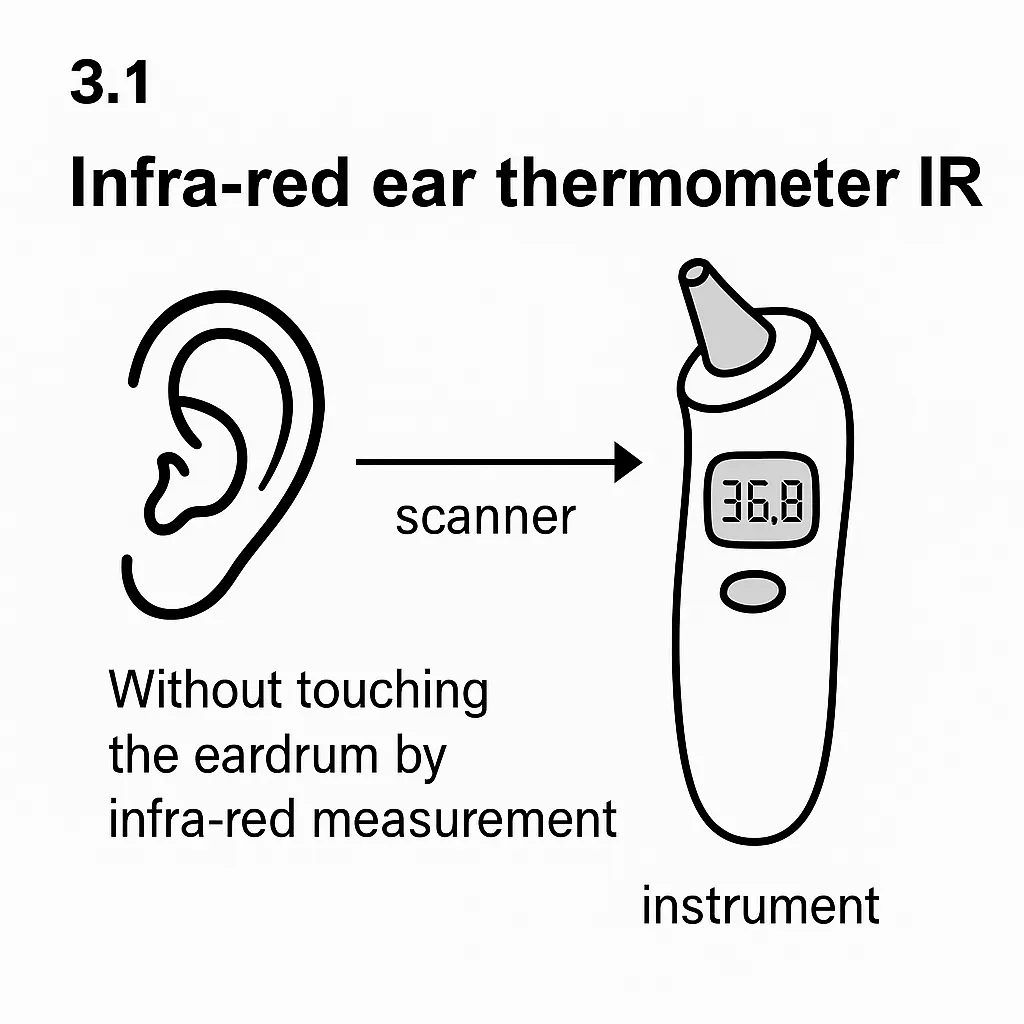
Source: National Standard GB/T 21417.1-2008 Medical infrared thermometers — Part 1: Ear canal type
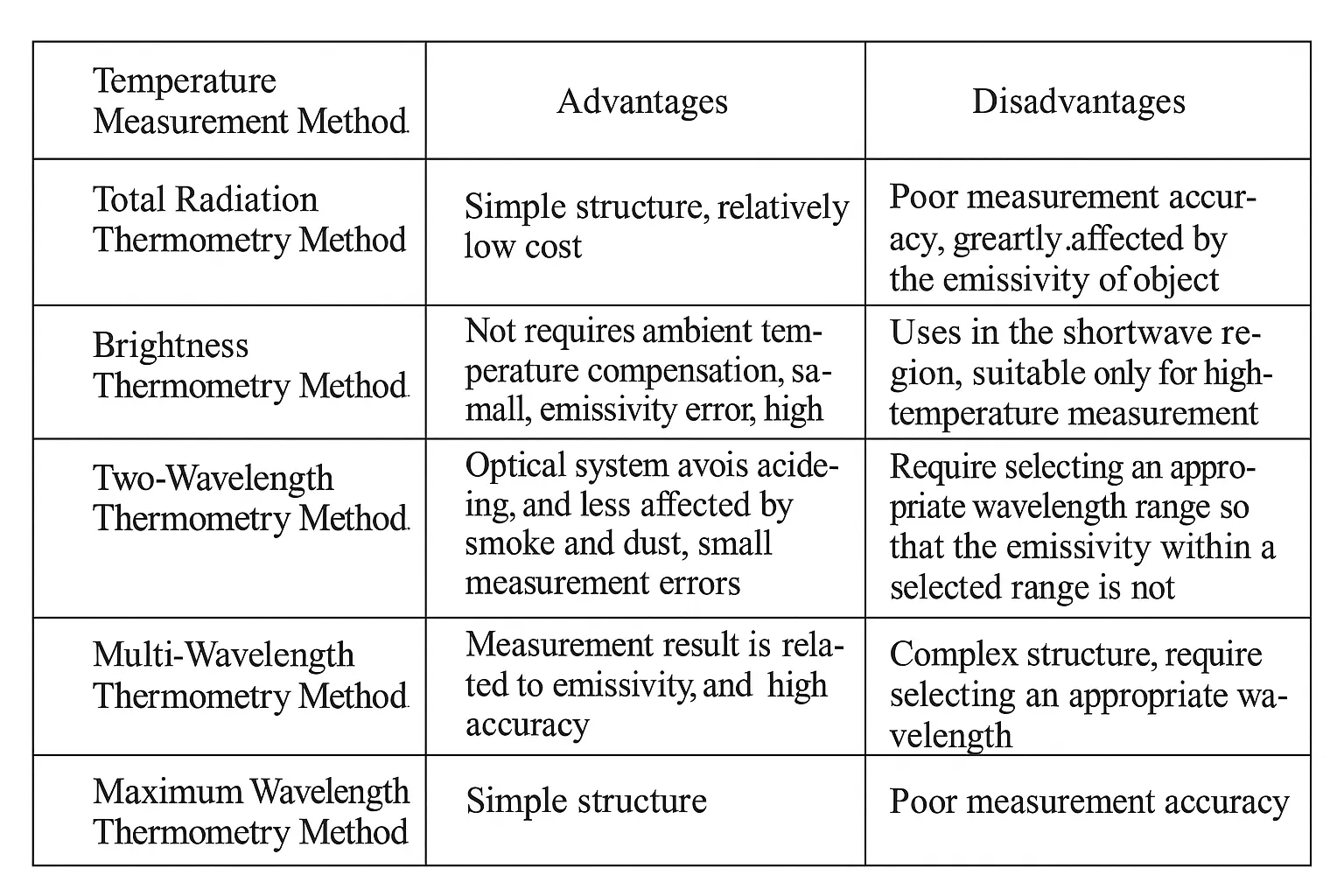
Focusing on non-contact infrared thermometry and its measurement principles, infrared thermometers can be divided into total radiation thermometers, single-wavelength (brightness) thermometers, and ratio (dual-band) thermometers, with additional variants such as multi-band and peak-band devices. In theory, a total radiation thermometer would measure radiative power over the entire spectrum, but practical limitations—absence of broadband detectors and transmissive optics across the full infrared spectrum—make this impractical. Instead, most instruments measure radiative power over a specific wavelength range (single-wavelength) or use the ratio of two bands to infer temperature (ratio thermometers).
From a system-function perspective, non-contact infrared thermometers can be categorized as handheld, online, and scanning systems. Handheld devices are portable point-measurement instruments such as ear and forehead thermometers. When a handheld device provides real-time data export, typically via wireless communication, it can function as an online device and may include additional data-processing features. Scanning thermometers acquire dynamic temperature data and images by scanning, for example, in opto-mechanical scanning imagers. Recent advances in integrated circuits have enabled focal plane array (FPA) thermal imagers based on staring array imaging, which are non-scanning and offer wide fields of view, automatic focus, continuous zoom, clear images, and advanced analysis functions.
Key concepts and terminology
Planck's law: Describes the spectral distribution of blackbody radiation at different temperatures.
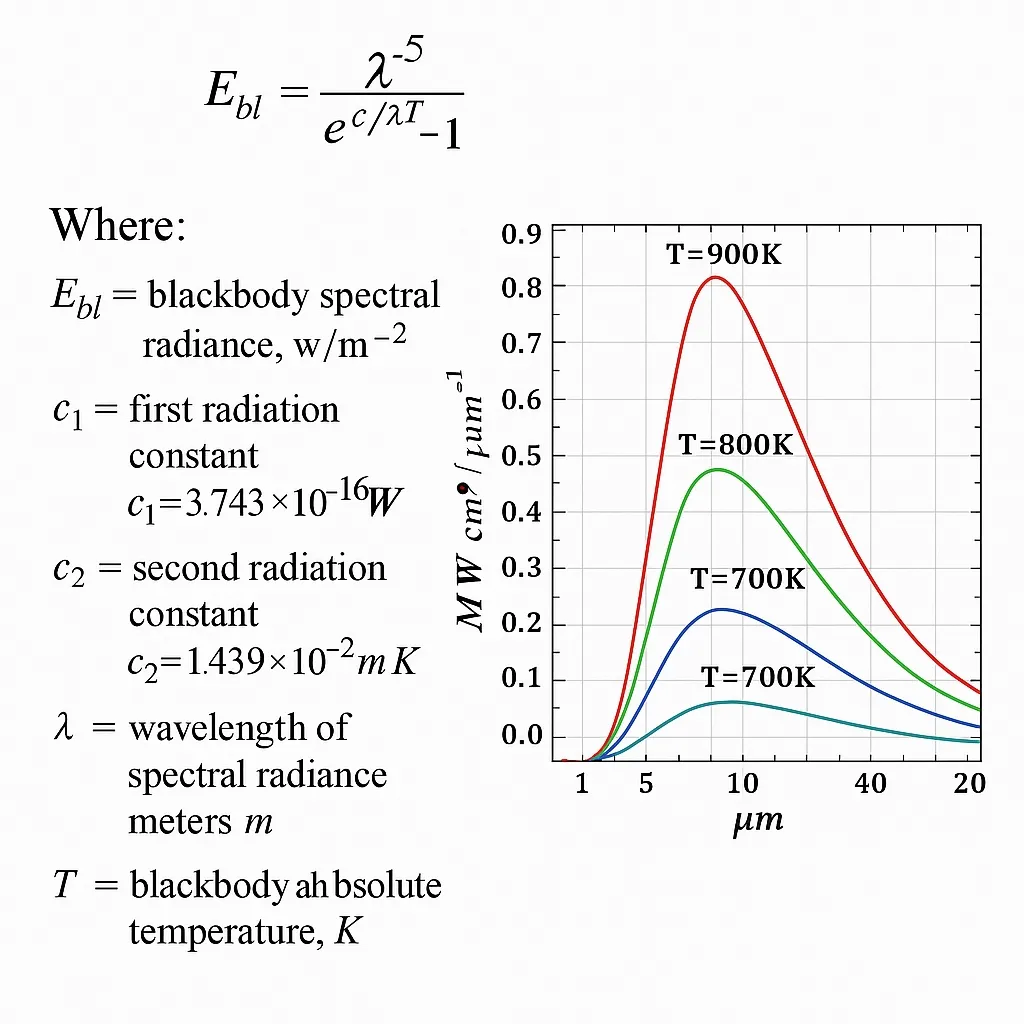
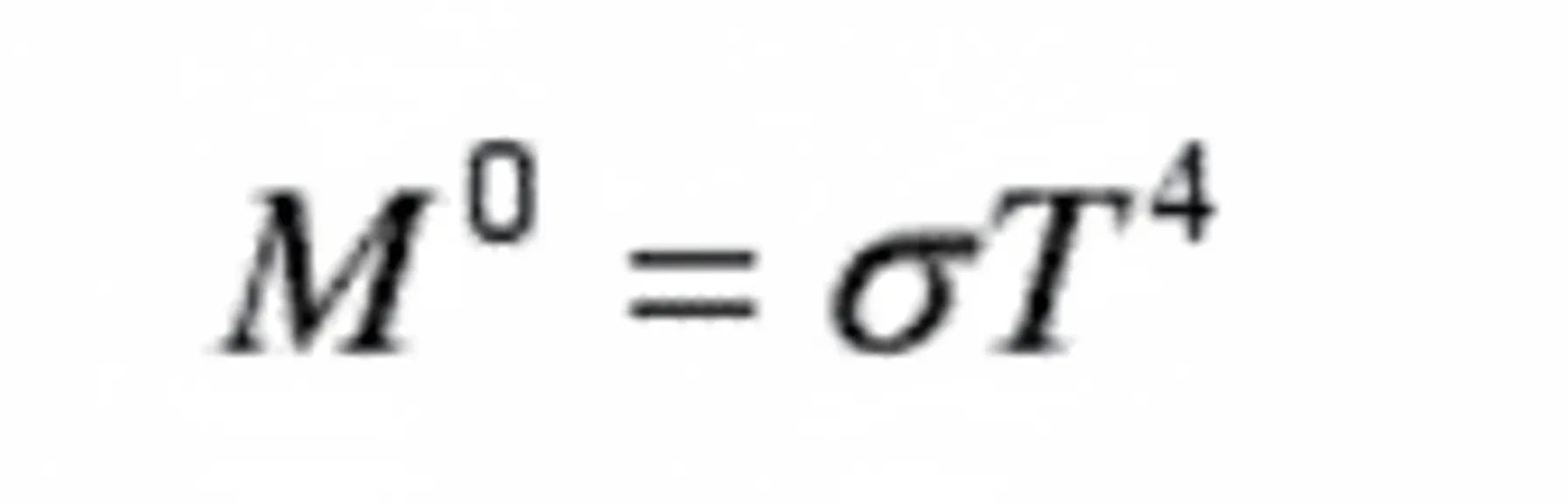
Stefan–Boltzmann law: Integrating Planck's law over all wavelengths yields the total power radiated per unit area into a hemisphere. The emitted power of a blackbody is proportional to the fourth power of its absolute temperature; this relation is applicable to both ideal blackbodies and real objects.
Wien's displacement law: Planck's law implies a single peak in the spectral radiance for a given temperature; the peak wavelength shifts inversely with temperature. As temperature rises, the spectral radiance increases sharply and the peak moves toward shorter wavelengths.

Blackbody: A reference source with an emissivity approximately 1.0 at the aperture, used to calibrate infrared measurements.
Body temperature: Temperature measured at a specific body location. Measured temperature varies by anatomical site and environmental conditions; typical differences across sites should be considered when interpreting readings.
Resolution: Includes thermal resolution and spatial resolution. Thermal resolution, or noise-equivalent temperature difference (NETD), is the smallest temperature difference the imager can resolve and is a key factor affecting instrument cost. Spatial resolution refers to image resolution and the ability to precisely resolve and measure objects, defined by field of view (FOV), instantaneous field of view (IFOV), and measurement field of view (MFOV).
Measurement accuracy: The difference between the thermometer reading and a standard blackbody; usually expressed as an absolute value and as a percentage.
Detector: The front-end component that collects temperature-related signals; it is the most critical element of a thermometry system.
Optics: The optical components that focus received thermal radiation onto the detector; high-quality optics can be expensive.
Emissivity: The ability of a surface to emit thermal energy; most object surfaces do not emit 100% of their thermal energy.
Transmissivity: For most objects, transmissivity is essentially zero for human-body infrared measurements, since skin and clothing are not transparent in the relevant bands.
Reflectivity: The ability of a surface to reflect thermal energy; when emissivity is low, reflections can affect temperature measurement and require reflected temperature compensation.
Ear and forehead thermometers
An ear thermometer detects the infrared spectrum emitted by the tympanic membrane to estimate body temperature.
A forehead thermometer measures skin surface temperature on the forehead and uses a model of forehead-to-core temperature relations to estimate body temperature. Forehead thermometers emphasize non-contact measurement and have been widely used for small screening sites and home use.
From a hardware perspective, both ear and forehead thermometers typically include a probe, control unit, signal processing and compensation unit, display, and power supply. Two common detector approaches are: (1) a waveguide coupled to a thermopile sensor plus a thermistor for ambient temperature measurement, and (2) a waveguide coupled to a pyroelectric sensor plus a thermistor.
Regarding accuracy, the national standard GB/T 21417.1-2008 specifies an ear thermometer resolution of 0.1 °C or better and a maximum allowable error of ±0.2 °C within the display range 35.0 °C–42.0 °C. Forehead thermometers commonly specify an accuracy around ±0.3 °C, although standards may vary.
Typical thermopile-based handheld infrared thermometer block diagram:
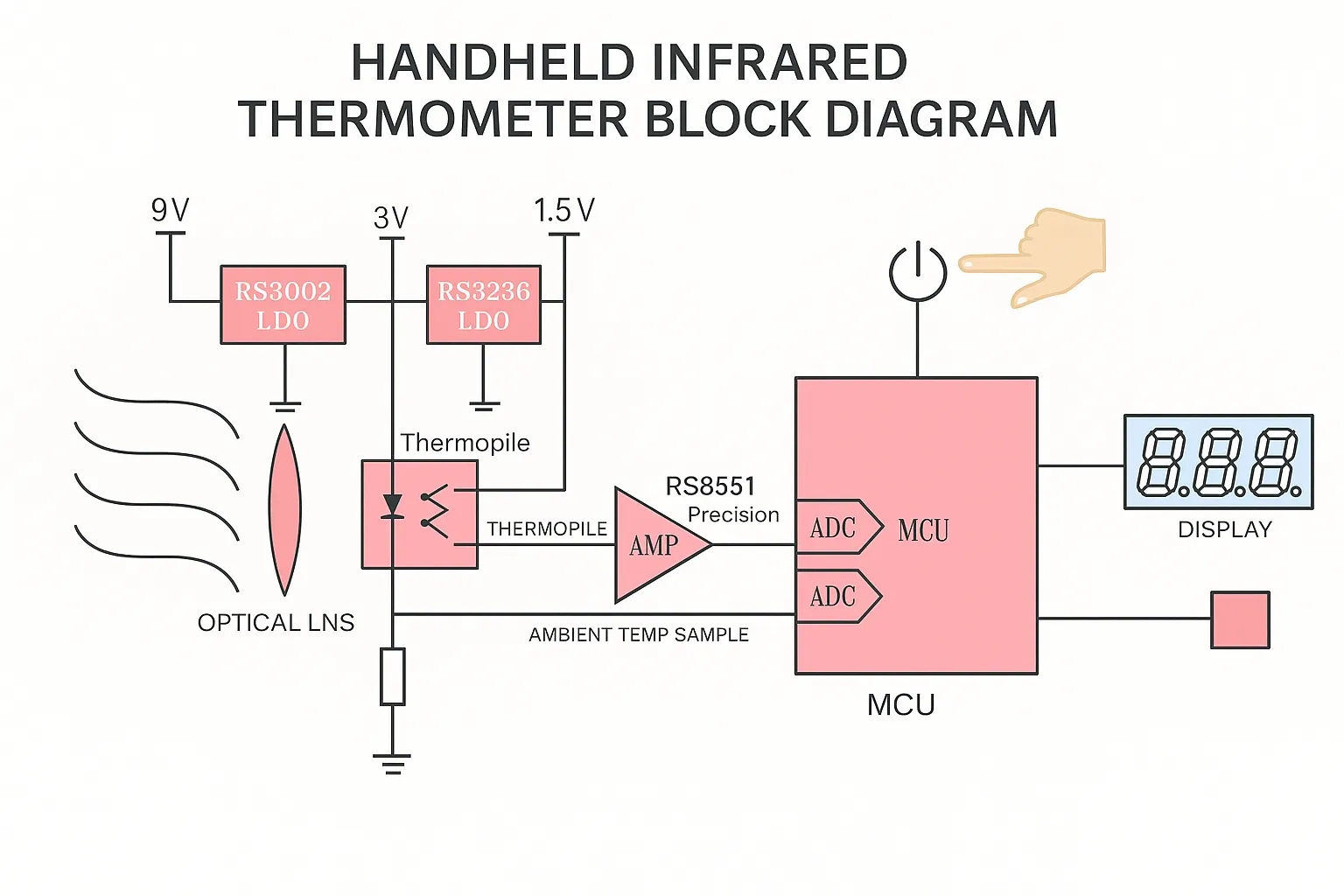
Common thermopile sensor modules in use include devices such as Melexis MLX90614 and related precision sensor ICs (for example, MLX81101 and MLX90302). Thermopile options and integrated signal-processing chips vary across manufacturers.
Another frequently used approach is pyroelectric sensing, which offers fast response, wide spectral response, and frequency-insensitive sensitivity. Example pyroelectric sensors include LN074B and other models from manufacturers such as PerkinElmer and TE Connectivity.
Common distributor websites are often used to search and select suitable components during design and procurement.
Thermal imagers
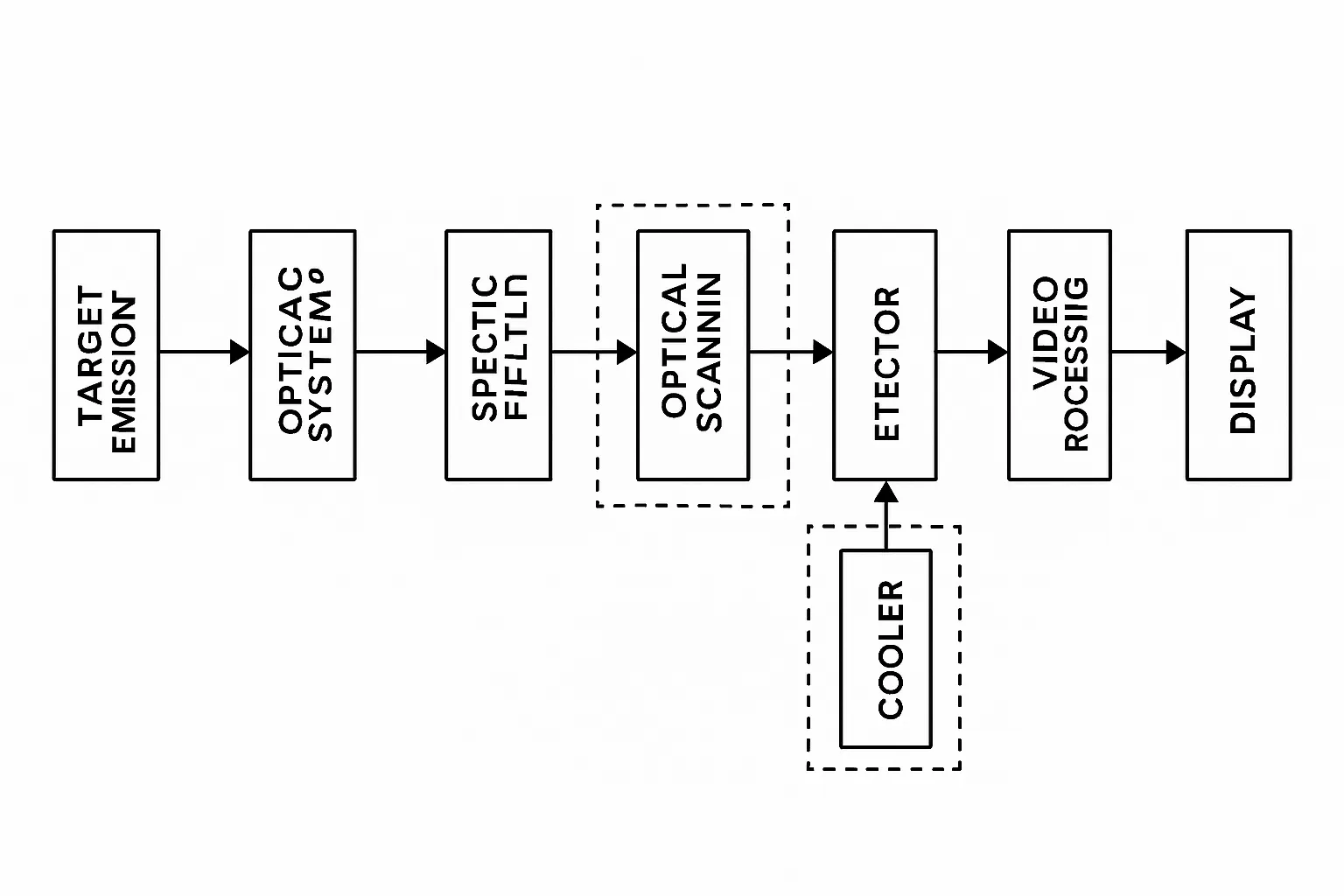
Thermal imagers are generally classified into opto-mechanical scanning imagers and non-scanning imagers such as focal plane array thermal cameras. A dynamic radiation scanning thermometer block diagram for opto-mechanical scanners:
For non-scanning imagers, focal plane array (FPA) thermal imagers are built around an FPA detector similar to CCD/CMOS sensors: each microbolometer element corresponds to a pixel, producing the entire infrared image in a single frame. FPAs offer large-format arrays, high resolution, and high performance, suitable for large-area monitoring.
FPA detectors are categorized as cooled and uncooled. For human body screening in high-traffic areas, uncooled FPAs are typically used because they operate at ambient temperature, have lower cost, and present fewer reliability concerns.
An infrared FPA detector assembly normally comprises two parts: an N×M infrared detector array (determining resolution by pixel count and element size) and a matching readout integrated circuit (ROIC). These are commonly connected using flip-chip bonding with indium bumps or similar interconnects:
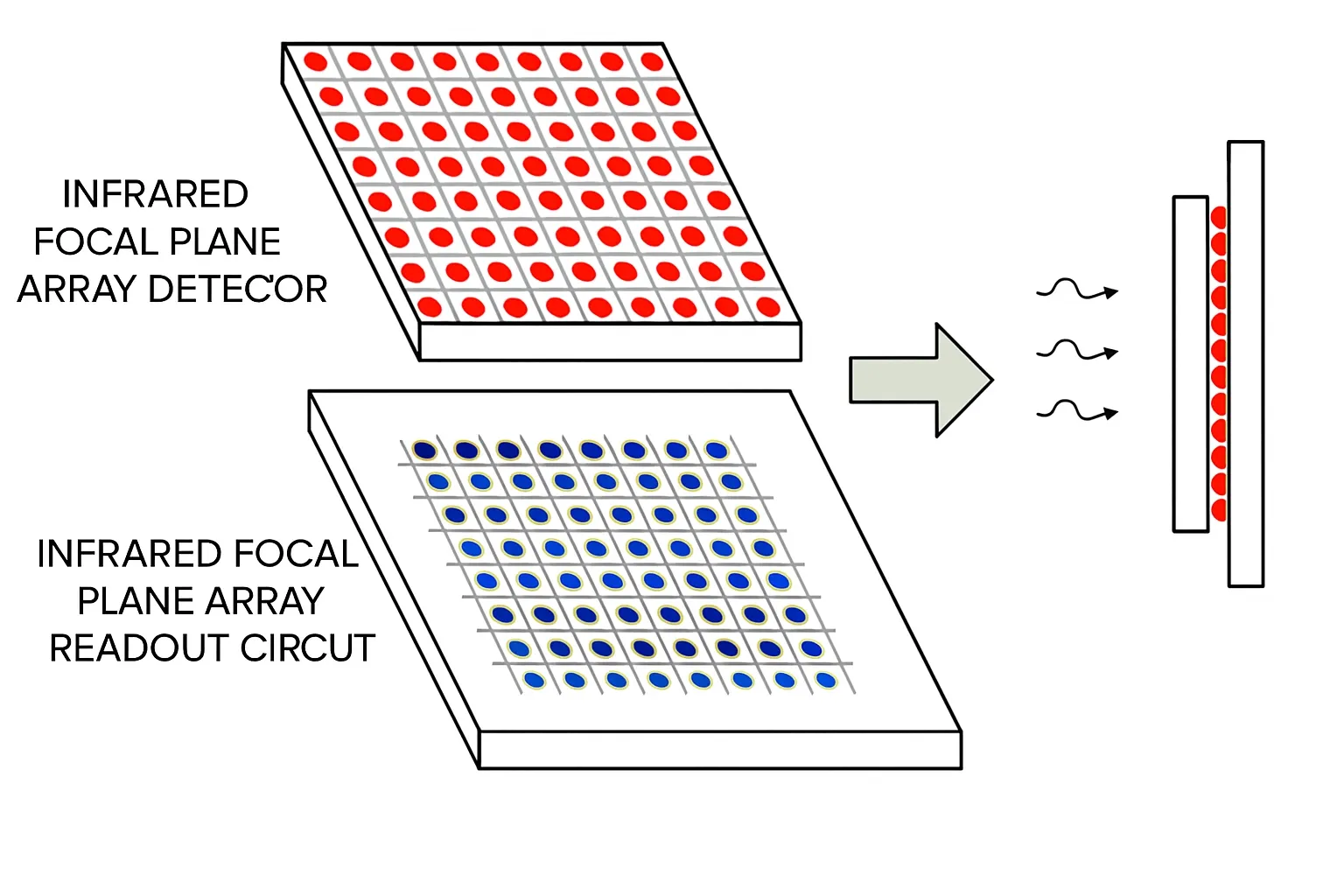
The detector array converts thermal radiation into photocurrent; the ROIC integrates photocurrent on a capacitor for a fixed, short time to produce a voltage proportional to incident infrared energy at each pixel. The analog voltage is then converted by an ADC and processed with filtering and amplification. Algorithms reconstruct the image from the digitized signals.
During the COVID-19 pandemic, many vendors introduced FPA-based thermal imaging solutions for mass screening. Examples include integrated systems from major surveillance and imaging vendors and turn-key solutions claiming screening accuracies. Such systems have been used for rapid, large-scale filtering of febrile individuals.
Three main challenges for infrared thermometry and countermeasures
1. Amplifying weak signals and resisting interference
Collected thermal signals are typically very small and are subject to noise and attenuation. The design quality of amplification and interference-rejection circuits strongly affects signal-to-noise ratio and overall instrument performance.
Analog signal conditioning, including low-noise amplifiers and properly designed filtering, is essential. Advances in integrated analog components and on-chip signal processing have improved stability and reduced device size and power. Algorithmic processing implemented in firmware or specialized ICs is also critical for improving signal quality and reducing susceptibility to environmental interference.
2. Nonlinear relationship between signal and temperature
The relationship between sampled signal and actual temperature is often nonlinear, and this can vary with measurement site and ambient conditions. Calibration procedures and nonlinear compensation algorithms are typically required to map detector signals to accurate temperature values.
3. Influence of detector temperature on measurements
Temperature variations at the detector cause measurement drift due to material properties of the detector components. Modeling the measurement environment and applying environmental compensation via calibration and learning-based algorithms helps to mitigate this source of error.
Practical guidance
For household use, either ear or forehead thermometers are acceptable; forehead thermometers can be preferable for infants and when truly non-contact measurement is desired. For large venues or organizations with resources, thermal imaging systems enable non-invasive, high-throughput screening.
Concerns about harm from infrared thermal imaging to the human body can be addressed: the passive infrared sensing used in these devices does not emit ionizing radiation and is not harmful; it merely detects thermal emissions from the body.