ALLPCB


Medical electronics products have advanced significantly over the past 30 years. From the implantable defibrillator in 1980, vascular repair in 1982, to coronary stents in the mid-1990s, technology has driven new medical devices and enabled clinicians to improve diagnostic and therapeutic precision, as shown in Figure 1.
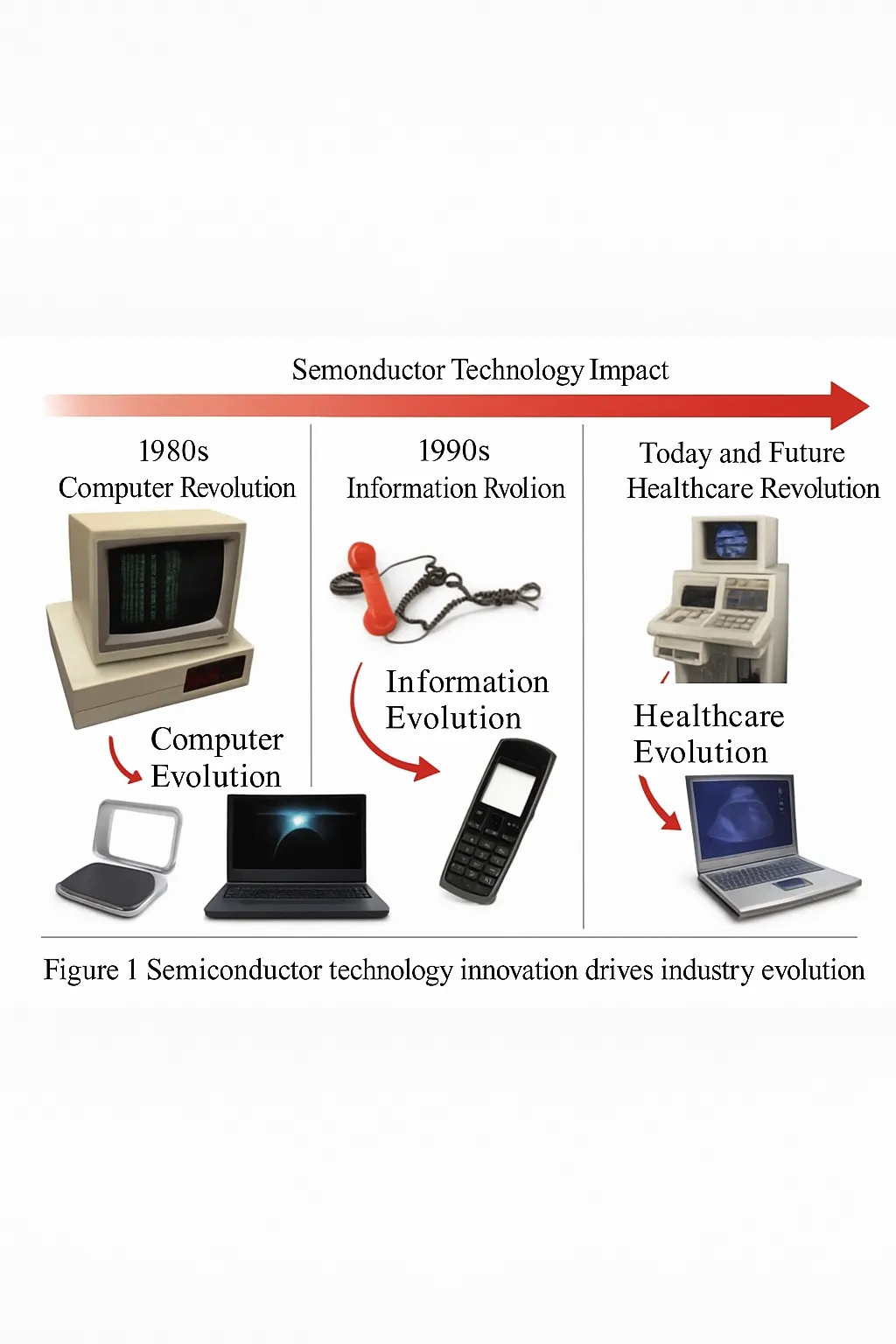
If innovation advanced rapidly in the past 30 years, the next 20 years are likely to move even faster. The following sections describe several potential trends in medical electronic devices.
Predicting future trends from current technologies
To forecast future medical trends, the best approach is to examine current innovations. Many technologies that may become standard by 2029 are already being introduced into clinical practice. Clinical trials, U.S. Food and Drug Administration (FDA) approvals, research funding, and other factors will influence global adoption and deployment.
Significant changes are expected in personalized medicine, implantable devices, and optical technologies. Effective deployment and management of wireless devices within these solutions will require attention to network scale, data volumes, device size, and required transmission range.
The critical nature of medical solutions requires mitigation of interference. While Wi-Fi (WLAN), Bluetooth, and Bluetooth Low Energy can support larger networks and lower power operation, the interference environment and density of devices in clinical settings can limit the suitability of these interfaces for some applications.
Therefore, many implantable and critical-care devices will require dedicated solutions to provide better control and awareness of electromagnetic interference (EMI), sensitivity, and range requirements. The Continua Alliance has selected Bluetooth as a platform for wireless solutions in this space.
Personalized medicine
Over the next 20 years, most of the global population may be able to use diagnostic devices with imaging and non-imaging capabilities to monitor their own health. Examples include implantable gastric pacemakers to treat obesity and alcoholism, digital wound dressings that monitor healing and report signs of infection, and high-performance sensors integrated into toilets to continuously measure bacteria in excreta and alert to infections or other conditions. These are only a few examples.
Mobile phones can serve as powerful platforms to provide timely feedback to individuals and their caregivers based on predefined parameters. In the coming decades, phones may warn patients and clinicians of impending diabetic shock before symptoms appear. Hundreds of applications already assist patients in monitoring health and performing self-care.
Data integrity and accessibility, along with system flexibility and mobility, are important for most patient-care systems. Using Ethernet or wireless networks, hospitals can network devices both on site and in patients' homes. Current interfaces allow clinicians to remotely access wearable wireless sensors through hospital networks, home security systems, or phones, enabling continuous monitoring via hospital networks or medical call centers. Bluetooth and ZigBee can also play roles; aside from power consumption, data rate and range are key factors in wireless interface selection.
The 2.4 GHz band offers worldwide multi-channel high data rates and duty cycles. Lower frequencies provide increased signal range, which can be advantageous when monitoring multiple sensors across wider areas, while higher frequencies increase data throughput for fixed locations with many channels. Ultimately, the chosen solution must meet the system's power and data transfer requirements.
Implantable mechanical devices
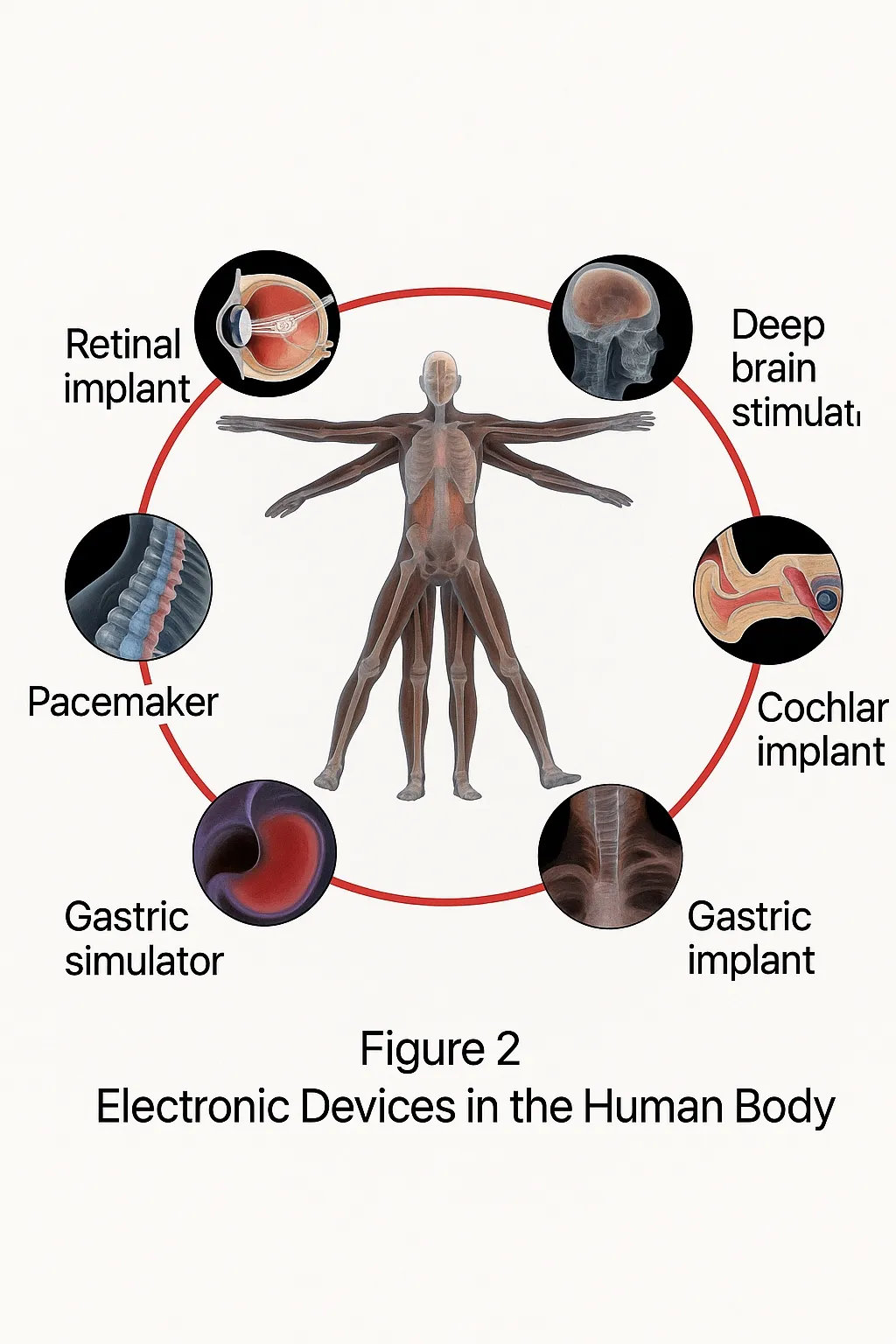
Within 20 years, implantable devices will increasingly incorporate electronics to enable noninvasive assessment. Current cardiac stents simply revascularize arteries; future stents may include sensors that use radio-frequency identification (RFID) to report vessel status wirelessly when scanned over the chest.
Sensorized artificial discs will be implanted in the hip, spine, or knee to noninvasively monitor load and verify proper function, as shown in Figure 2. If excessive load or malfunction is detected, the sensors will alert the patient and caregivers so corrective measures can be taken promptly.
High-performance sensors have not been widely used in implants because proteins and the immune system can attack devices, limiting long-term efficacy. Over the next 20 years, cellular biology approaches will reduce immune recognition of sensors as foreign bodies. Biocompatible materials will be essential for all implantable devices.
Optical technologies
Optical technologies will soon allow clinicians to observe chemical changes in tissue. By exploiting absorption and reflection properties, clinicians will be able to differentiate normal tissue from precancerous tissue noninvasively and rapidly. This approach is especially suitable for the esophagus, skin, and oral cavity.
Spectroscopy will be used widely in the next 20 years for early detection of colorectal polyps. An optical probe inserted into the rectum can assess whether polyps are present and whether a colonoscopy is required.
More than 100 million colonoscopies are performed annually; these optical techniques could reduce unnecessary procedures and lower healthcare costs. Noninvasive probes may also encourage preventive screening among patients reluctant to undergo colonoscopy.
Another optical approach uses long wavelengths for subcutaneous imaging. This method will be applied in laparoscopy to visualize blood vessels before cauterization, distinguishing nerves from vessels. These techniques will rely on electronic devices, lasers, and LEDs as optoelectronic components.
Stem cell therapies
Stem cell therapy will be widely applied over the next 20 years. Researchers are increasingly able to convert stem cells into different functional cell types. Culturing and isolating stem cells requires various devices; electronic bioreactors can provide controlled environments to direct cell differentiation and position cells for implantation.
Electronics will also play a key role in sorting usable cell types and in delivering cells back into patients. Biomaterials will be important for supporting repair and regeneration during cell implantation.
Outlook
Innovation is hard to predict, and the medical trends of the next 20 years may differ from current expectations and become even more advanced. Technologies not yet developed could become standard within a decade of progress.
The field of medical technology is broad and offers many opportunities. Global collaboration across regions such as Western Europe, Russia, Israel, China, and India is accelerating the realization of these trends.