ALLPCB


Overview
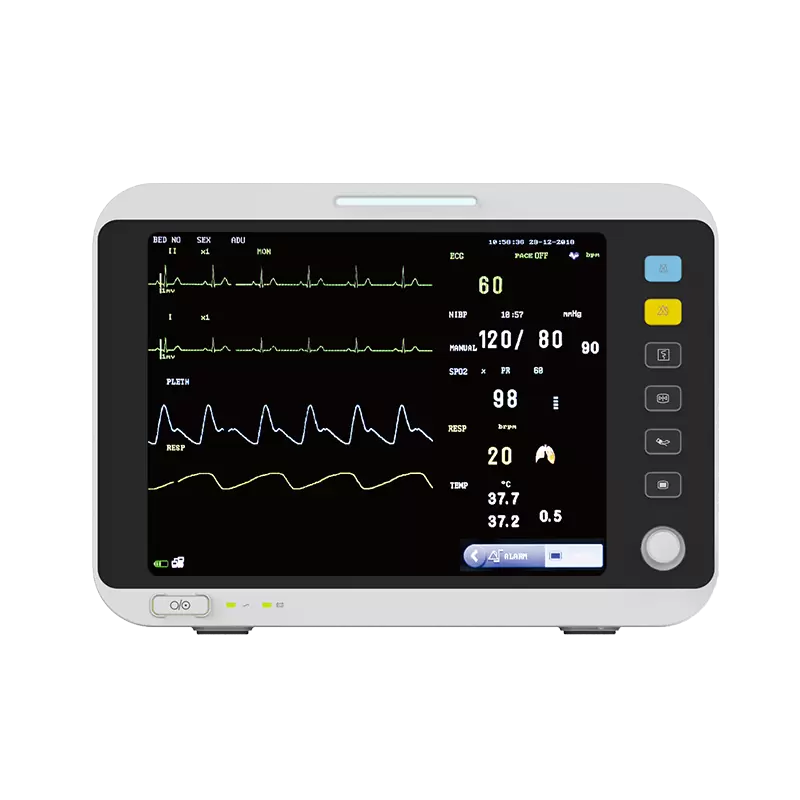
As medical equipment moves from hospitals to emergency response and home-care environments, mobility becomes a primary design constraint. Even within hospitals, battery support is often required to allow patients to be moved between wards. Aging populations with greater mobility needs have increased demand for portable versions of traditionally fixed devices. These include diagnostic instruments such as defibrillators, ultrasound systems, and blood analyzers, as well as patient-facing devices including insulin injectors, left ventricular assist devices (LVADs), and wireless vital-sign monitors.
Battery power also frees many surgical tools from tethered operation. Battery-powered surgical instruments such as electric orthopedic tools and endoscopes provide operating-room flexibility valued by surgeons.
A typical battery pack contains the primary energy cells and a small circuit board that integrates a fuel gauge, protection circuits, temperature sensors, LED drivers to indicate pack or cell status, and a serial data communication bus. The pack is usually enclosed in a plastic housing with external contacts that provide the electrical interface to the host device while providing shock absorption and insulation for internal components.
1 Usage profile
The first step in designing a safe, reliable system is to understand the device usage model, including operating temperature range, discharge profile, charging method, storage life, and transport needs. All external and internal operating temperatures are important when selecting the optimal battery for a mobile device.
Manufacturers typically specify cell performance at a C/5 constant current and an ambient temperature of +20°C. In practice many medical devices must operate over a much wider range, for example -20°C to +60°C, and heat is generated during charge and discharge. When cells and temperature-sensitive components share an enclosure, the combined battery system and device housing determine maximum allowable temperature.
Nonuniform pulse discharges, such as the pulses delivered by a defibrillator, generate more heat in cells and can reduce usable capacity faster than smooth discharge curves. Charging method also affects heat generation and must be considered during system thermal design.
2 Chemistry selection
Choosing the correct cell chemistry is critical for field medical equipment. Key parameters include nominal voltage, cycle life, load current capability, energy density, charge time, and self-discharge rate. The following summarizes common rechargeable chemistries with those criteria in mind.
Sealed lead-acid (SLA). Rechargeable SLA characteristics include a 2 V nominal cell voltage, available in prismatic or cylindrical formats, high capacity, low cost, and simple charging requirements. Main challenges are large size and weight, linear voltage sag under load, lack of fast-charge capability, and sensitivity to high temperature and high self-discharge, which reduce shelf life.
NiMH. Nickel-metal-hydride cells offer about 1.25 V nominal per cell, roughly 500 charge/discharge cycles over life, average energy density near 100 Wh/kg, charge times under 4 hours, monthly self-discharge approaching 30%, and tight size constraints. Where low cost or low voltage is acceptable, NiMH performs well; ten NiMH cells in series yield approximately 12.5 V.
Lithium-ion. Lithium-ion cells have a nominal voltage around 3.6 V, typical cycle life of 500 to 1000 cycles, average energy density near 160 Wh/kg, charge times under 4 hours, and monthly self-discharge around 10%. Seven lithium-ion cells in series provide about 25.2 V. Compared with NiMH and SLA solutions at the same power, lithium-ion generally requires fewer cells due to higher energy density.
3 Battery pack intelligence
Trends toward handheld and outdoor medical devices increase the value of lithium-ion chemistry, given its higher energy density, lower mass, longer cycle life, better capacity retention, and wider operating temperature range. Advanced components on the pack circuit board enable intelligence: state-of-charge gauges, protection circuits, temperature sensors, and serial communication interfaces. An intelligent pack, when calibrated for the device discharge profile and usage, delivers higher usable power.
One key advantage of an intelligent pack is self-monitoring. It can predict remaining run time accurately and report pack status to the host device, allowing users to manage device operation and avoid unexpected shutdowns. An intelligent pack can also provide usage-history logs that facilitate traceability and warranty diagnostics.
4 Safety
Medical battery packs must incorporate multiple safety layers and reliable protection circuitry. Active safety circuits are essential to maintain the chemical stability of cells. Protection circuitry guards against overcharge, overdischarge, short circuits, and extreme temperatures by limiting voltages to within strict operating ranges. Temperature sensors can force a disconnect at specified thresholds to prevent thermal runaway and overheating.
For multi-cell packs, an active cell-balancing circuit is recommended. Placing the balancing and protection circuitry inside the pack is especially important because it reduces the risk of cell overheating and ensures consistent, safe operation of the entire battery assembly.