ALLPCB


Introduction
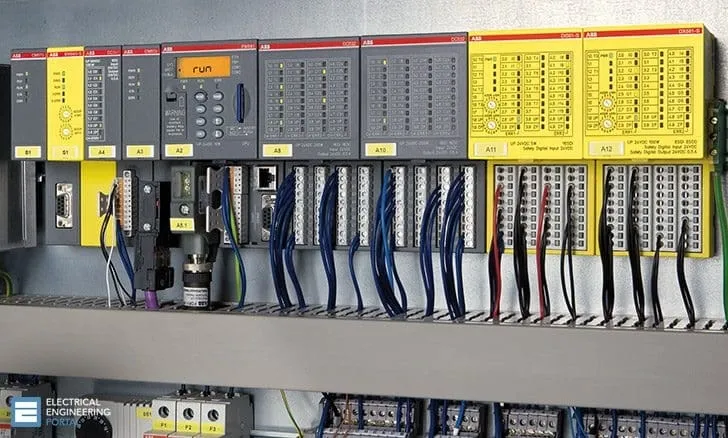
PLC (programmable logic controller) is an electronic device used in automation control systems to monitor and control industrial processes. One common application is controlling and driving contactors. A contactor is an electrical switching device that uses an electromagnetic coil to switch high-current loads. Before discussing whether a PLC can directly drive a contactor, it is important to understand the contactor characteristics.
Contactor Basics
A contactor typically consists of an electromagnetic coil and a set of contacts. When the coil is energized, it generates a magnetic field that pulls the contacts closed, allowing current to flow through the contactor. When the coil is de-energized, the contacts open and interrupt the load current. Contactors are designed to handle high current loads and are commonly used to control circuits that require significant power handling.
PLC Output Types for Driving Contactors
1. Direct-output PLC: These PLCs include high-power output modules (typically relay outputs) that can directly drive contactors. Relay output modules are usually designed to handle higher currents, so they can be connected directly to contactor coils without additional relays or amplifiers. This type of PLC is suitable for direct control of contactors.
2. Three-wire output PLC: These PLCs have dedicated output modules that include dedicated output relays and additional coil drive circuitry. They can be used to control contactors but require the extra coil drive circuits to do so. These circuits may include output drivers or converters to provide the required current and voltage for the contactor coil.
3. Low-power output PLC: These PLCs are generally not suitable for directly driving contactors because their output current is low. They are typically used to control lower-power loads or to receive sensor signals.
Practical Considerations
1. Output current: Different PLC brands and models have varying output current capabilities. When selecting a PLC, ensure its output current can meet the contactor coil current requirements. If the PLC output current is insufficient, an external coil driver circuit or relay amplifier must be used.
2. Supply voltage: Contactors often require higher voltages (commonly AC), while PLC output or supply voltage may be lower. Before connecting a PLC to a contactor, convert the PLC output signal to a voltage suitable for the contactor coil.
3. Relay module options: Some PLCs offer removable relay modules, allowing modules to be replaced as needed to meet different current and voltage requirements.
Conclusion
PLCs capable of directly driving contactors typically have high-power output modules that provide sufficient current and voltage for the contactor coil. However, not all PLCs are suitable for direct contactor driving. In practice, consider the PLC output current and voltage capabilities and whether additional coil drive circuitry is required.