ALLPCB


Note: It may be late to write a primer on motion tracking technology, but there is frequent confusion around VR tracking terminology. This article explains basic theory and techniques for tracking. Readers already familiar with the topic can skip ahead.
Context
At Google I/O this year, Google published a Daydream VR reference headset design that includes a controller. Some media outlets described the controller as a "Motion Controller", implying it captures the user's movements for gesture input. Others in the industry pointed out that Google did not call it motion capture in the strict sense. The reality is that the Daydream controller can be considered a motion-capture device, but it differs from other systems in important ways. The following explains how motion capture is commonly defined.
6 Degrees of Freedom (DOF)
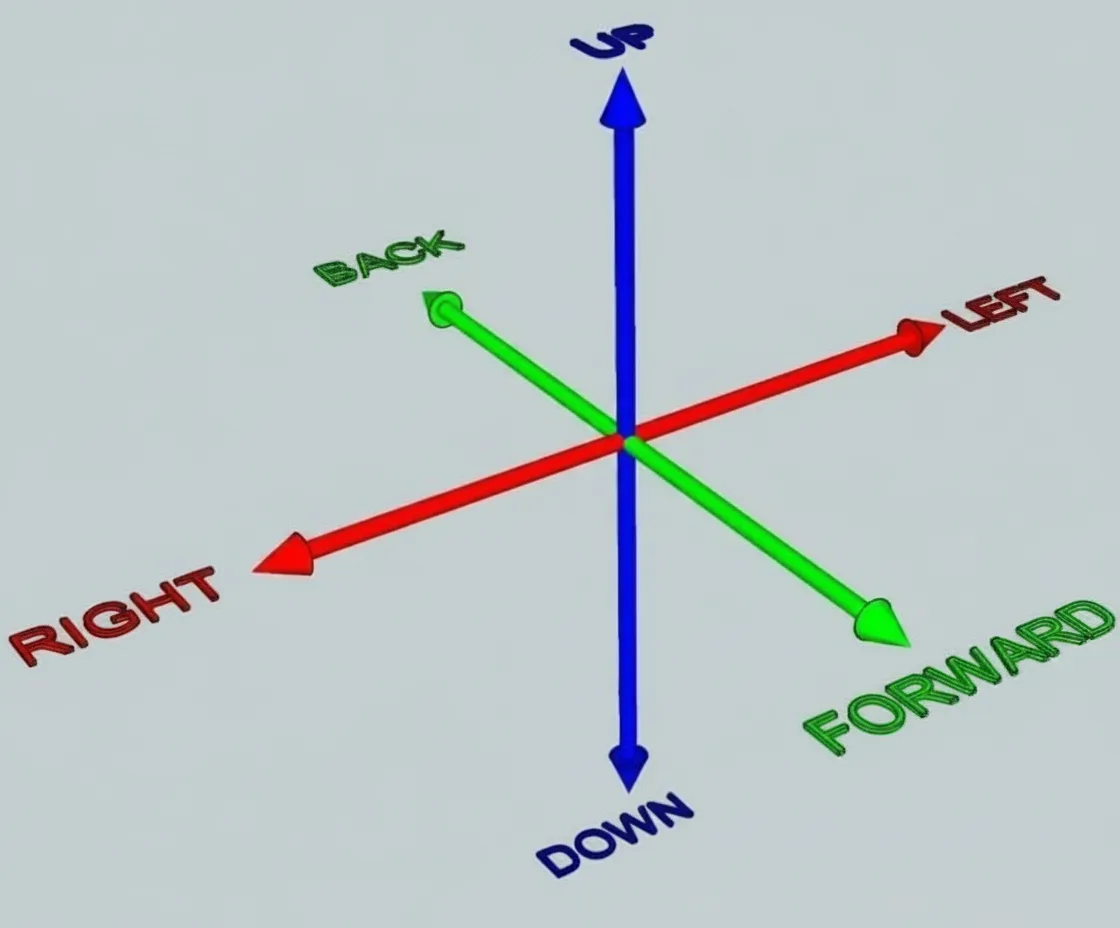
To understand the Daydream controller, first understand "degrees of freedom", usually abbreviated DOF. Degrees of freedom refer to the basic ways an object can move in space. There are six in total, which split into two categories: translation and rotation.
Translation includes forward/back, left/right, and up/down.
Rotation includes roll (rotation about the forward axis), pitch (tilt up/down), and yaw (turning left/right).
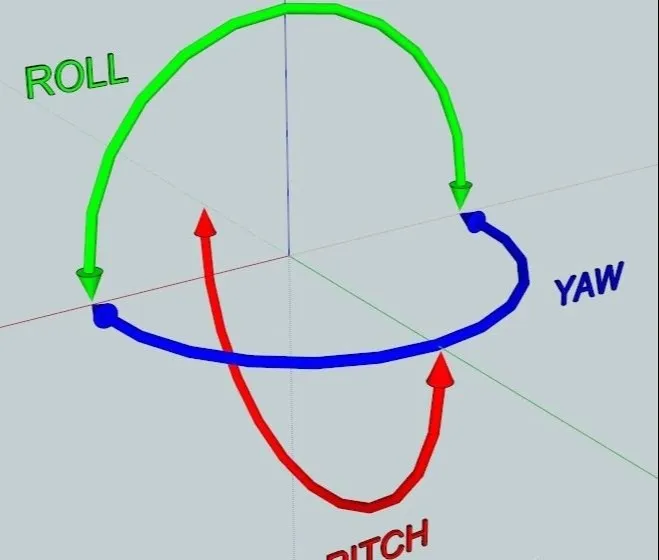
Each degree of freedom has two opposite directions. For example, an elevator has one translational degree of freedom (up/down) but can move in either direction. Any rigid-body motion can be decomposed into these translation and rotation components.
With that in mind, the Daydream controller is a motion-tracking device, but it only tracks the three rotational degrees of freedom: roll, pitch, and yaw. It does not provide absolute spatial translation. Therefore, it is correctly described as a 3-DOF motion controller.
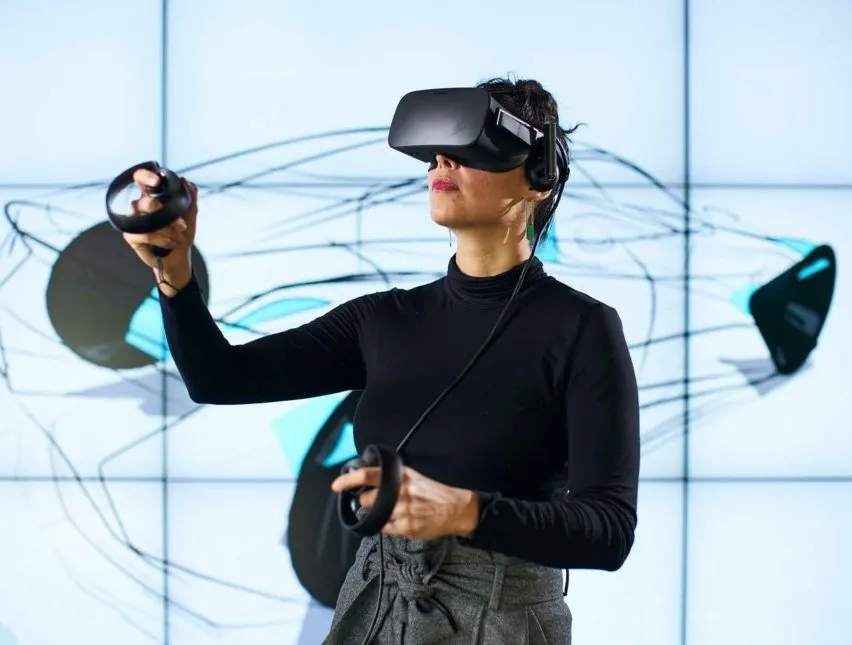
By contrast, the HTC Vive tracking system provides 6-DOF for its controllers, including the three translational degrees. As a result, actions such as reaching down to pick up an object on the floor are possible with Vive controllers but not with a 3-DOF controller like Daydream's.
Google-provided demo videos illustrate what a 3-DOF controller can do and what requires 6-DOF. Examples from Google include a Daydream controller demo showing 3-DOF interactions, and Daydream Lab's Drum Keys demo demonstrating 6-DOF interactions.
IMU and Inertial Tracking
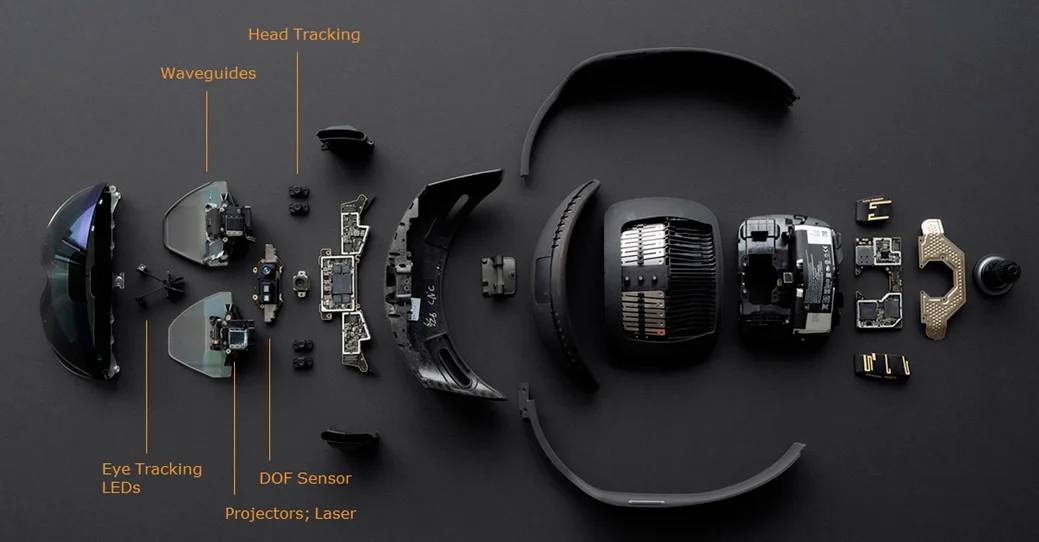
IMU stands for Inertial Measurement Unit. An IMU typically contains an accelerometer, a gyroscope, and a magnetometer. Originally used in aircraft, IMUs are now common in smartphones and are relatively low cost. IMUs measure acceleration, orientation, and gravity; this inertial technique is often called inertial motion capture.
IMUs track the three rotational degrees of freedom well, which is why the Daydream controller almost certainly relies on IMU sensors. This also explains why developers can use an Android smartphone with its built-in IMU as a substitute for the Daydream controller during development.
The limitation of inertial tracking is that it is difficult to determine absolute position in space, so the three translational degrees of freedom cannot be reliably tracked by IMU data alone.
Optical Tracking
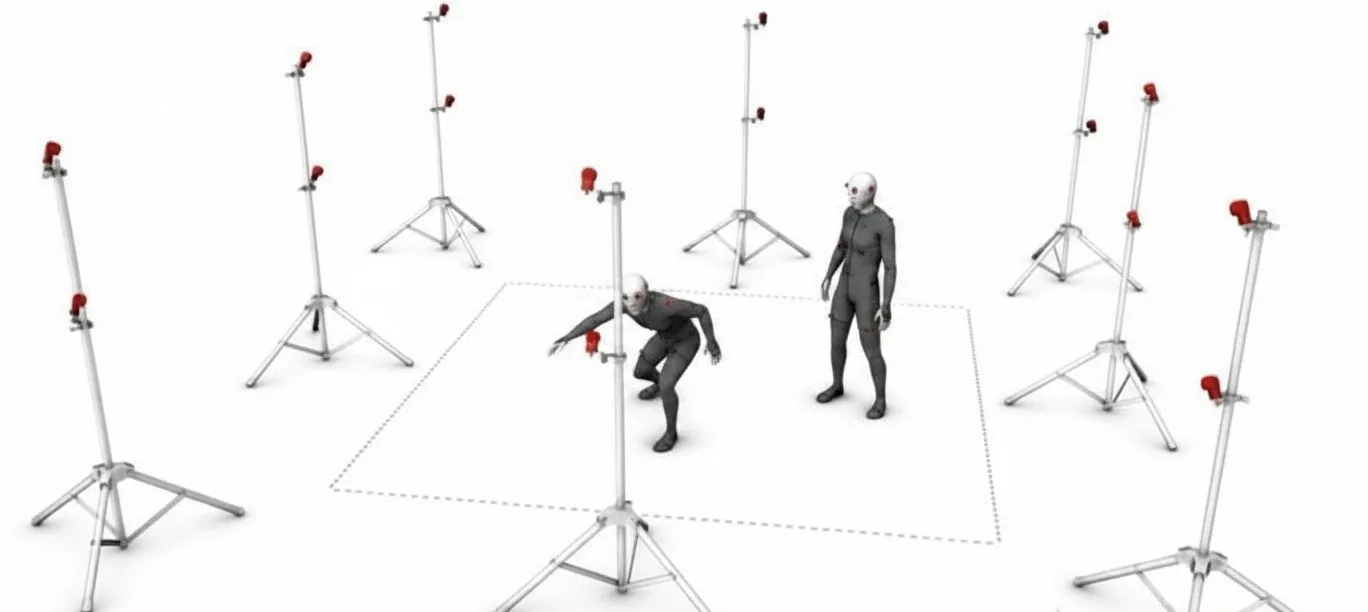
Another commonly used technique is optical motion capture or optical spatial tracking. Optical tracking uses one or more cameras to continuously track markers on an object. These markers are arranged in a known pattern, and algorithms compare observed marker positions to the expected pattern to determine the object's absolute position and orientation.
The number, placement, and arrangement of markers matters. For example, four markers arranged in a square may not disambiguate whether an object is upside down or rotated 90 degrees. Occlusions or strong ambient light can also disrupt tracking.
To maintain continuous, accurate tracking, systems may require multiple cameras and more compute power, which increases cost. Many providers combine optical and inertial tracking to achieve accurate 6-DOF tracking while reducing the number of cameras and computational requirements. For example, solutions from companies such as Noitom use sensor fusion of optical and inertial data to control costs and improve robustness.
Lower-cost optical spatial tracking solutions also exist; for example, Vive's Lighthouse system provides a relatively affordable approach to 6-DOF tracking.
Summary
VR tracking techniques aim to deliver accurate, low-cost 6-DOF motion tracking. Inertial tracking with IMUs for rotational DOF is mature and widely used. Spatial-positioning methods that determine translation are available in several forms, including lower-cost solutions such as Vive's Lighthouse, but many optical motion-capture systems remain relatively expensive. Beyond inertial and optical approaches, other tracking technologies also exist.
Illustrations and references: RoadtoVR