ALLPCB


Overview
When operating a phone, if there is a barrier between the finger and the screen the display typically will not respond. Modern touchscreen behavior depends on the screen technology, which determines whether direct skin contact is required to register input.
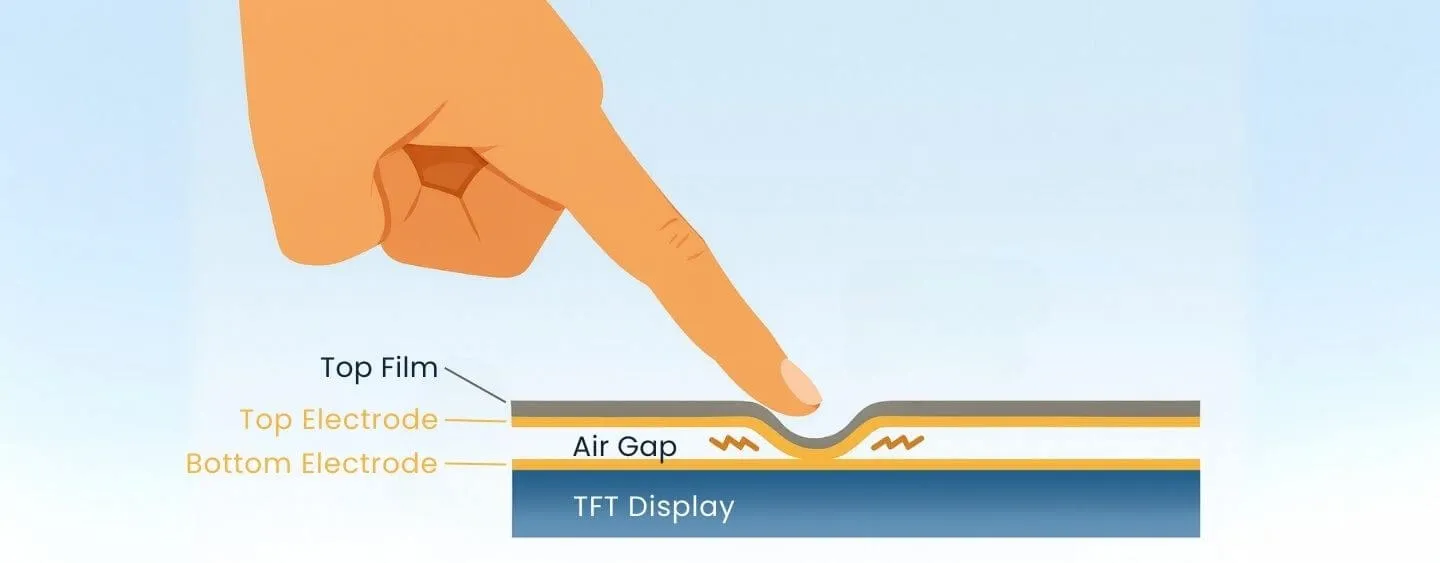
Resistive touchscreens
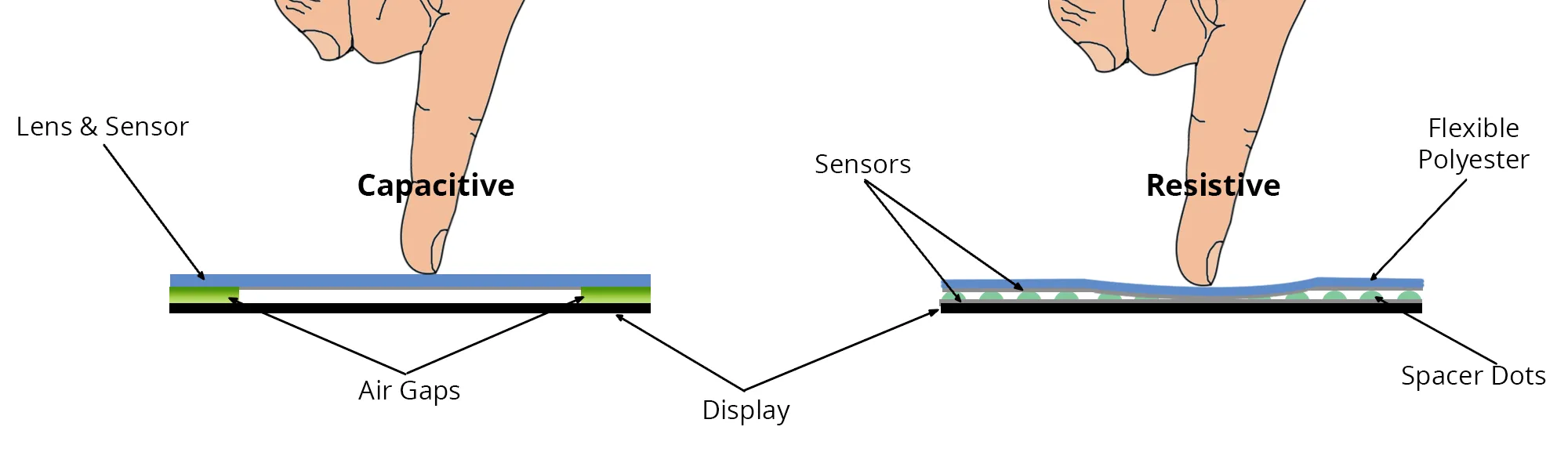
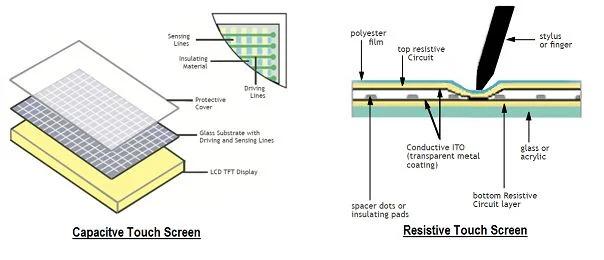
Older touchscreen phones often included a stylus. Those devices used resistive touchscreens, which consist of thin conductive layers separated by a gap. When the screen is pressed, the layers make contact and the controller detects the resulting change as a touch signal. Because the mechanism relies on physical pressure rather than body capacitance, resistive screens can register input from a stylus or a fingernail instead of bare skin.
Capacitive touchscreens
Most current smartphones use capacitive touchscreens. These detect changes in capacitance caused by a conductive object, such as the human body, coming into proximity or touching the surface.
Capacitive screens are built from multiple layers of glass, typically four. During manufacture, an indium tin oxide coating (ITO) is applied to one or more layers; these conductive ITO layers form the sensing surface. The four corners of the panel typically provide connections for electrodes. The outermost layer is a thin protective glass made from silica, with a thickness on the order of 0.0015 mm.
How touch detection works
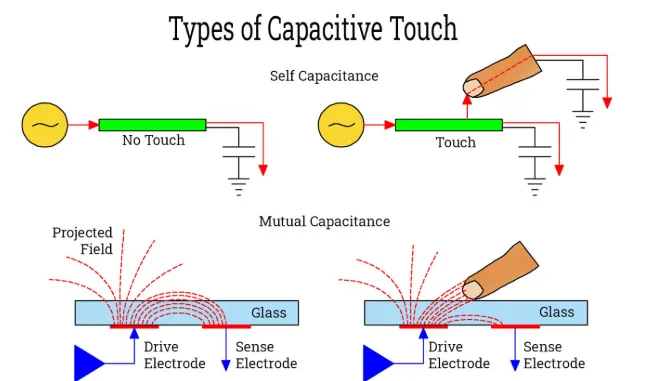
When a finger approaches or contacts the screen, a coupling capacitance forms between the finger and the sensing surface. This coupling alters the local electric field and provides a path for high-frequency signals through the capacitive element. The fingertip effectively draws a very small amount of charge from the sensing layer, and the touch controller measures the change in capacitance to determine the touch location and respond accordingly.
Practical limitations
Capacitive screens do not strictly require direct skin contact; any object or tool that provides sufficient capacitive coupling can operate the screen, which is why some nonconductive styluses and specialized tools exist. However, when the finger is wet, large areas of the screen can become conductive, making it difficult for the controller to distinguish the actual contact point. This can cause touch drift and reduced responsiveness when sliding or tapping the screen.