ALLPCB


Overview
As of October 2023, China had 3.215 million 5G base stations, accounting for 28.1% of the country's total communication base stations. The rapid growth in 5G sites has raised concerns about power consumption. Electricity costs for base stations represent a significant operating expense for carriers, making energy reduction a priority.
1. High Energy Consumption of 5G Base Stations
Since the 2G era, the energy consumption of communication networks has steadily increased. While users benefit from broader coverage and higher speeds, network expansion has driven higher power demand. More sites, wider frequency bands, larger bandwidth, and stronger processing all increase power draw. Compared with 4G sites, 5G stations can consume nearly three times more power, and the number of 5G sites has increased substantially to address coverage reduction. Mainstream 5G single-system full-load power consumption is about 3.5–4 kW. Statistics show an average 5G micro site consumes about 65 kWh per day. At a tariff of 1 CNY/kWh, annual electricity expenditure for 5G sites nationwide would be substantial.
Power supply equipment, transmitters, and transport equipment generate significant heat, so air conditioning must run continuously to cool the site. Air conditioning accounts for about 54% of a site's electricity expenditure, making it the primary consumer in site rooms.
In addition to high electricity costs, power provisioning is a challenge. Because 5G loads are about three times higher than 4G, existing 4G distribution systems may be insufficient. Upgrades to supply cables, circuit breakers, air conditioning, power supplies, and batteries may be required, increasing cost and complexity. High power demand can therefore constrain 5G deployment.
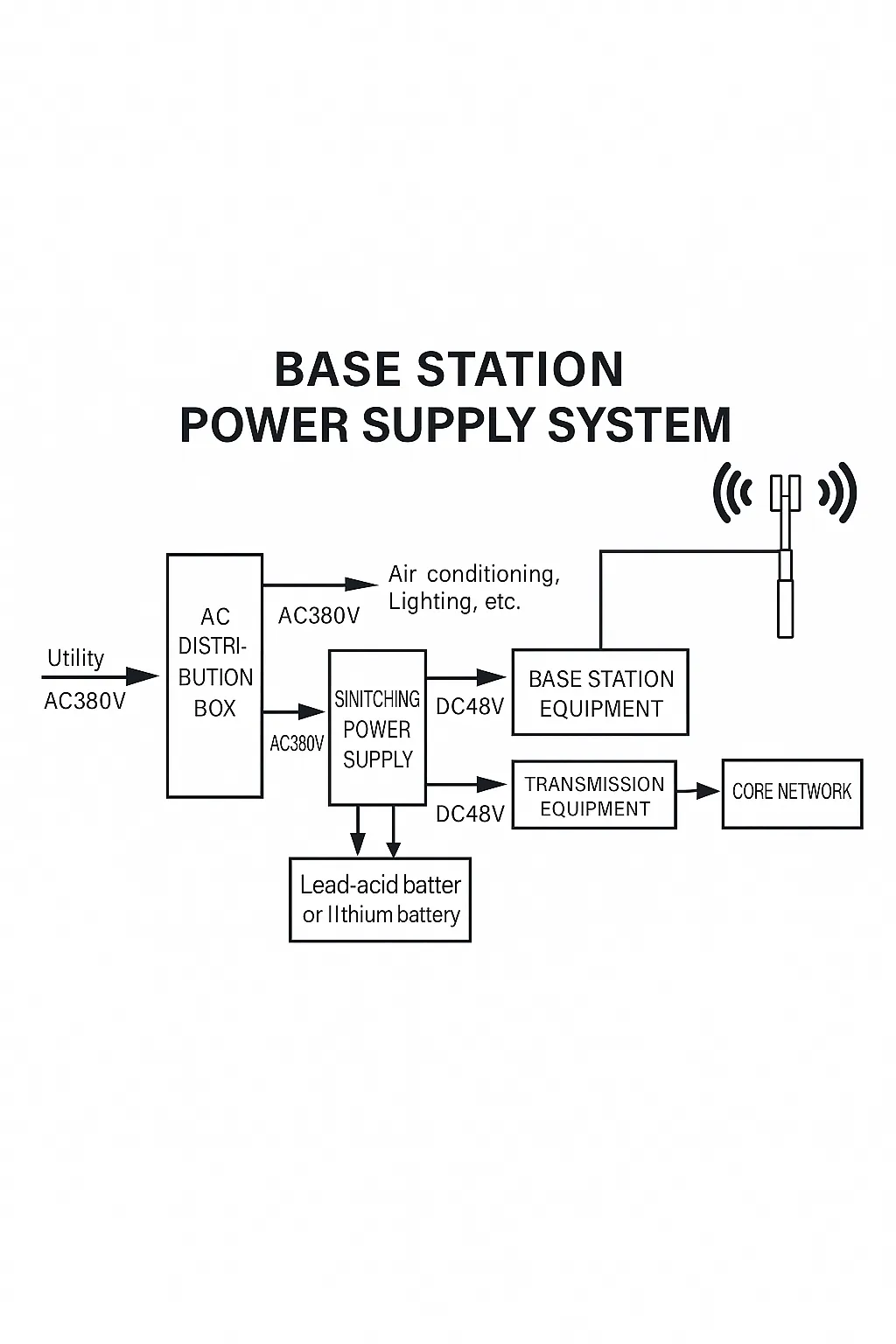
Base station power supply system diagram
2. Smart Power Management for Base Stations
Many existing base station power systems lack intelligence, energy-saving functions, and easy maintenance. They do not provide early detection of power system faults, so operators must dispatch personnel for on-site checks, increasing operating costs.
Acrel proposes a smart power cloud platform for base stations that integrates energy sensors, intelligent miniature circuit breakers, and air conditioning controls to enable fine-grained remote management of site power use and support reliable, energy-efficient operation.
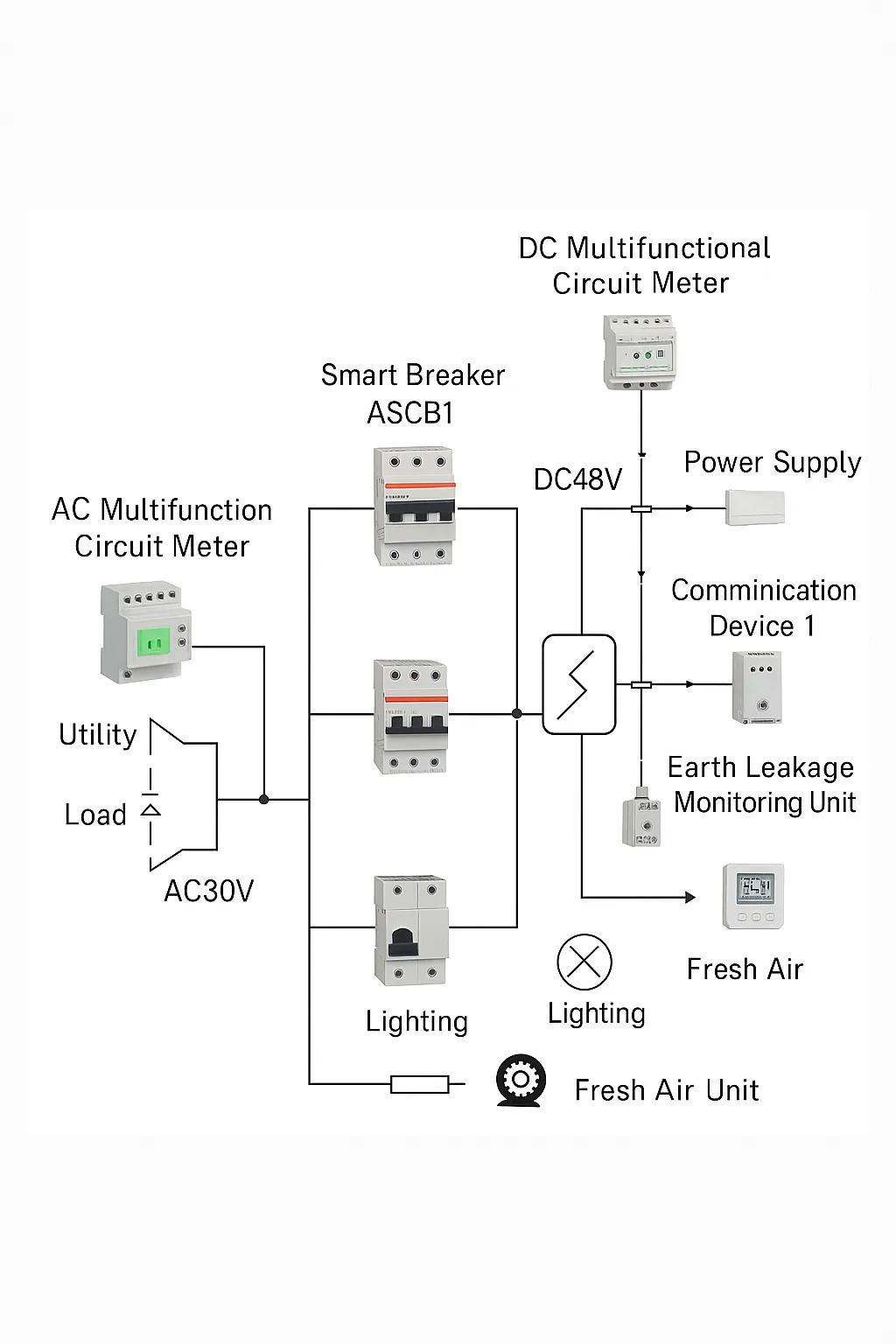
Site electrical data acquisition configuration
2.1 Power Monitoring and Intelligence
The platform monitors electrical parameters, aggregates energy usage, and issues real-time alerts for abnormal electrical conditions, such as mains/emergency input and DC feeder undervoltage, loss of voltage, and battery anomalies, enabling remote digital management.
- Install AC multi-circuit meters to collect electrical parameters of mains circuits, emergency generator circuits, and main incoming circuits and upload to the platform.
- Install DC multi-circuit meters to collect electrical parameters of DC feeder circuits and upload to the platform.
- Install intelligent miniature circuit breakers to monitor and control air conditioning, lighting, and fan circuits; data is uploaded to the platform.
- Install air conditioning infrared controllers for local automatic control and remote control from the platform.
- Install battery monitoring units to collect battery data and upload to the platform.
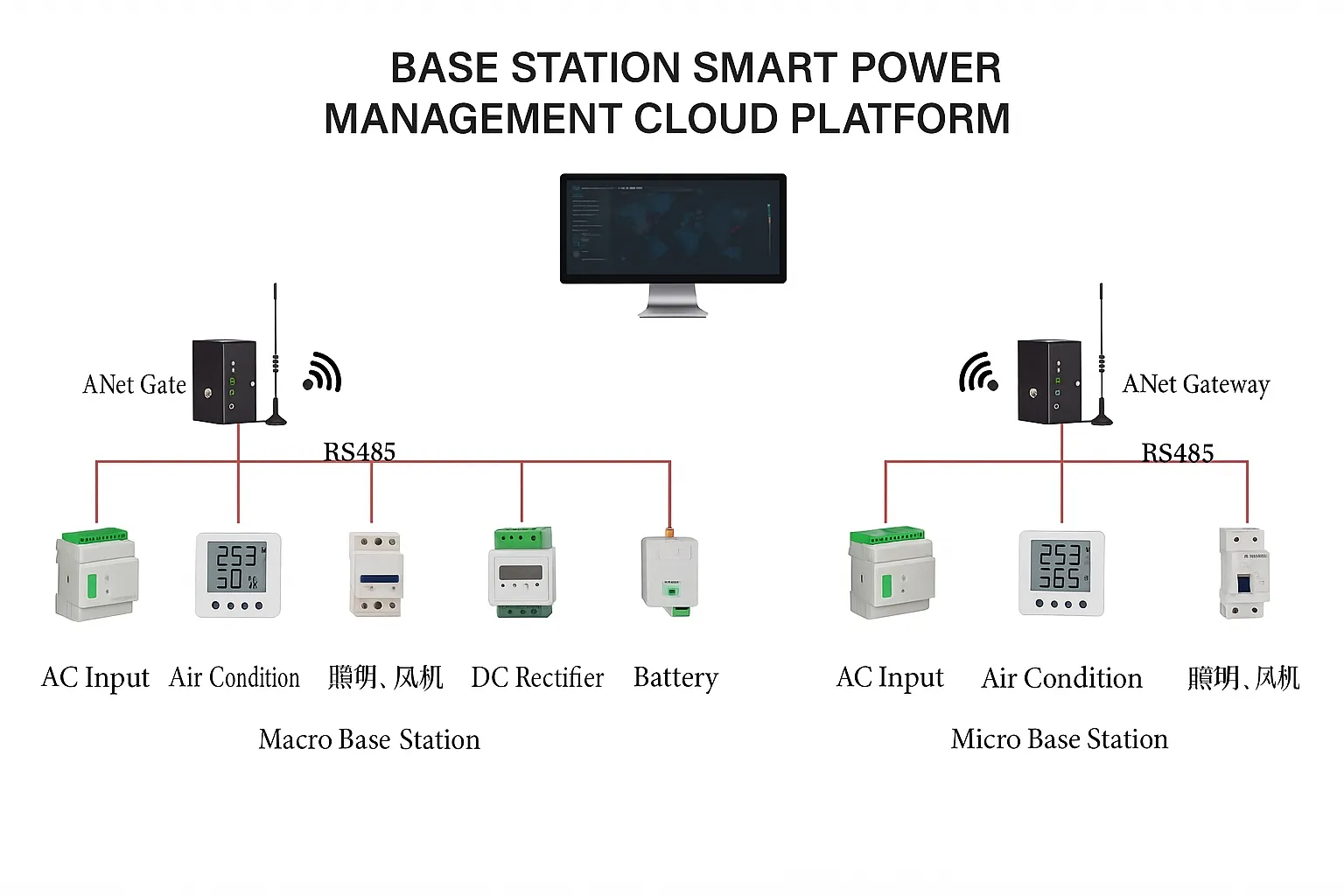
Site power data transmission diagram
2.2 Energy-Saving Control
Edge computing gateways run control logic that compares external ambient temperature with internal site temperature to automatically switch air conditioners to standby and start or stop fresh-air fans. By leveraging natural cooling when conditions allow, internal temperature and humidity are maintained within target ranges, reducing air conditioning power consumption.
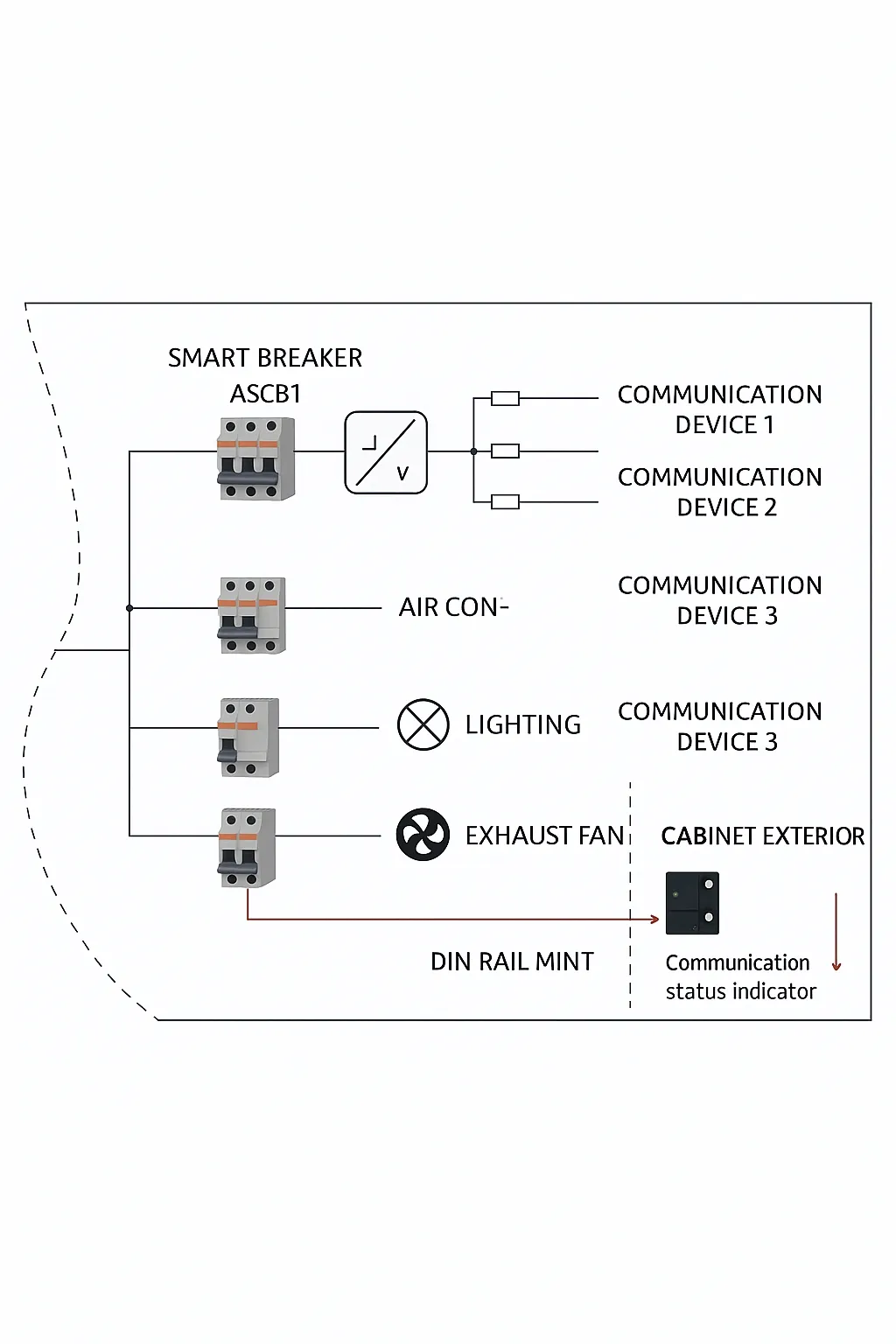
Air conditioning fan energy-saving control diagram
2.3 Power Capacity Expansion Management
Because 5G increases power demand relative to 4G by about three times, upgrading existing 4G sites often encounters insufficient mains capacity. Upgrading mains might require replacing supply cables, breakers, air conditioning, power supplies, and batteries, and in some cases mains capacity cannot be increased.
One approach used in industry is to add an external battery-based energy storage system that discharges during load peaks and charges during idle periods, avoiding mains modification. The storage system can also act as backup power during wide-area outages, reducing large-scale service loss. The platform can integrate lithium battery energy storage inverters and battery management system data and implement charge-discharge control strategies.
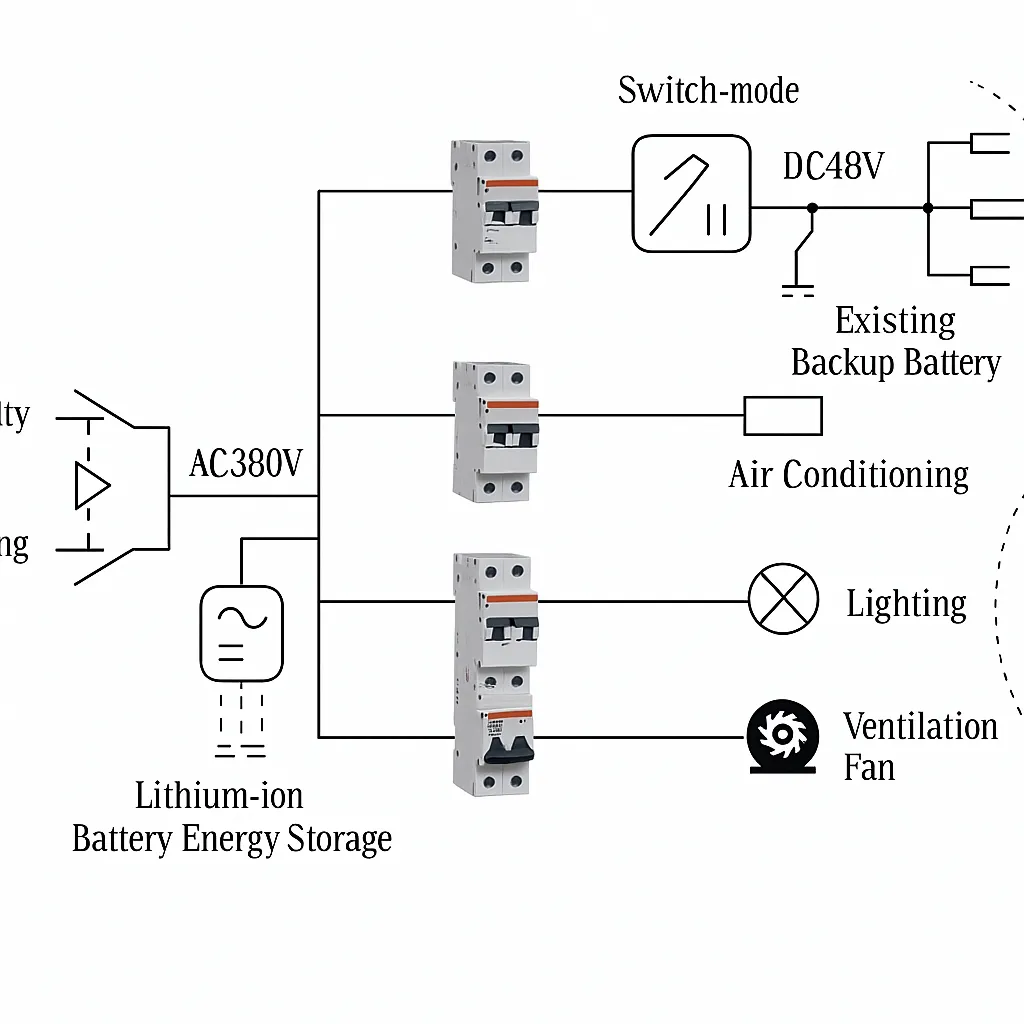
Site power capacity expansion diagram
2.4 Example Digital Distribution Equipment Selection
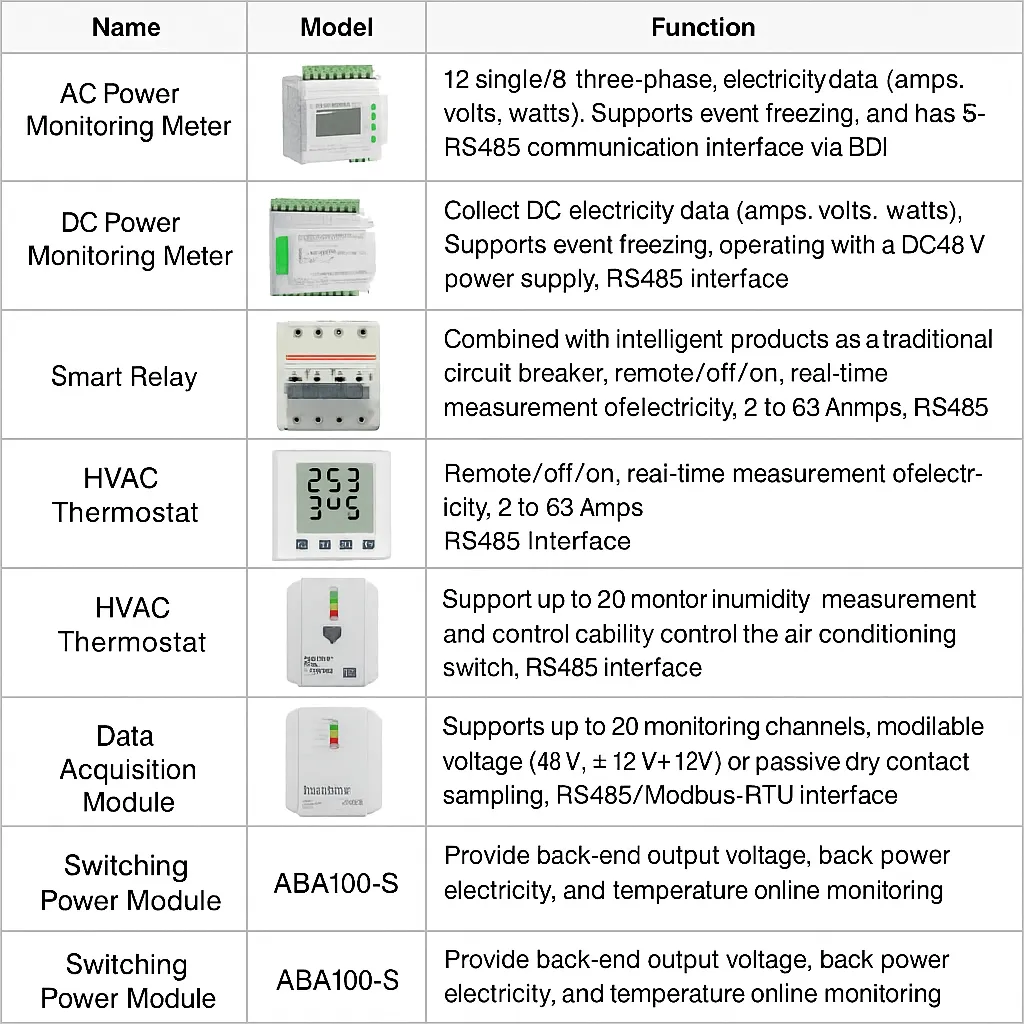
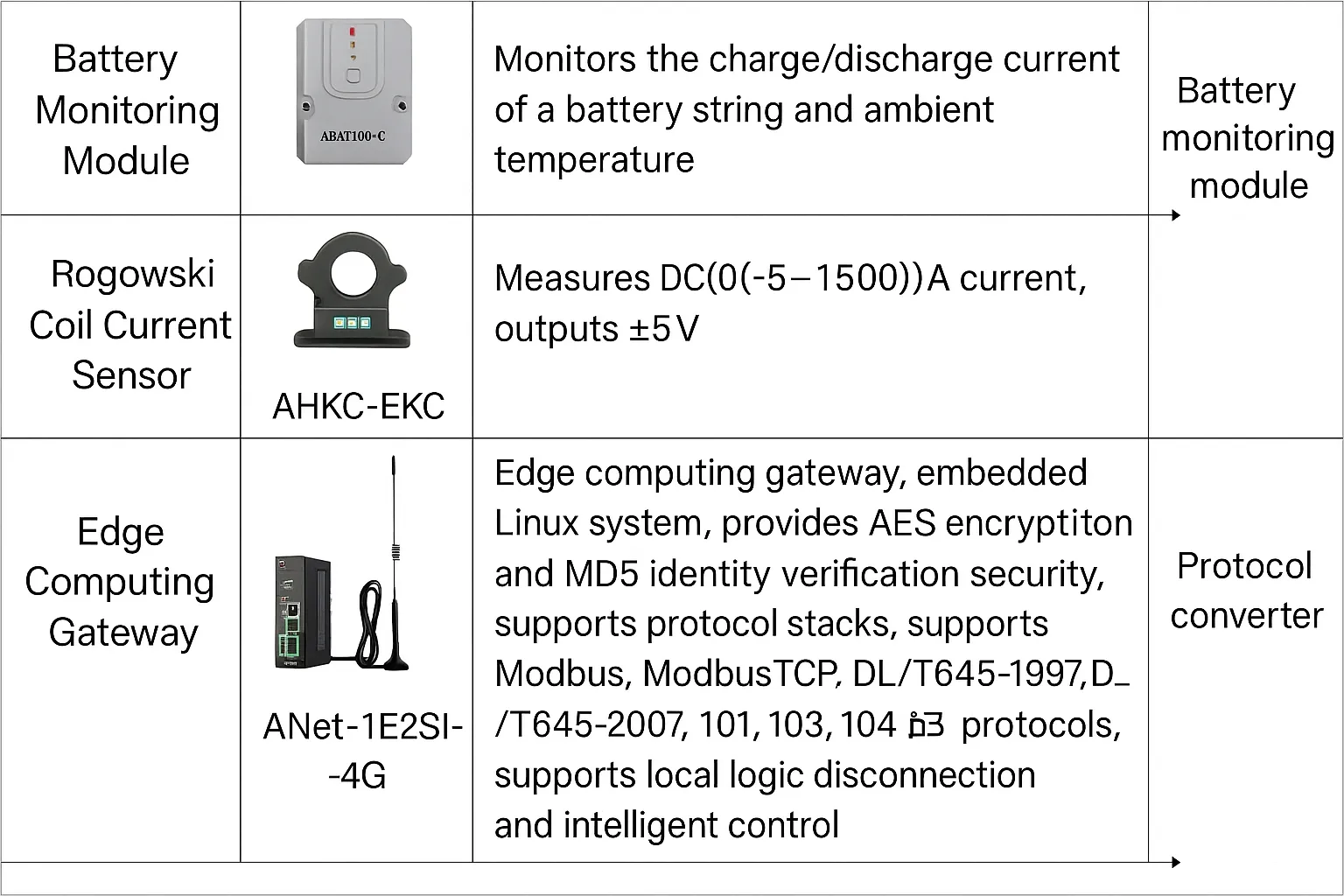
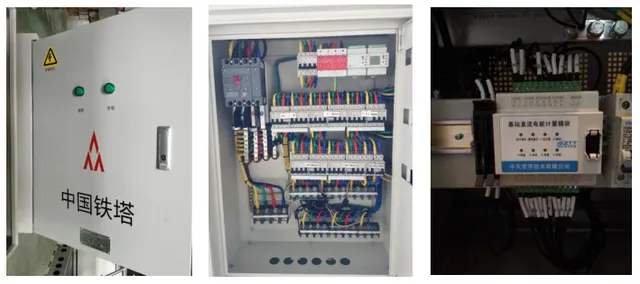
Example equipment selection for site digitized distribution
3. Smart Power Cloud Platform for Base Stations
The Acrel base station smart power platform can be deployed locally or in the cloud. It collects distribution system data for visualization and analysis and uses local edge computing to control air conditioning and fans. The platform enables remote centralized monitoring and energy-saving control. When alarms occur, the platform sends notifications via SMS, voice call, or app push to relevant personnel to improve operations and maintenance efficiency and provide transparent management.
3.1 Site Overview
A GIS map shows site locations, detailed site information and equipment configuration, and displays the month's alarms and energy usage for each site.
3.2 Site Power SCADA
The interface displays the operational and consumption status of site equipment, including mains, emergency generation, power supplies, air conditioning, fans, batteries, and load devices, as well as environmental data inside and outside the site.
3.3 Energy Consumption Analysis
The platform aggregates site energy consumption data, performs period-over-period and year-over-year comparisons, and generates energy reports.
3.4 Lithium Battery Energy Storage Management
The platform integrates battery management systems and energy storage inverter data, providing monitoring of operating modes and selectable control strategies. It monitors cell current, temperature, state of charge (SOC), and state of health (SOH), checks DC system insulation, and sets charge-discharge policies based on load variation or manual commands to ensure reliable power supply.
3.5 Alarm Notifications
The platform can notify responsible personnel by SMS, app push, email, or voice call when anomalies occur.
3.6 Operations and Maintenance Management
O&M functions include hazard inspection, hazard handling, records, reminders, work order processing, and batch hazard handling.
4. Applications and Results
In December 2021, several Chinese ministries published a plan to promote green, high-quality development of data centers and 5G infrastructure, setting a target of at least a 20% improvement in 5G energy efficiency by 2025. The described energy saving and digital management approach has been deployed at multiple sites, with reported average energy savings exceeding 20% and operations efficiency improvements of around 40%, supporting the digital transformation of communications site management and national carbon goals.