ALLPCB


Overview
A 1993 survey by Helsel and Doherty analyzed 805 VR research projects worldwide. The results showed that entertainment, education, and art accounted for 21.4% of applications; military and aerospace 12.7%; medicine 6.13%; robotics 6.21%; and business 4.96%. Visualization and manufacturing also represent significant application areas. The following sections summarize major application domains.
Medical VR
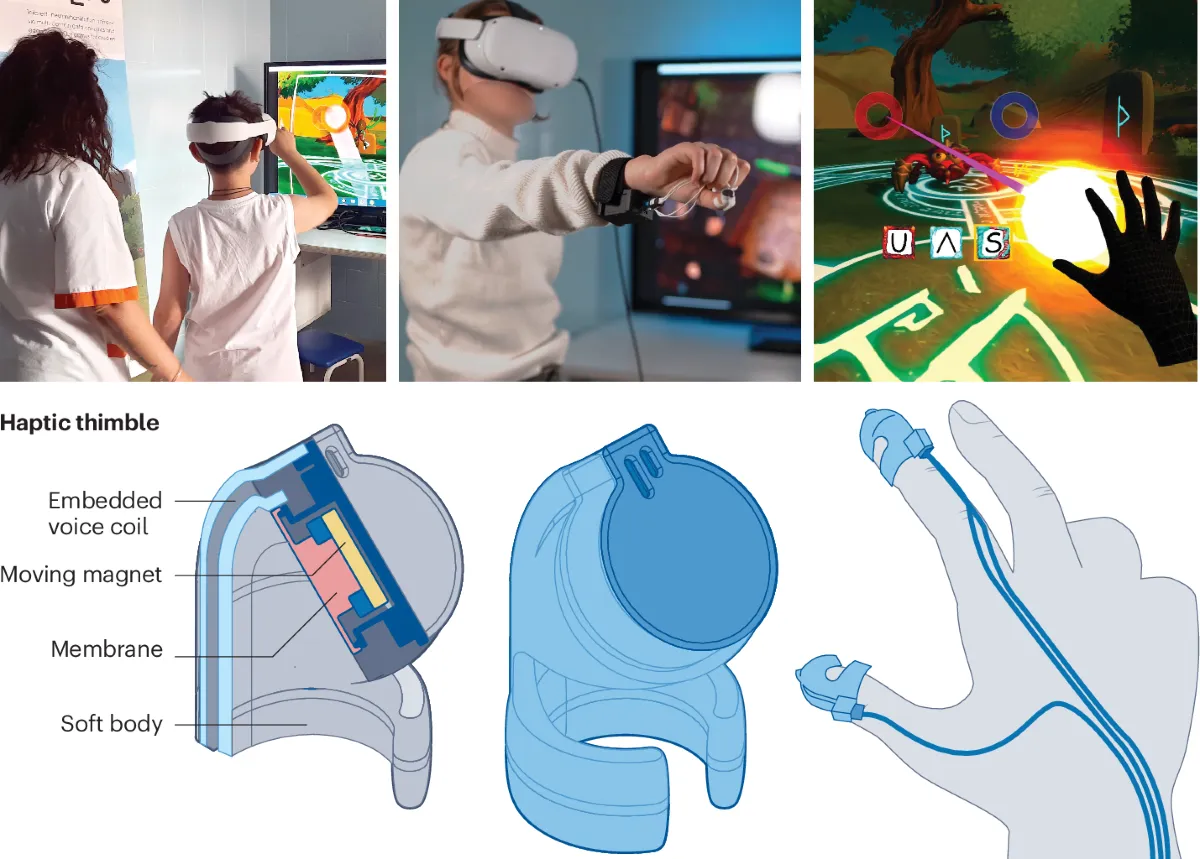
Virtual environments can host detailed human body models. With tracking markers, head-mounted displays, and data gloves, learners can examine internal anatomy more effectively than with textbooks. In the early 1990s, researchers Pieper and Satara developed a virtual surgical trainer on two SGI workstations for leg and abdominal surgery simulation. The system included a virtual operating table and lights, virtual surgical instruments, and virtual human models and organs. Using an HMD and data gloves, users could perform simulated procedures. Further improvements were needed to increase realism and add networking for multi-user training and remote expert guidance.
VR is also relevant to teleoperated surgery, surgical planning, intraoperative guidance, outcome prediction and rehabilitation, and new drug development.
Entertainment, Art, and Education
The combination of rich sensory input and 3D displays makes VR well suited for video games and interactive media. Because entertainment applications often tolerate lower fidelity, VR has advanced rapidly in this sector. Examples include a large multi-user VR entertainment system in Chicago themed around a future war set in 3025, the UK "Virtuality" game system with HMDs to enhance immersion, and a 1992 system called "Legeal Qust" that incorporated AI features and won that year's VR product award. Home entertainment applications also show potential.
As a medium for displaying information, VR can transform static art into dynamic, participatory experiences. It can extend artistic expression, enable virtual musicians to perform multiple instruments, and provide accessible concert experiences for people with mobility limitations or remote locations.
In education, VR is useful for illustrating abstract concepts. For example, Lofin and colleagues built a "virtual physics laboratory" in 1993 to demonstrate concepts such as position and velocity, and force and displacement.
Military and Aerospace
Simulation training is important in military and aerospace contexts, offering broad scope for VR applications. Since the 1980s, DARPA has worked on SIMNET, a virtual battlefield system for tank crew coordination that can link over 200 simulators. VR can also simulate microgravity environments, providing an alternative to current underwater astronaut training methods.
Urban Planning
VR provides intuitive visualization of urban environments and can simulate cities under various weather conditions. It helps stakeholders inspect drainage, power distribution, road networks, canals, and other infrastructure, and can model sudden natural disasters such as hurricanes, fires, floods, and earthquakes, supporting government planning efforts.
Interior Design
VR enables realistic representation of interior spaces and supports free movement within 3D environments. Common industry applications include 360-degree panoramas and virtual walkthroughs. Pre-renovation systems allow dynamic changes to wall colors, wallpapers, flooring materials, furniture layout, and decorations, all rendered in real time for design evaluation.
Cultural Heritage Preservation
VR has been applied to cultural heritage preservation and public access. Projects have created online experiential centers for the Egyptian pyramids using panoramic and 3D virtual technologies. IBM produced a comprehensive digital virtual model of the Forbidden City that can be viewed online.
Transportation
VR is advantageous for planning and simulating transportation across air, land, sea, and inland waterways. Combined with 3D GIS, VR can accurately display routes and dynamically simulate the impact of natural disasters on traffic systems.
Real Estate
VR is increasingly used for property presentation and marketing, with potential to replace traditional renderings and 3D animations. It can represent planned landscaping, fountains, plazas, and recreational facilities, and offers virtual tours that allow users to explore a development in detail.
Games
VR is well suited to role-playing, action, adventure/puzzle, and racing games. Modern graphics engines, integrated physics, and AI systems support high-quality visual presentation and game mechanics.
Home Appliances
In product demonstrations and exhibitions, VR can accurately portray product appearance and convey functional behavior. Panorama, video-based, and 3D virtual techniques are applicable across the diverse home appliance market.
Geography
VR, when combined with 3D GIS, provides intuitive representations of terrain and landforms, assisting geographers and providing reliable reference data for engineering projects.
Education and Training
VR's interactivity and vivid presentation are used to simulate courseware for solid geometry, physics, and chemistry. In vocational training, VR supports virtual driving, traffic rule simulation, special equipment operation, and simulator-based equipment training.
Industrial Applications
Industrial uses include industrial park simulation, machine-tool operation training, equipment management, virtual assembly, and industrial control simulation. VR characteristics make these simulations convenient, fast, and capable of delivering realistic, accurate results.