ALLPCB


AI and machine learning are core technologies in modern engineering
Artificial intelligence (AI) is one of the most discussed topics in technology, with applications across many aspects of daily life and industry. This article summarizes key AI-related concepts and outlines recent developments and applications of Edge AI.
Machine learning training paradigms for different application needs
Machine learning (ML) enables systems to learn and improve from data. Different training paradigms are used depending on the task and available data, each with distinct characteristics and use cases.
Supervised learning uses labeled datasets where each input has a corresponding correct output label. It is commonly applied to classification tasks, such as spam detection, and regression tasks, such as house price prediction. Typical algorithms include linear regression, support vector machines (SVM), random forests, and neural networks. Supervised learning can achieve high accuracy and interpretable objectives, but it requires large amounts of labeled data, which can be costly to obtain. Models may also be sensitive to biases in the labeled data and prone to overfitting.
Unsupervised learning uses unlabeled data and learns from the intrinsic structure of the data. It is used for tasks such as clustering (for example, customer segmentation), dimensionality reduction (for example, principal component analysis, PCA), and anomaly detection. Common methods include K-means clustering, hierarchical clustering, PCA, and autoencoders. Unsupervised learning is useful when labeled data are unavailable, but because it lacks explicit targets, results can be harder to interpret and model performance more difficult to evaluate.
Semi-supervised learning combines a small amount of labeled data with a large amount of unlabeled data. It is useful when labeling is expensive but unlabeled data are abundant, for example in text classification or image recognition. Techniques can include graph neural networks (GNN) and certain applications of generative adversarial networks (GANs). Semi-supervised methods can improve performance when labeled data are limited, but training is often more complex and sensitive to label quality.
Reinforcement learning learns by interacting with an environment and optimizing behavior based on rewards and penalties. It is commonly applied to decision-making problems such as robot control, autonomous driving, and game AI. Typical algorithms include Q-learning, deep Q-networks (DQN), and policy gradient methods. Reinforcement learning is suitable for dynamic, complex environments and long-term reward optimization, but it often requires long training times, many trials to find optimal policies, and can be unstable and difficult to interpret.
Self-supervised learning lets models generate their own supervisory signals from unlabeled data, for example by creating proxy tasks through data transformations. This approach is widely used in natural language processing (NLP) and computer vision (CV), and underlies pretraining methods such as BERT and GPT. Common techniques include autoregressive models, autoencoders, and contrastive learning. Self-supervised learning scales well with large unlabeled datasets but can be computationally expensive and may yield models whose internal reasoning is hard to interpret.
Machine learning and AI have broad industry applications. In healthcare, AI assists diagnosis, medical image analysis, and personalized treatment planning. In finance, ML is used for risk assessment, fraud detection, and algorithmic trading. In manufacturing, AI supports process automation, quality control, and predictive maintenance. Transportation applications include autonomous driving and traffic management. Retail uses ML for personalized recommendations, demand forecasting, and customer analytics. Entertainment platforms employ ML to recommend music, movies, and other content.
Deep learning uses deep neural networks to model complex patterns
Deep learning is a subfield of machine learning that uses deep neural networks to model complex patterns and extract features automatically from large datasets. It excels at processing unstructured data such as images, audio, and text, and has matched or exceeded human performance in many tasks.
Deep learning models are typically based on artificial neural networks (ANN). These networks consist of layers of interconnected neurons or nodes. Each layer processes inputs and passes results to the next layer. As the number of layers increases, the network can learn increasingly abstract features. Deep neural networks (DNN) contain multiple hidden layers that enable learning of high-order representations.
Unlike traditional ML models that require manual feature engineering, deep learning learns features directly from data, which makes it particularly effective for image and speech processing. Backpropagation is the core algorithm used to train neural networks by adjusting weights and biases to minimize prediction error.
In computer vision, convolutional neural networks (CNN) are commonly used for object recognition and detection, for example pedestrian detection in autonomous vehicles and face recognition. In natural language processing, deep learning enables speech recognition, machine translation, text generation, and conversational agents. Text-to-speech (TTS) systems and speech emotion recognition also rely on deep models.
In healthcare, deep learning is applied to medical image analysis, tumor detection, pathology diagnostics, and genomics for disease risk prediction. In autonomous driving, deep models assist perception and decision making. In game AI, deep learning has enabled agents to learn complex strategies in environments such as Go and other board or video games. As compute power and data availability increase, deep learning continues to drive advances across many domains.
Edge AI provides faster, more reliable, and more private distributed processing
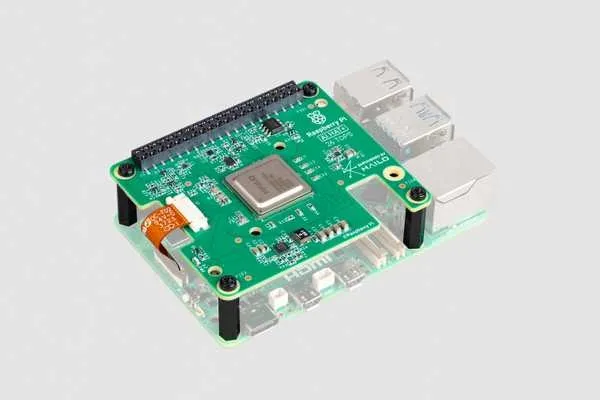
Edge AI refers to running AI algorithms and models directly on edge devices such as Internet of Things devices, smartphones, and embedded systems. Unlike cloud-based AI, Edge AI processes data locally on the device rather than sending all data to remote servers for analysis. This distributed approach can improve latency, reliability, and privacy in many scenarios.
Because processing occurs locally, Edge AI offers low latency and is suitable for real-time applications such as autonomous driving and industrial automation. Advances in hardware have enabled edge devices to perform increasingly complex AI tasks efficiently on-device.
Edge AI can also improve data privacy and security since raw data can be processed and stored locally, reducing the need to transmit sensitive information over networks. Transmitting only necessary or aggregated data to the cloud reduces bandwidth consumption, which is beneficial in bandwidth-constrained environments. Edge architectures are inherently scalable and distributed, reducing single points of failure.
Common Edge AI applications include smart home devices such as smart speakers, smart surveillance, and intelligent appliances, where on-device processing enhances user experience while protecting privacy. In manufacturing, Edge AI supports machine condition monitoring, quality inspection, and fault prediction to enable industrial automation and smarter operations.
In healthcare, Edge AI can run on wearable devices to monitor vital signs like heart rate and blood pressure and provide personalized health feedback in real time. In transportation, Edge AI enables autonomous vehicles to rapidly process local sensor data and make safety-critical decisions. In retail, Edge AI supports intelligent shelf management, automated checkout, and demand forecasting. Logistics applications include parcel tracking and route optimization. In agriculture, Edge AI is used for real-time monitoring of crop environments, pest and disease prediction, and automated machinery control.
Due to its low latency, efficiency, and privacy advantages, Edge AI is an effective solution for applications that require real-time response and distributed processing.
Conclusion
AI and machine learning are reshaping multiple industries by enabling automation and data-driven decision making. Edge AI extends these capabilities by bringing efficient, low-latency, and more private processing to endpoint devices. As algorithms, hardware, and data continue to evolve, AI, ML, and Edge AI will keep driving innovation and expanding their range of practical applications.