ALLPCB


As reforms continue in the power sector, intelligent management of key infrastructure such as substations and distribution rooms has become an important driver of safe, economical, and efficient grid operation. With increasing electricity demand and accelerating urbanization, the number of power station buildings has surged, widely distributed and subject to diverse environmental conditions, posing unprecedented challenges to the stability, reliability, and security of power systems.
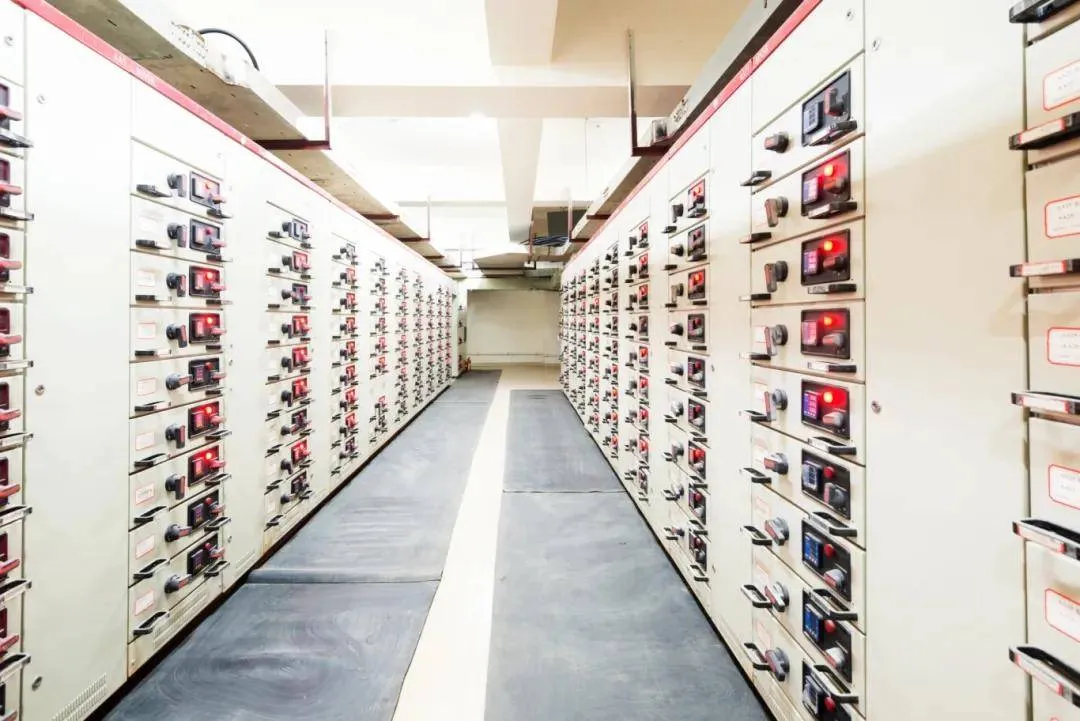
Traditional control-room monitoring systems face significant limitations: subsystems operate independently, creating information silos that reduce overall monitoring efficiency and hinder coordinated safety management. This distributed management approach increases operation and maintenance costs, slows response to emergencies, and weakens early-warning capabilities for potential risks, constraining the grid's progress toward intelligent operation and efficient maintenance.
To address these issues, an intelligent assistance and artificial intelligence visualization gateway for power station buildings has been developed. Designed for substations, distribution rooms, and similar power environments, the solution integrates an LCD display and advanced AI technologies to provide comprehensive visualization, monitoring, and management of on-site parameters. The gateway can monitor transformer conditions, switchgear operation, ambient temperature and humidity, air conditioning and fan status, lighting, smoke detection, access control, and video surveillance, forming a multi-dimensional monitoring network for power station buildings.
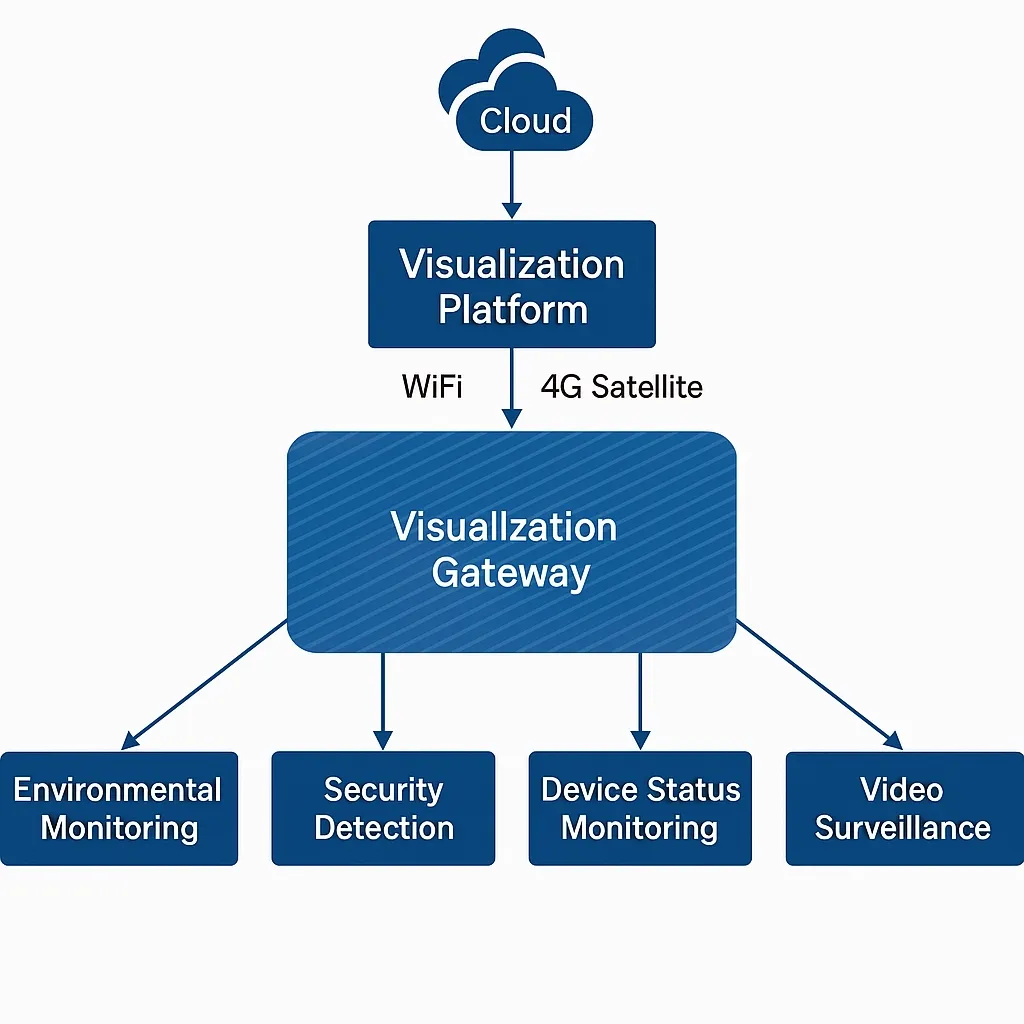
By analyzing real-time data collected from sensors and comparing it against preset thresholds, the gateway can quickly identify and respond to anomalies, enabling automatic alarms, remote control, and fault prediction. Its data integration and analysis capabilities also support maintenance decision-making, facilitating more precise and intelligent operation and maintenance.
1. Client Requirements
Through discussions with the client, Feiling Embedded identified the following requirements for the gateway's main controller:
1) The gateway's core CPU should use a domestically produced chip based on the ARM architecture, with at least 4 cores and a clock frequency of at least 1 GHz.
2) The gateway should include a video processing module for video stream handling and AI analysis, with computing power of at least 3 TOPS.
3) RAM should be at least 2 GB, and storage capacity at least 8 GB.
4) The gateway should run a Linux-based operating system.
5) The gateway should provide at least four RS485 ports, with selectable baud rates of 9600, 19200, and 115200 bps.
6) Ethernet interface should support 100/1000 Mbps auto-negotiation.
2. Main Controller Selection: RK3576 Processor
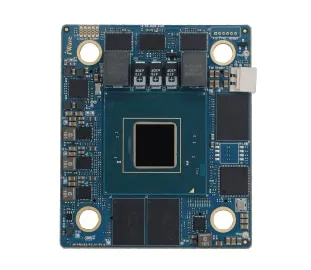
Based on the project specifications, the client selected the Rockchip RK3576 processor as the gateway's main controller. Feiling Embedded recommended the FET3576-C core board developed around the Rockchip RK3576. The RK3576 is a high-performance, low-power, feature-rich application processor aimed at AIoT and industrial markets.
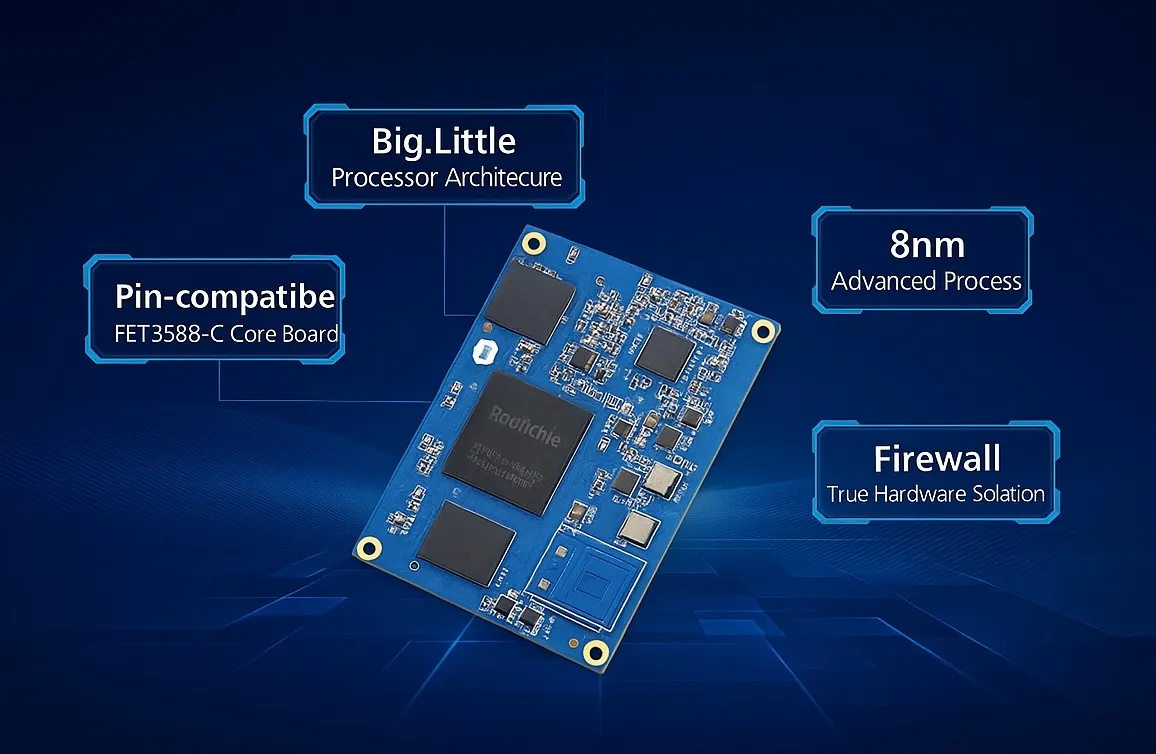
In terms of performance, the RK3576 integrates four Cortex-A72 cores and four Cortex-A53 cores, with a maximum clock of up to 2.3 GHz, and includes a 6 TOPS NPU. This provides sufficient compute power for tasks such as helmet-wearing detection, small-animal intrusion detection, and fall detection.
Regarding interfaces, the FET3576-C core board exposes the RK3576's features, offering 12 UART ports that support 5-, 6-, 7-, and 8-bit serial data transfers; two Ethernet ports supporting 10/100/1000 Mbps; a FlexBus parallel interface that can emulate irregular or standard protocols and supports 2/4/8/16-bit parallel transfers with a clock up to 100 MHz; and other interfaces including DSMC, PCIe 2.1, SATA 3.0, USB 3.2, SAI, and I2C.
For display, the FET3576-C supports H.264 and H.265 encoding and decoding, and offers multiple display interfaces: HDMI/eDP, MIPI DSI, Parallel, EBC, and DP. It supports multi-screen output, 4K@120 Hz display, and image enhancement functions, providing flexible display options and image improvement capabilities.
In configuration, the FET3576-C runs Linux 6.1.57 and currently provides 32 GB eMMC storage, with RAM options of 2 GB or 4 GB LPDDR4, allowing clients to choose based on project needs.
An industrial-grade wide-temperature FET3576J-C core board will be introduced later to meet additional application scenarios and requirements.
3. Conclusion
The intelligent assistance and AI visualization gateway for power station buildings represents a significant evolution of traditional control-room monitoring systems and supports the power sector's shift toward more intelligent, networked, and service-oriented operation. The RK3576-based solution provides robust computing performance, rich interfaces, and flexible display and analysis capabilities to enhance safety, operational efficiency, and maintenance decision-making in complex environments.
This summarizes the RK3576-based gateway application solution for power station buildings and can serve as a reference for project controller selection.