ALLPCB


Regulable metaverse storage-compute platform
Introduction
The metaverse is a virtual world constructed using digital technologies, mapped from or extending beyond the physical world and capable of interacting with it. It provides a digital living space and emergent social systems, integrating multiple new technologies into a hybrid physical-virtual internet application and social form. Based on extended reality technologies it delivers immersive experiences and, using digital twin techniques, generates mirrors of the real world. Blockchain technology establishes an economic foundation, tightly integrating virtual and physical worlds across economic, social, and identity systems, and allows users to produce and assert ownership of content. The metaverse will break conventional physical rules and stimulate technological innovation across industries, driving transformation and new business models through deep integration with various sectors.
Background technology
Blockchain
Blockchain is a foundational logical technology for the metaverse. It is a distributed ledger that appends consensus-validated blocks in sequence using cryptographic techniques and a linked data structure to achieve tamper resistance and traceability. Blockchain enables large-scale collaboration among decentralized nodes and offers advantages in data storage, analytics, secure computation, and network security. As such, it underpins key operational logic and economic structures in metaverse systems.
Distributed computing
Distributed computing divides a problem that requires substantial computing power into many smaller tasks, assigning them to multiple compute nodes and aggregating results to obtain the final output. By balancing compute loads across nodes, distributed computing forms a collective computational substrate for the metaverse, reducing total computation time and improving performance and efficiency.
3D modeling
Three-dimensional modeling and multiuser collaboration are the most direct presentation modes for the metaverse. Displayed objects can be physical entities from the real world or entirely fictional. Anything that exists in the physical world can be abstracted into a 3D model, making 3D modeling essential for metaverse visualization.
Extended reality (XR)
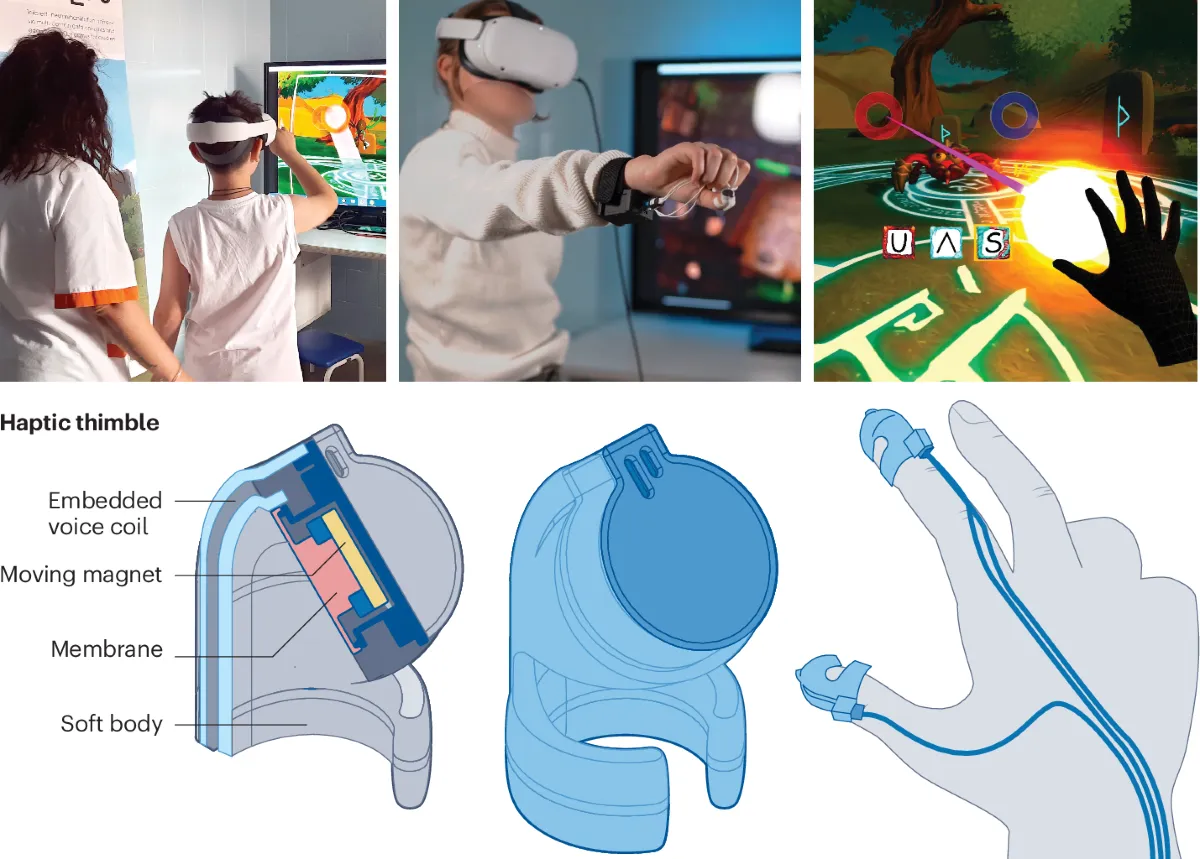
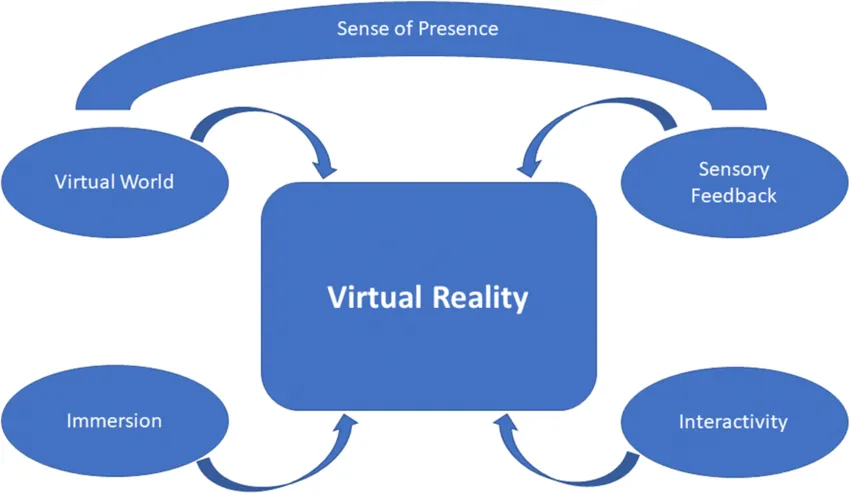
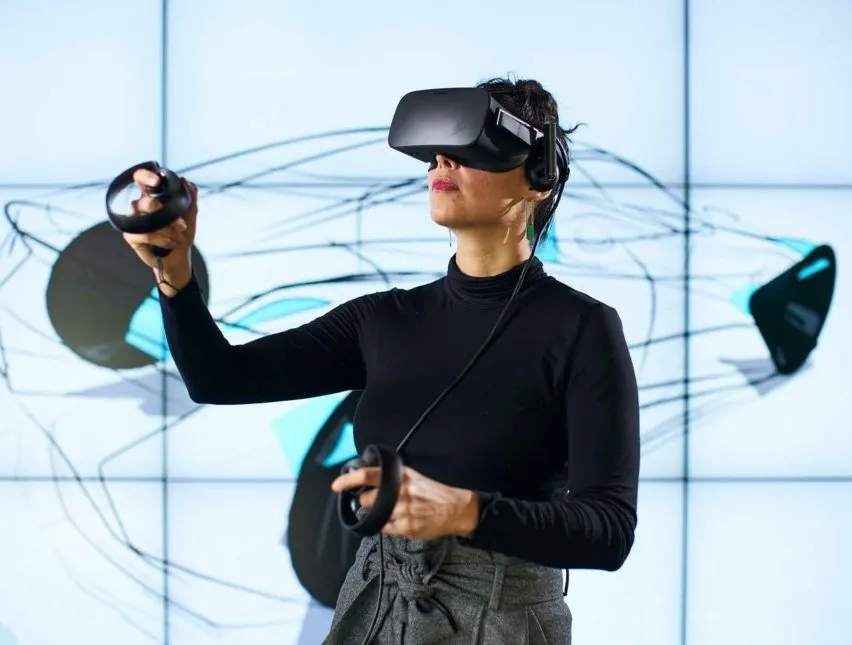
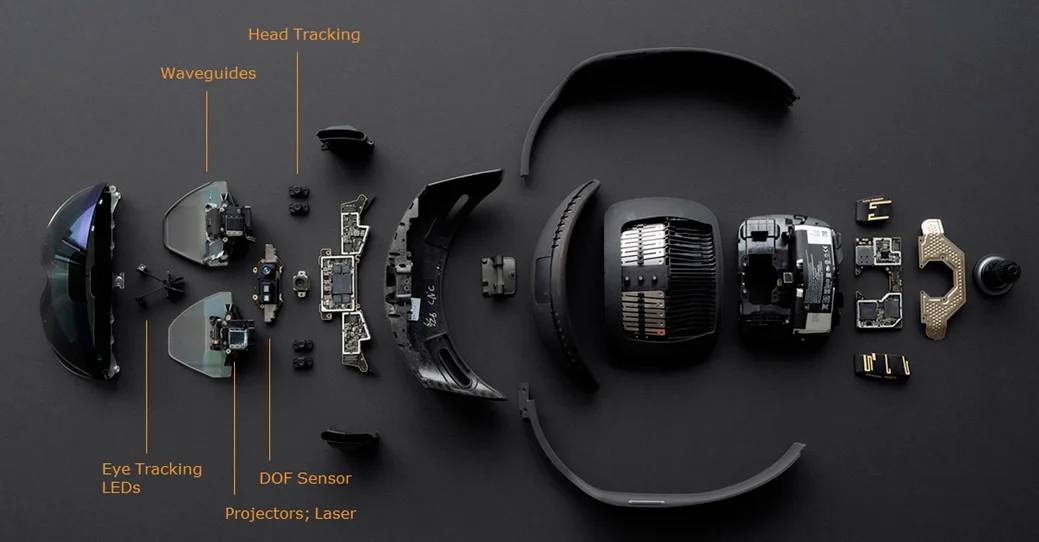
Extended reality (XR) combines real and virtual elements via computing to create a human-machine interactive virtual environment. XR is an umbrella term for immersive technologies including virtual reality (VR), augmented reality (AR), and mixed reality (MR). VR uses head-mounted devices to simulate three-dimensional interactive virtual scenes; AR overlays information and imagery onto the real world through devices such as phones, tablets, or glasses; MR enables real-time interaction among virtual content, the physical world, and users. XR is central to providing immersive metaverse experiences.
Autostereoscopic (naked-eye) 3D
Autostereoscopic 3D display uses binocular visual differences to deliver different images to the left and right eyes, producing a stereoscopic effect when the brain merges the two images. Current autostereoscopic techniques include parallax barrier, lenticular lens, directional backlight, and multilayer displays. The parallax barrier method places a striped barrier between the backlight module and the LCD panel to selectively block light for each eye; lenticular lens uses a layer of cylindrical lenses in front of the display to direct pixels to different angles; directional backlight combines two LED groups with high-speed control to alternate left- and right-eye images; multilayer displays use front and rear panels to simulate depth by showing foreground and background images separately.
Holography
Holography records and reconstructs real three-dimensional images using interference and diffraction. First, object wavefront information is recorded by interfering light from the object (illuminated by a laser) with a reference beam on a holographic plate, converting phase and amplitude into spatial intensity variations. Second, reconstruction uses diffraction: the hologram acts like a complex grating, and coherent laser illumination reconstructs the object wave to produce original and conjugate images. The reproduced images carry strong stereo cues and realistic visual effects.
Significance of the metaverse
The metaverse is characterized by three main features: parallelism with the physical world, reciprocal influence on the physical world, and integration of multiple advanced technologies. These features define the significance of metaverse technology for real-world systems.
Parallel to the physical world
The metaverse essentially virtualizes and digitizes the physical world, requiring substantial transformation of content production, economic systems, user experiences, and representations of physical entities.
Reciprocal influence on the physical world
As digital transformation proceeds, physical-world elements can be moved into virtual environments, and content created in virtual spaces can be projected back into the physical world through various carriers, thereby affecting reality.
Integration of multiple advanced technologies
Metaverse development relies on shared infrastructure, standards, and protocols, and emerges from the continuous fusion and evolution of many tools and platforms. It uses XR for immersion, digital twins to mirror reality, and blockchain to build economic systems, tightly integrating virtual and physical worlds across economic, social, and identity systems while enabling user-generated content and world editing.
Platform implementation
Given advances in metaverse technologies and maturing blockchain platforms, this proposal outlines a basic platform for establishing a metaverse. A blockchain platform developed for the project is combined with a dual-chain architecture and distributed computing to form a multiuser collaborative storage-compute integrated metaverse platform.
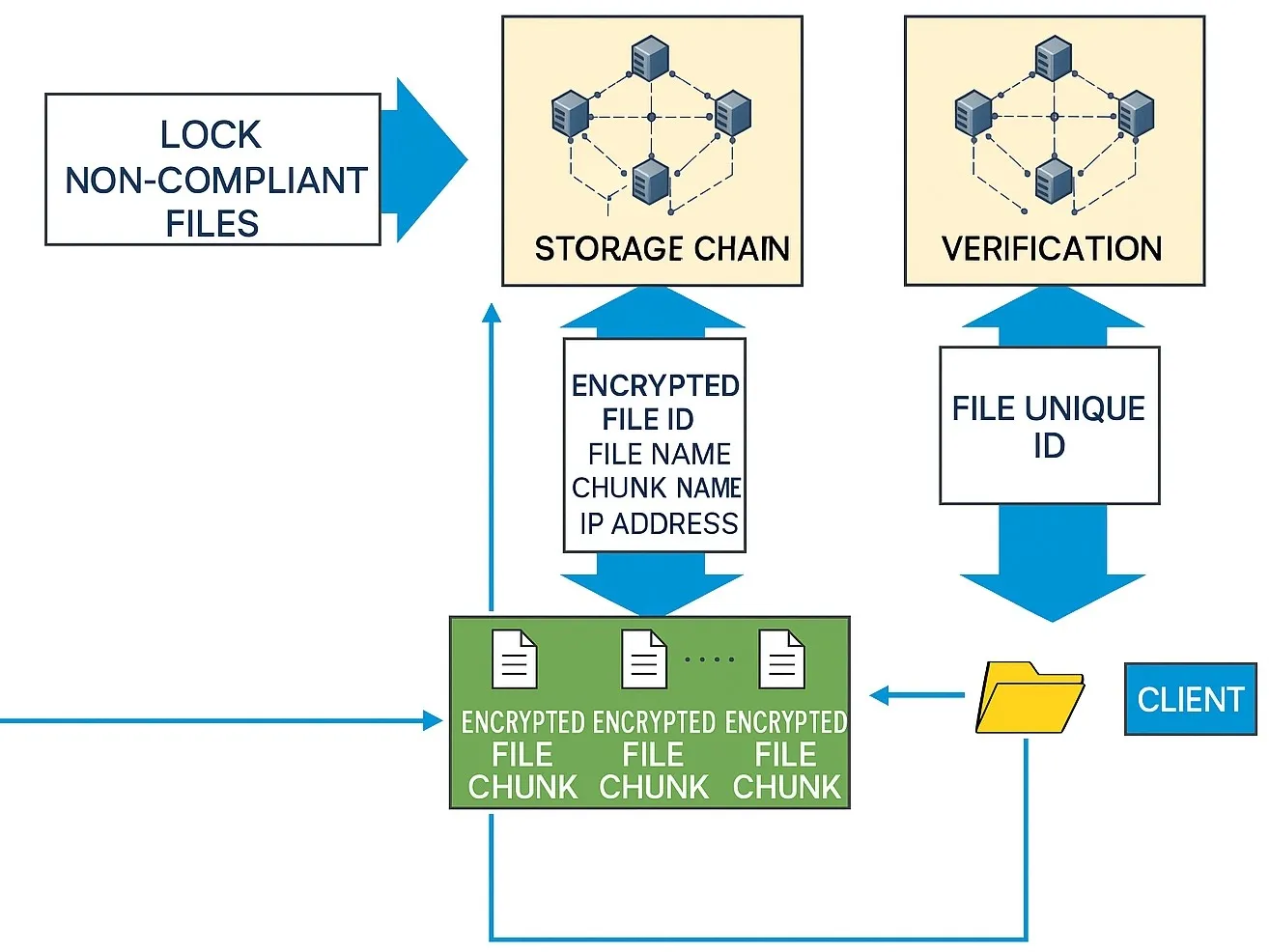
Storage-compute integrated supervisory metaverse platform
Basic workflow
Users upload files and related metadata to the user platform. After inspection by a supervisory server, blockchain synchronization records 3D model metadata uploaded by nodes into the ledger, integrating models on-chain to form a combined metaverse. Other users retrieve model metadata from the blockchain; clients parse model files and render 3D models for display. Users enter scenes via immersive devices to interact and collaborate with uploaded data in real time.
Model storage
The platform combines blockchain with data sharding for model storage. Blockchain manages file metadata and stores file location and verification information, leveraging decentralization and traceability to prevent tampering. Large model files are sharded and stored on node local storage, while only metadata are recorded on-chain to avoid exponential data growth. This approach preserves data integrity while minimizing excessive data volume and redundancy. A supervisory server can lock file shards or revoke download permissions if uploaded content fails to meet regulatory requirements, such as containing illegal material.
Distributed computation
3D model rendering requires significant computation and can be decomposed into multiple tasks distributed to nodes via the blockchain. Nodes publish compute results to the blockchain and receive token rewards. Completed models are propagated to nodes through blockchain synchronization.
Multiuser real-time interaction
Because blockchain synchronization can introduce latency, real-time multiuser interactions are handled by having clients automatically connect to a given service node. Frame and state synchronization mechanisms ensure consistent position and status data across clients to enable real-time interaction.
Innovations
Scene co-evolution and fusion
Uploaded 3D models are converted into a unified format through distributed computing and stored in a distributed manner via blockchain. Consensus mechanisms and smart contracts record user-uploaded models on-chain, enabling users to collaboratively construct an integrated storage-compute metaverse. Peer-to-peer distribution over the blockchain delivers models to user nodes for scene access and experience.
Storage-compute integrated blockchain
Because the metaverse imposes high demands on model storage and computation, the platform uses a storage-compute integrated blockchain. Metadata such as model names and hashes are stored on-chain to prevent tampering, while large model files are kept in distributed storage to avoid on-chain bloat. Computation tasks are published and received via the blockchain for distributed processing, with token incentives to encourage participation.
Application scenarios
Military
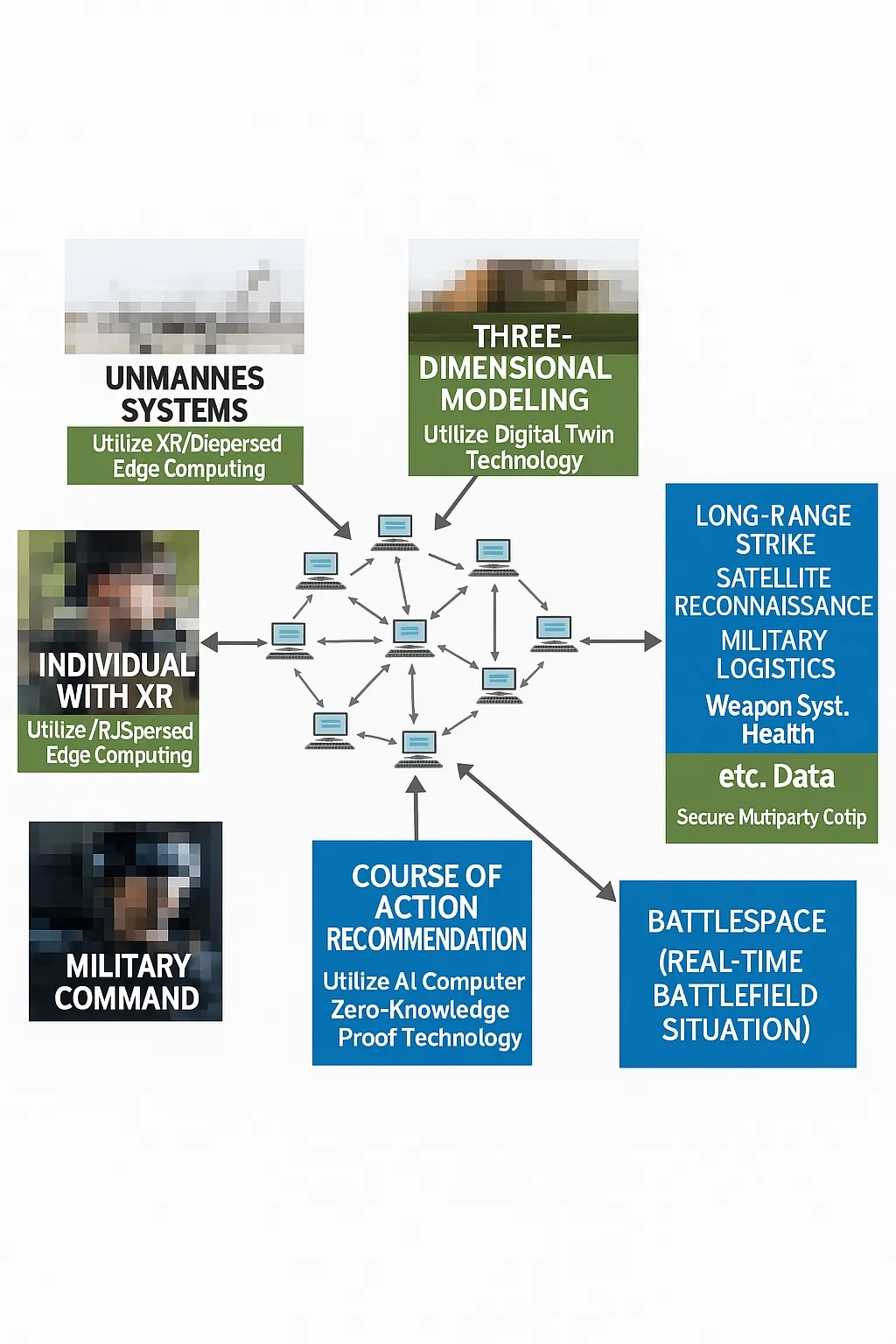
The metaverse can create highly realistic multi-domain battlefield environments across land, sea, air, and space that are switchable on demand. Soldiers can train in immersive, near-combat conditions to improve physical, mental, and tactical readiness. Metaverse-based war-gaming prototypes can evaluate weapon system designs and technical performance to accelerate development cycles, visualize tactical performance, and speed system iteration. Immersive metaverse wargaming enables demonstration and validation of advanced operational concepts, assessing the integrated impact of doctrine, training, command capabilities, organization, equipment, and soldier experience.
Energy
In the energy sector, digital twin techniques can mine historical data to extract valuable insights from large operational datasets. 3D modeling and digital twins can identify potential energy resources and provide remote expert decision support. Combined with AR terminals and 3D visualization, operators can control manufacturing and energy processes via intuitive interfaces while collaborating with remote experts for guidance and optimization. Digital twin and virtual space technologies are particularly suitable for addressing safety challenges in upstream energy activities such as field extraction and offshore exploration.
By building digital models of the grid, environment, personnel, and operations, a data-driven power metaverse can continuously improve operational performance. It can reflect switch states, equipment loads, user demand, and renewable generation in real time; surface anomalies and faults; support root-cause analysis for voltage or power-quality issues and billing anomalies; forecast renewable output, load profiles, and equipment loads; and optimize maintenance cycles, asset configuration, switching strategies, and phase balancing to provide decision support.
Industrial production
In manufacturing, traditional process boundaries among design, production, and sales are evolving toward supply-chain collaboration, regional collaboration, remote manufacturing, cross-border and cloud manufacturing. In the metaverse era, product information will transition from mere informatization to full digitization, improving precision, integrity, timeliness, and real-time availability. The industrial metaverse, supported by industrial internet infrastructure, forms an application pattern and ecosystem where virtual worlds map and interact with real industrial economies. It enables a holographic intelligent manufacturing and intelligent economic system covering the full product lifecycle, promoting more effective industrial internet adoption and closer virtual-physical integration. From 2D drawings to 3D models, static to dynamic models, and abstract data to simulation models, technologies such as the internet, IoT, and mobile networks support data twins, cyber-physical systems, and real-time remote simulation, control, and maintenance, making collaborative production the mainstream model and significantly improving productivity and innovation.
Construction and engineering
The construction metaverse maps design, component production, digital construction, building operations, and waste recycling into virtual space, creating an end-to-end digital construction system that improves lifecycle outcomes and coordination. Virtual operations can guide real-world construction, enabling rapid iteration of design changes without the costs and timelines of physical reconstruction. When combined with engineering workflows, the metaverse divides real and virtual building spaces and can serve as an advanced parameter-driven design tool. Using topology optimization and computational methods, complex structural engineering can be made more orderly, offering strong potential for future applications.
Conclusion
The metaverse is more than a parallel virtual world; its value lies in interactive coupling with the physical world, enabling economic development, improving experiences, and mapping virtualizable parts of the physical world into digital space for association, analysis, simulation, and optimization. This creates opportunities for rapid industry aggregation and innovation. The metaverse supports simulation and cost-reduction across military command, energy, industrial production, and construction. Although still in the early stages, the platform described provides foundational infrastructure and support for further development. As metaverse technologies and industry maturity progress, applications will expand and deepen, with substantial potential in areas such as public services and governance.