ALLPCB


Introduction
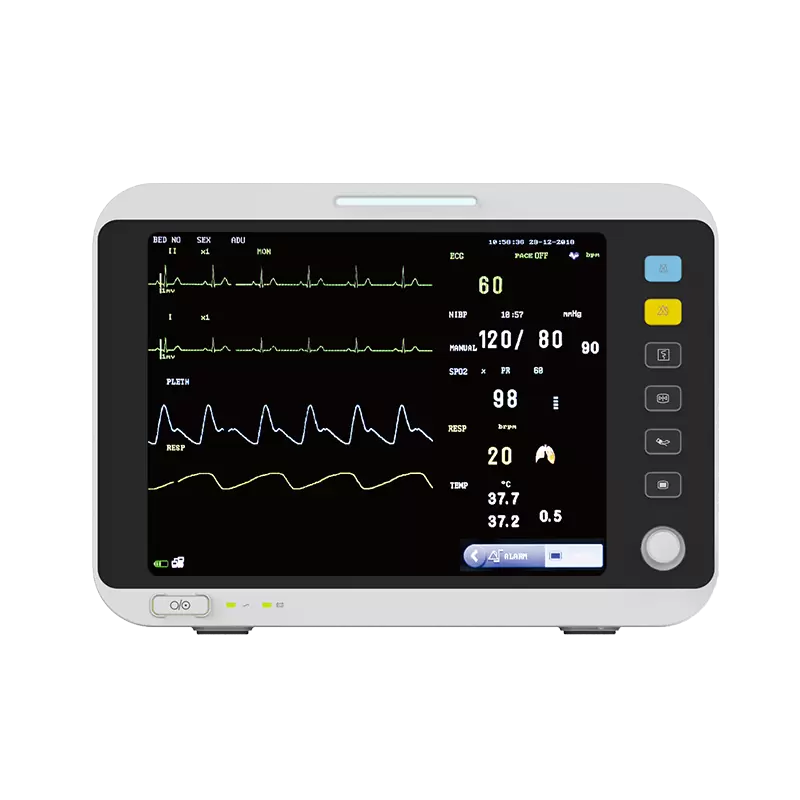
Connectivity technologies are advancing rapidly and have significant implications for health and care. For newcomers, medical devices no longer need to confine patients to hospital beds or specific medical facilities. Clinicians can remotely monitor devices worn by patients and make adjustments even during air travel.
This progress is largely driven by the convergence of mobile phones, computers, wearable peripherals, and personal area networks. From an economic perspective, cost-conscious insurers are encouraging wearable medical devices because early detection and prediction of events can reduce patient treatment costs. Datasheets and related training materials cited in this article are available on Digi-Key.
Why choose Wi-Fi?
Within a PAN there are many competing wired and wireless protocols. Wireless options include Wi-Fi, ZigBee, Bluetooth, ANT+, 6LoWPAN, and Z-Wave. While these protocols offer advantages such as lower power, lower protocol complexity and overhead, and lower traffic, Wi-Fi may be well positioned for medical device use for several reasons.
One reason is the widespread deployment of Wi-Fi compared with several other protocols. Wi-Fi is commonly available in cafes, restaurants, and many public spaces, which is useful for devices that need to connect directly to cloud services or healthcare professionals via public infrastructure. This direct path can also serve as a backup if a wearable host fails.
Another reason is that almost all smartphones support Wi-Fi. Smartphones act as compute and communications aggregators for wearables, providing a low-power, continuous link to cloud services via 3G, 4G, or 5G.
Wi-Fi also includes basic security and encryption features. For example, using IPv6 provides sufficient addresses to uniquely identify each device. Addressing is therefore not a limiting factor.
Finally, there are many mature Wi-Fi solutions available in chip and module form. Designers can use these solutions without deep involvement in complex RF theory. Manufacturers provide example designs, code, layouts, and application support.
Consider modules
For designers, copying a reference design into a printed circuit board may seem straightforward since the design, manufacturing, testing, and characterization have already been completed. However, in practice many factors affect RF performance, and even RF chip vendors may iterate on PCB reference boards and development kits. Passing regulatory testing can be time-consuming and costly, and changes unrelated to RF can force costly PCB rework. This raises cost, risk, and time to market.
For these reasons, specifying a module for prototyping and initial production is often a better choice. Modules frequently come pre-certified for various regional standards and provide support for multiple frequency bands for global use. Modules can be tested independently of the rest of the system, allowing evaluation of enclosures, spacing, and component placement to maximize RF performance when materials are close to the antenna.
One major advantage of using modules is parallel development. While RF modules are developed and finalized, the main application, prototype, and system tests can proceed. This reduces schedule pressure because early production can use OEM Wi-Fi modules, which often have reasonable cost.
Selecting modules
Data rate helps determine the most suitable module. Not every application requires high throughput or high power consumption. Consider the MikroElektronika 3.3V MIKROE-1135 Wi-Fi module that supports 802.11b at 11 Mbit/s. It uses an integrated PCB antenna with an approximate coverage of 400 m, and a firmware-encoded protocol stack allowing an embedded microprocessor to communicate via a standard UART. The plug-in module format supports rapid upgrades and assembly and includes reference schematics and example code. MikroElektronika also offers other RF modules in its Click series.
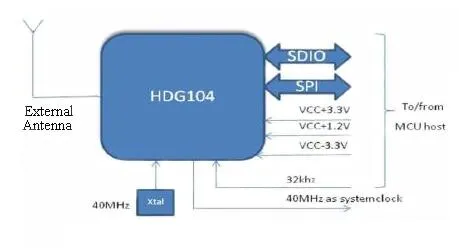
The H&D Wireless HDG104-DN-2 supports up to 54 Mbit/s and handles 802.11b/g. It operates from 2.7 to 3.3 V and uses a small QFN44-like SMT package occupying just 7.1 x 7.7 mm of PCB area.
This module does not require RF tuning and ships pre-calibrated with an assigned MAC address. It is based on an Atmel AVR processor with internal ROM and can accept a 40 MHz clock from the host system (or use a local oscillator) to synchronize the host with internal processors and RF frequencies. For low-power modes it can use a 32.768 kHz clock, and in soft shutdown the power consumption is about 15 mW. The device uses an external antenna and communicates serially via SPI, and it also provides digital I/O.
Texas Instruments also offers 54 Mbit/s Wi-Fi modules, such as the WL1831MODGBMOCT, which combine Wi-Fi 802.11b/g/n transceivers with Bluetooth. These modules are part of the WiLink series, are based on TI Sitara processors, and include stacks and software for Linux and Android integrated with AM335x development kits.
Other available modules include Microchip RN171XVS-I/RM 54 Mbit/s Wi-Fi modules and H&DSP B800-BCP1 surface-mount 54 Mbit/s modules. These modules enable devices with UART or RS-232 connectivity to connect wirelessly to the Internet or local networks.
Faster options
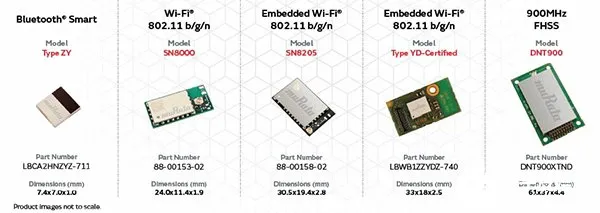
Murata offers a faster module, the LBEE5ZSTNC-523, which supports 65 Mbit/s and combines 802.11b/g/n with Bluetooth 4.0. Murata also provides RF modules that can connect medical devices via Bluetooth and even 900 MHz radios for greater range and improved penetration.
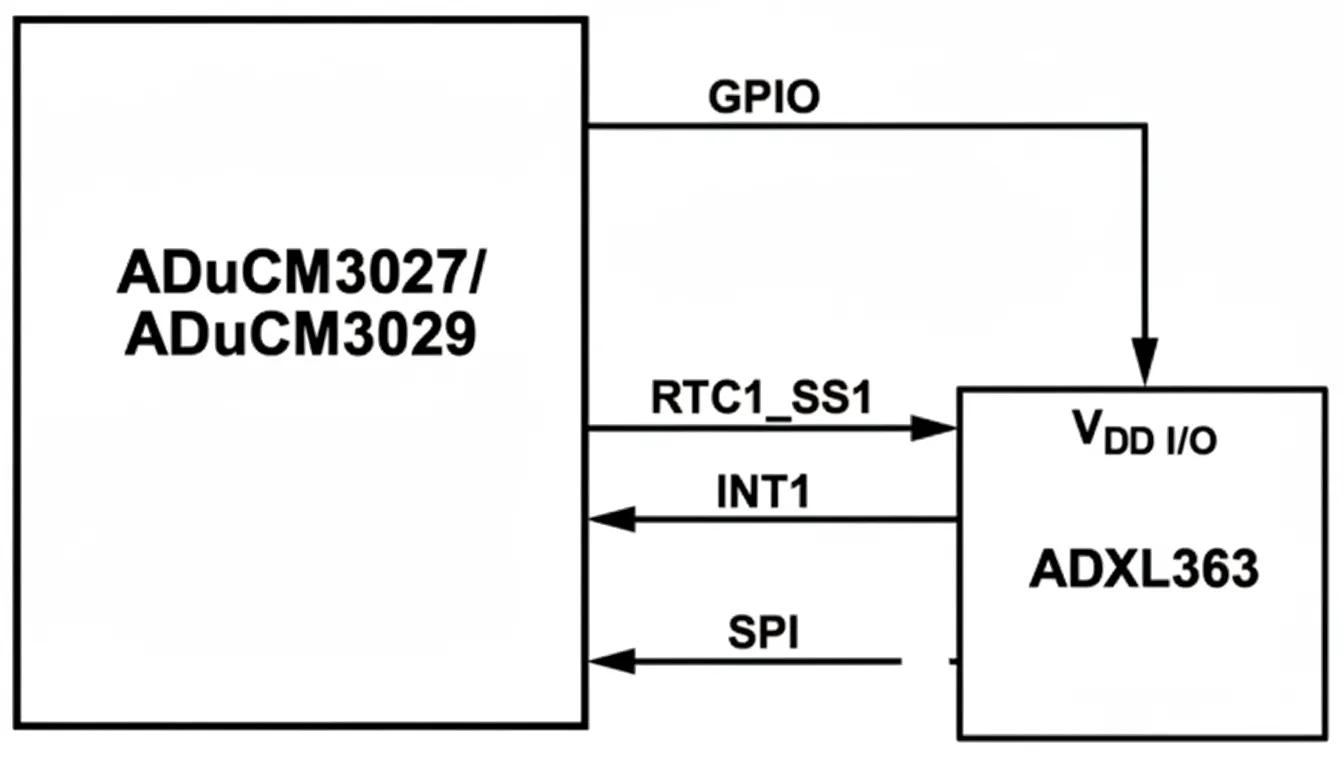
Inventek offers the UART-fed ISM43362-M3G-L44-E-C2.4.0.2 module for 802.11b/g/n with a microstrip antenna and the option to attach an external antenna. The module supports simple serial communication and, with multiple SPI, UART, and USB ports, can act as a small hub. The module also includes an ADC for mixed-signal functions.
BlueGiga provides the WF111 and WF121 Wi-Fi module series with options for internal or external antennas, for example the 72 Mbit/s WF111-E with external antenna and the WF121-A with internal antenna. The Sagrad SG901-1059B-5.0-H supports up to 150 Mbit/s with an external antenna and is a general-purpose 802.11b/g/n module. Integrated single-chip RT3070 solutions use a USB 2.0 interface and provide a 150 Mbit/s PHY compliant with 802.11n draft features. Note that achieving full performance from these parts may require a 300 or 400 MIPS host; 32-bit ARM and x86 hosts have successfully used these modules in tests.
Conclusion
Medical device manufacturers excel in patient-facing and clinician-facing health product development but may not have equal expertise in wireless communications. Module-based solutions let these manufacturers more easily add wireless connectivity to medical sensors or therapy systems. While one team focuses on developing medical functionality, another team can develop the low-cost RF link. This approach can reduce risk, potentially lower cost, and shorten time to market, particularly when repeated regulatory testing is required.