ALLPCB


Introduction
Researchers reported in Applied Physics Reviews a wearable ECG patch that uses active dry electrodes and an optimized geometry to improve bedside diagnostics and continuous cardiac monitoring. The design targets compact, lightweight, gel-free operation and integrates a Bluetooth module for remote sensing and data transmission. The device aims to capture high-quality ECG signal while avoiding issues associated with traditional gel-based electrodes.
Background
Cardiovascular disease remains a leading cause of death worldwide. Conventional Ag/AgCl electrodes typically require conductive gel, which can cause discomfort and skin irritation and is unsuitable for long-term monitoring. Dry electrodes, made from conductive materials and not requiring gel, are preferred for prolonged, comfortable monitoring. However, integrating dry electrodes into wearable ECG systems raises questions across materials, design, fabrication, and cost that must be addressed.
Study Overview
The researchers fabricated dry electrodes using a 150 nm gold thin film. Gold offers chemical inertness, high conductivity, and biocompatibility, making it suitable for bioelectrical applications. At this thickness, the electrodes maintain a favorable surface-to-volume ratio for ECG acquisition.
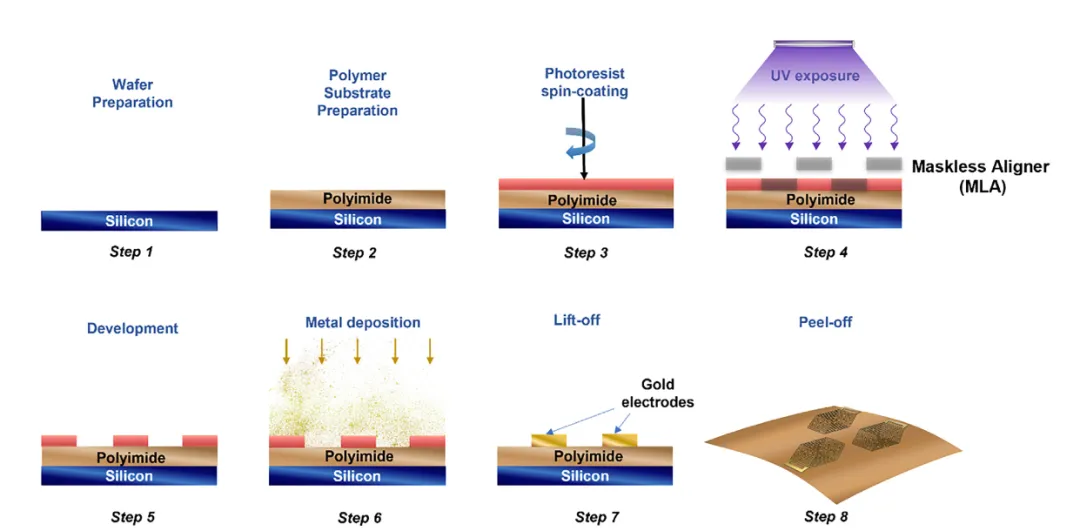
Figure 2: Step photolithography process used in electrode fabrication.
The team compared several electrode geometries within constrained areas to evaluate sensor performance. Results showed that a hexagonal maze geometry covers a larger effective area while minimizing material usage and preserving signal quality.
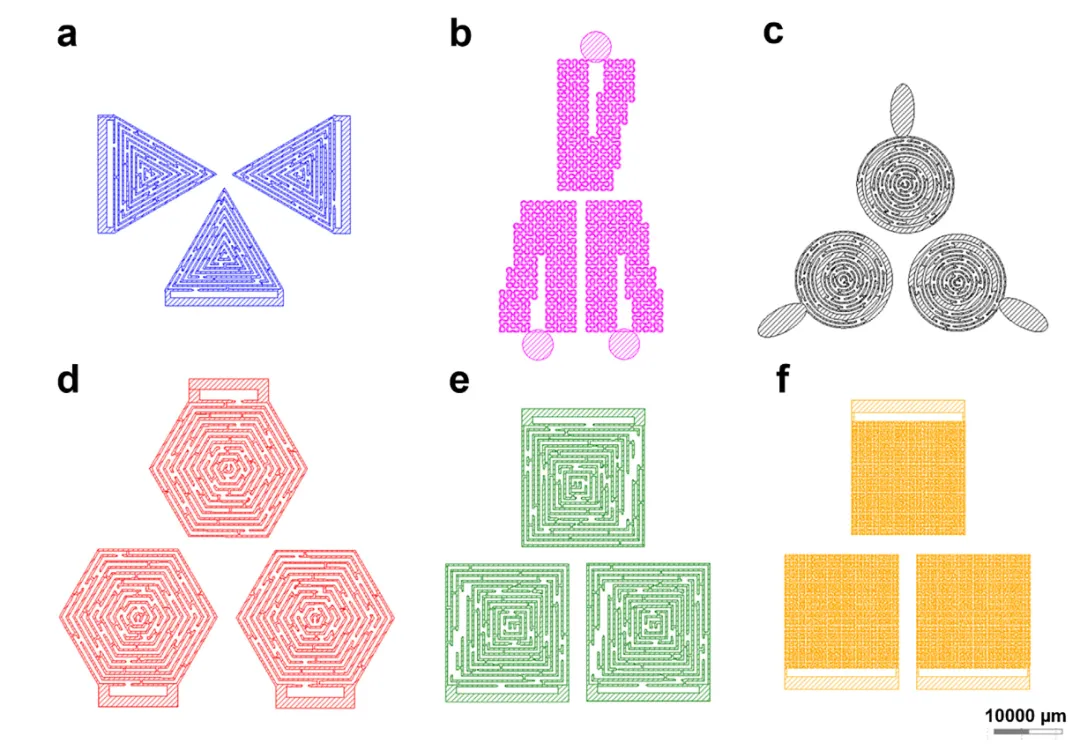
Figure 3: CAD layouts of ECG electrode designs: (a) triangular maze, (b) Peano curve, (c) circular maze, (d) hexagonal maze, (e) square maze, (f) Hilbert curve.
Using a commercial 12-lead ECG as the reference, sensors composed of different geometries were compared. The hexagonal electrode showed greater sensitivity to applied stimuli and a closer correspondence to the standard 12-lead ECG signals. In skin impedance comparisons, the hexagonal dry electrode exhibited higher impedance at lower frequencies compared with Ag/AgCl wet electrodes, but lower impedance at higher frequencies. The researchers also evaluated biocompatibility and waterproofing; no skin irritation or allergic reactions were observed after seven days of continuous wear.
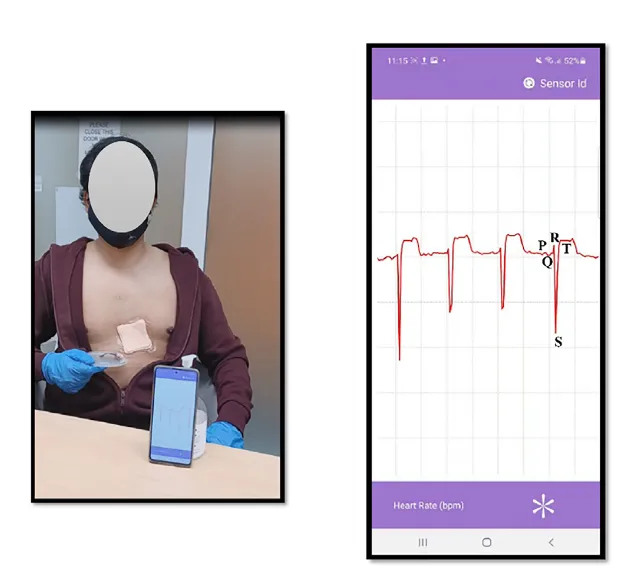
Figure 4: Demonstration of a 3-lead ECG sensor based on the hexagonal maze design, featuring wireless communication.
Significance
Portable ECG patches with gel-free dry electrodes and wireless data transmission can expand remote and outpatient cardiac monitoring and have potential applications in preventive medicine. Their lightweight form factor and accurate detection of abnormal cardiac events make them suitable for clinical use and integration into everyday wearable garments, offering an alternative approach to continuous heart-health monitoring.