ALLPCB


1. Overview
In recent years, battery-powered electronic products have become widely used. Designers increasingly require analog circuits that operate at low voltages to reduce power consumption. Low-voltage, low-power, low-noise analog circuit design techniques are a current focus. From an energy-saving perspective, low power consumption is important not only for battery-powered portable devices but also for mains-powered systems, since it can extend operating life and slow device degradation. The operational amplifier is one of the most fundamental components in integrated circuits. In low-voltage op amp designs, reducing the supply voltage decreases signal dynamic range while noise amplitude becomes a larger fraction of the signal, reducing signal-to-noise ratio. To address these design challenges, DIO Microelectronics has developed several low-power, low-noise op amps for this market.
2. Background
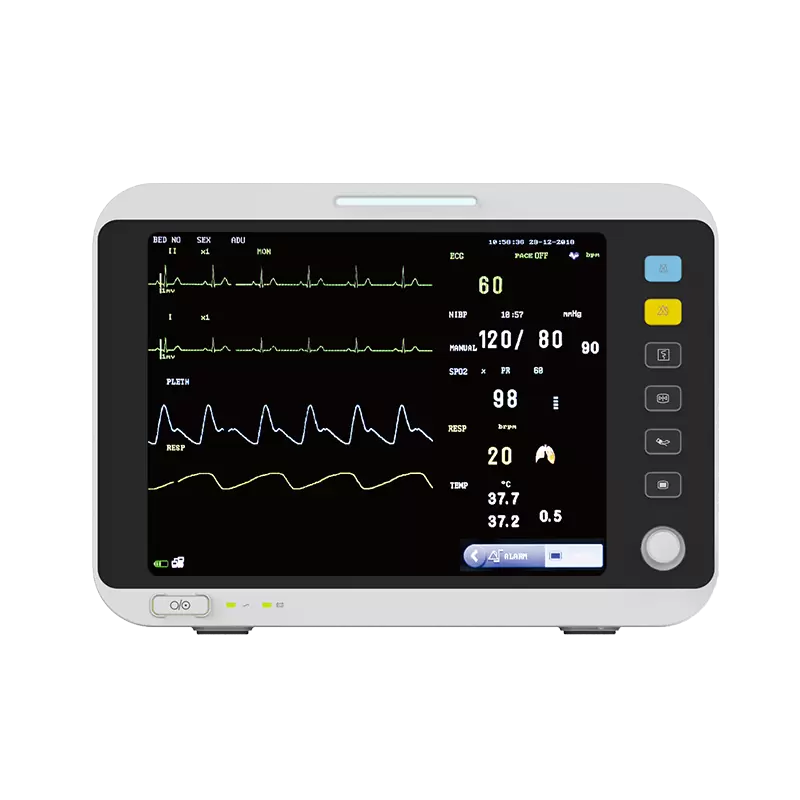
With the rapid development of medical electronics, mobile handheld personal-health devices are also advancing. Whether for handheld defibrillators or continuous glucose monitors, designing these products is challenging. Choosing appropriate components to meet specifications, minimizing cost, ensuring power requirements, and paying attention to product size are all essential considerations. As public awareness of safety has increased, smoke detectors have become widespread, raising demands for low-power (long battery life), sensitive, and reliable fire-detection designs.
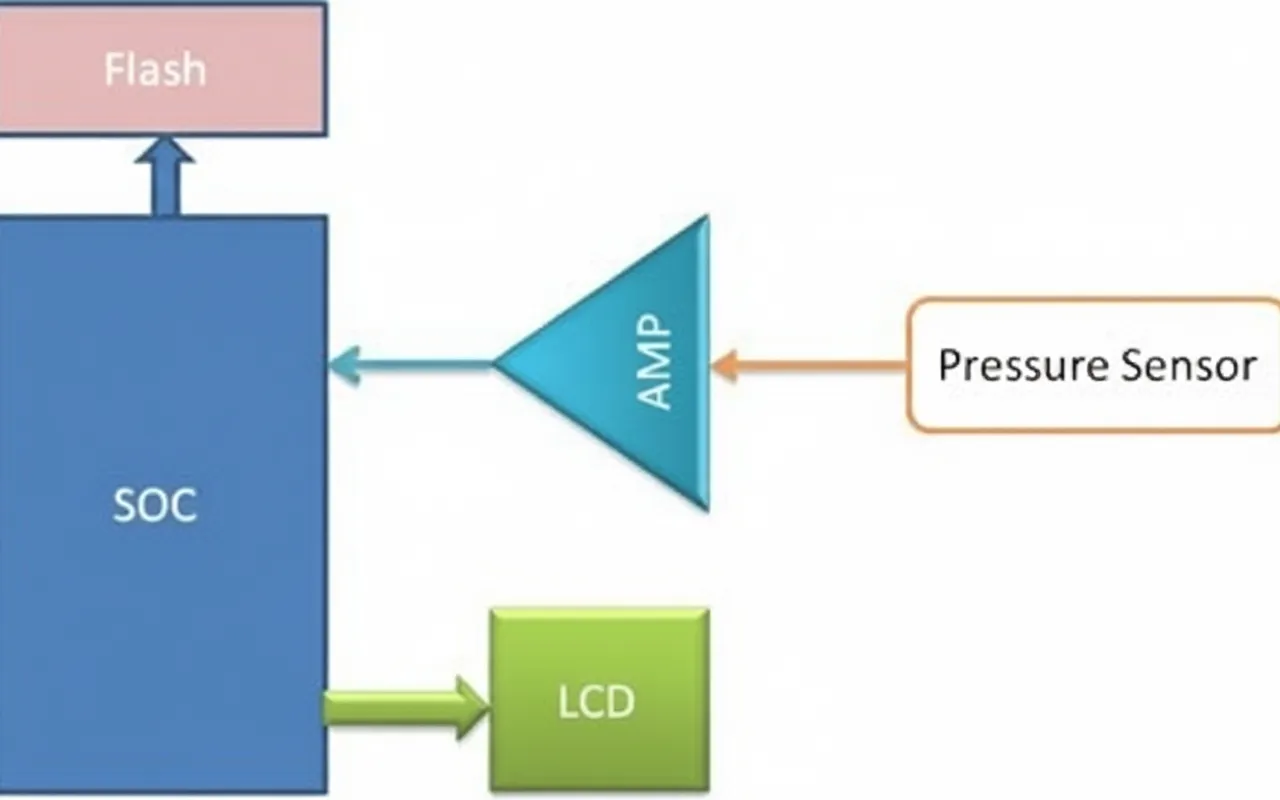
Block diagram of a blood pressure monitor
Whether measuring temperature, pulse, glucose, or other biosensor outputs, proper signal amplification and conditioning are critical. In the analog front end, the op amp is a key element. Typical choices for these circuits are low-noise, high-precision, low-power op amps with low input bias current. The first stage usually requires high common-mode rejection ratio and low input bias current (especially for infrared photodiode sensors) and low noise; the second stage often uses low-power, high-precision, low-noise op amps. The next stage is a good delta-sigma or successive-approximation analog-to-digital converter (ADC). Built-in single-cycle filtering and on-demand conversion simplify ADC requirements, increase conversion speed, and allow for larger source impedance. With appropriate layout and component selection, a clean, accurate signal can be delivered to the system microprocessor or DSP.
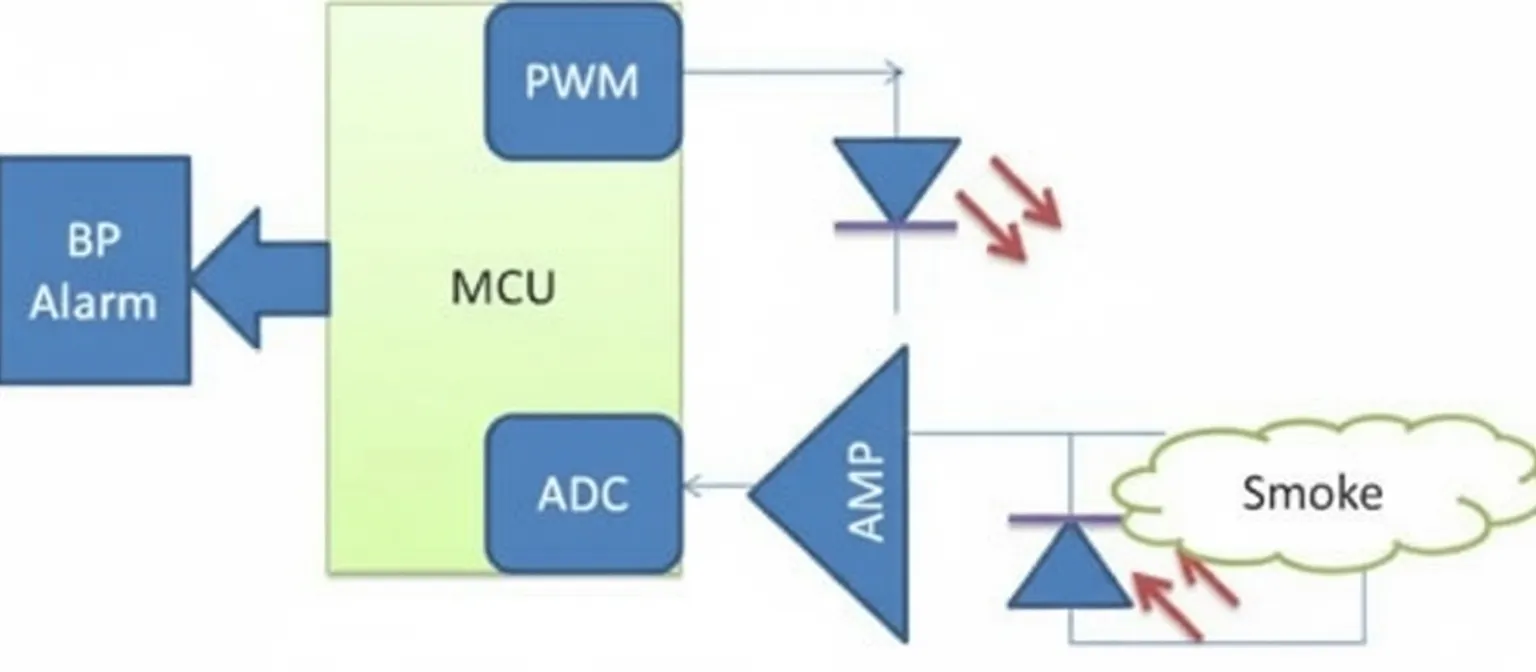
Block diagram of a smoke detector
Smoke detectors report fires by detecting airborne particulates. One detection approach uses gas-sensitive semiconductor materials, such as tin oxide or zinc oxide. When the smoke concentration reaches a threshold, the resistance of the sensing material rapidly decreases, and it returns to its normal resistance when smoke clears. Another common method uses infrared light scattering: obstruction or scattering of infrared light by smoke particles changes the photodetector current and triggers an alarm. Optical methods include forward-scatter and back-scatter detection, with the sensor mounted in an optical maze; without smoke, the sensor receives little or no light and the amplifier and logic do not signal an alarm. When smoke enters the maze, light scatters off particles and the sensor receives a stronger signal; after amplification and logic evaluation, an alarm is issued. These applications require op amps with ultra-low power consumption, low input bias current, and low noise.
3. Application of the DIO2051/2052
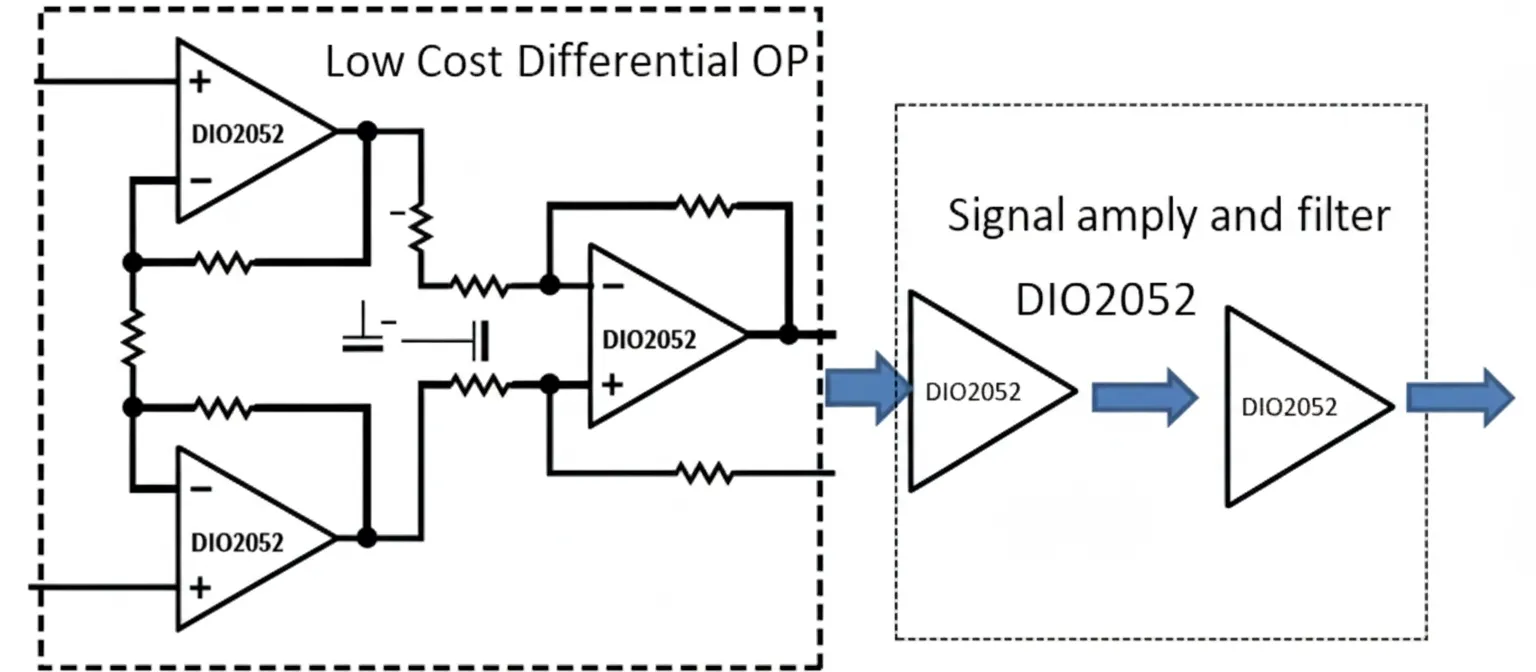
To meet these market needs, DIO Microelectronics developed the DIO2051 and DIO2052 devices. The DIO2052/DIO2051 offer a wide input common-mode range and wide output swing. The devices operate from a 2.1 V to 5.5 V supply and over a temperature range of -40°C to 125°C.