ALLPCB


Overview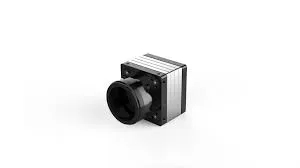
Area-scan cameras, a category of industrial cameras, are widely used in machine vision applications. They use continuous, two-dimensional scanning to perform product inspection, capturing a complete target image in a single exposure for timely image acquisition.
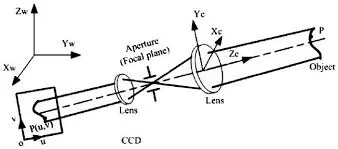
Imaging Principle
Classification
- By sensor chip type: CCD cameras and CMOS cameras.
- By image sensor structure or readout arrangement: frame transfer, interline transfer, line transfer, and full-frame transfer types.
Key Parameters
- Exposure time: the interval from shutter open to closed during which the sensor photosites receive photons.
- Pixel size: the physical dimension of a single pixel (photosite) on the sensor.
- Sensor array size: the number of pixels in the sensor, typically expressed as width × height.
- Frame rate: the number of images the camera outputs per second.
- Quantum efficiency: an important parameter describing a photodetector's photoelectric conversion capability; it is the ratio of the average number of photoelectrons generated to the number of incident photons at a given wavelength over a unit time.
- Readout rate: indicates how quickly image data can be read from the sensor. Typically two rates are defined: full-frame readout rate and the maximum achievable readout rate (for partial or parallel readout).
Industry Applications
Typical application areas include consumer electronics, food and pharmaceutical production, express logistics, printing and textiles, automotive manufacturing, and new energy.
Application Scenarios
1. Positioning and Measurement
- Accurate and efficient localization of geometric elements within images.
- Template matching tools that handle translation, rotation, scaling, and illumination differences.
- Fast and precise detection of circles, lines, spots, edges, vertices, and other geometric features.
- Accurate measurement of shape, size, area, distance, angle, intersections, and other geometric properties.
- Provision of positional and presence/absence information for robot guidance and other vision tools.
2. Defect Detection
- Accurate identification of surface, shape, and contour defects on workpieces.
- Deep learning–based methods can detect fine surface scratches and spots and are robust to surface texture, color, and noise interference.
- Precise detection of form and contour defects, overcoming interference from burrs, color variations, and noise.
- Reliable part-comparison tools for locating subtle differences between specimens.
Advantages and Limitations
Advantages
- Wide range of applications, including measurements of area, shape, size, position, and in some cases temperature.
- Provides intuitive, two-dimensional image information for measurement and analysis.
Limitations
- High total pixel counts but fewer pixels per row compared with line-scan cameras, which can limit achievable frame rates.
- Due to manufacturing constraints, the active area of a single area-scan sensor is often insufficient to meet the field-of-view requirements of some industrial measurements.