ALLPCB


Currently, global 5G network deployment is progressing rapidly. As of August 2020, there were 92 commercial 5G networks covering 38 countries and regions. Most of these 5G networks use the TDD duplexing mode. For context, 4G LTE networks use either FDD LTE or TDD LTE. FDD and TDD refer to frequency-division duplex and time-division duplex respectively.
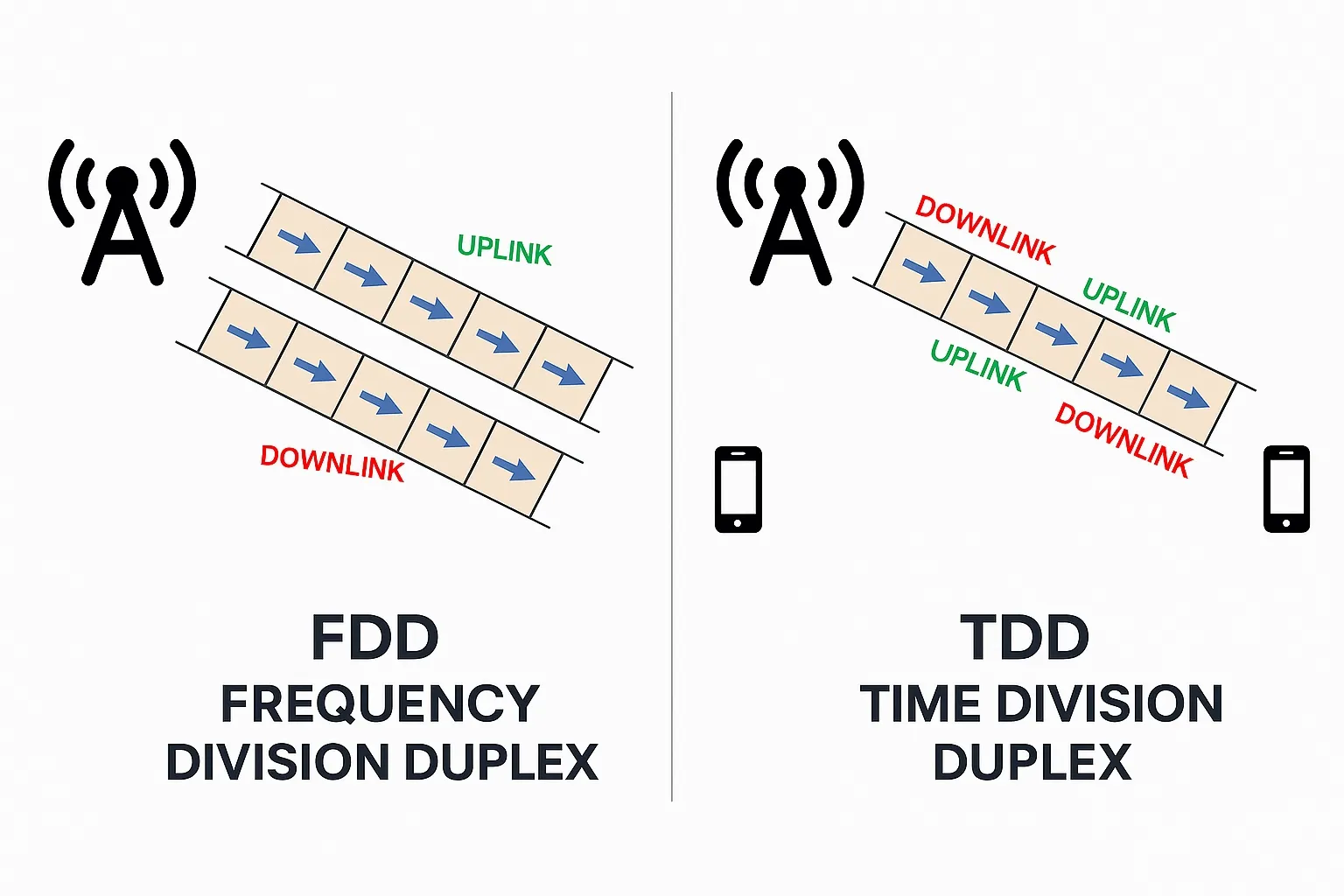
FDD vs TDD: Key Differences
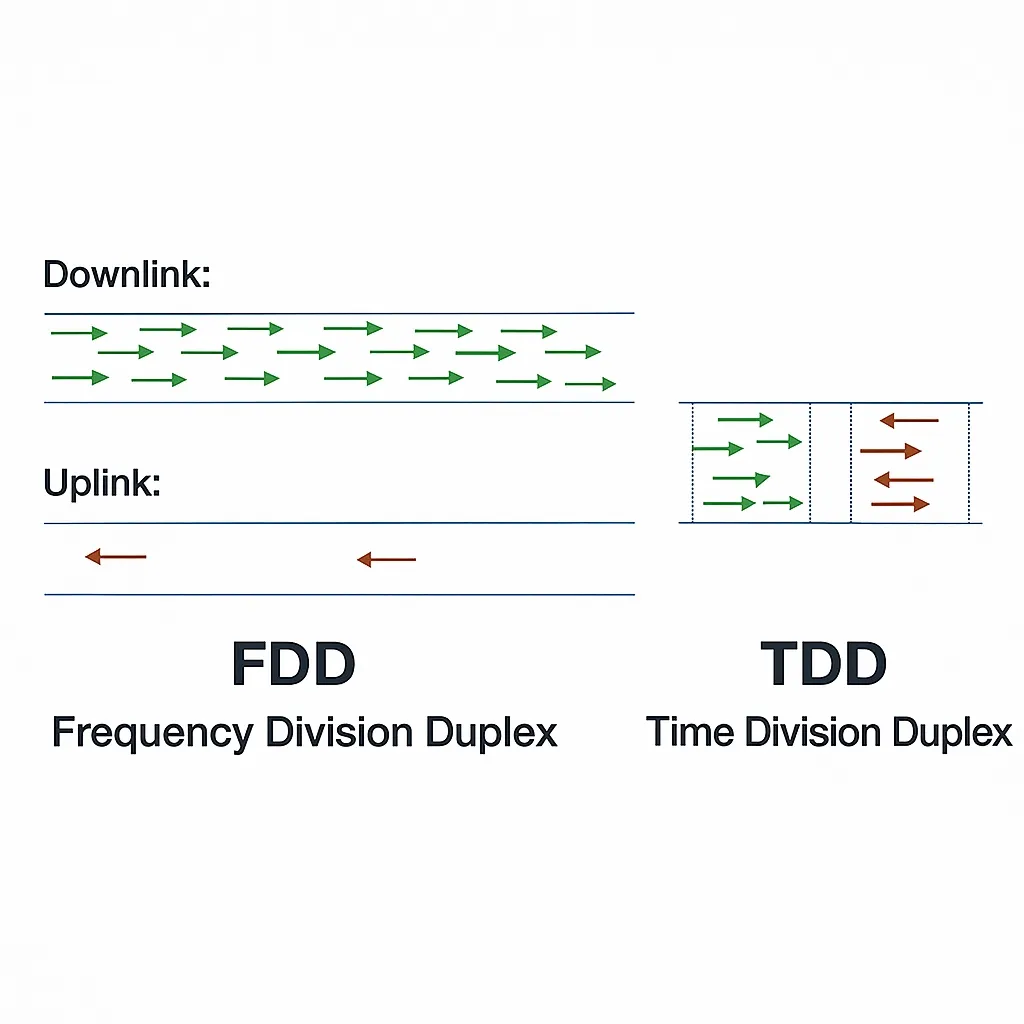
FDD uses two separate frequency bands for the uplink (mobile to base station) and downlink (base station to mobile). TDD uses the same frequency band and separates uplink and downlink by time slots. Compared with FDD, TDD requires scheduling of uplink and downlink time slots and additional interference management, so the implementation is more complex. However, TDD generally provides higher spectral efficiency than FDD.
Mobile traffic is typically asymmetric. For example, video streaming produces a large downlink load while the uplink remains small. In FDD deployments, uplink spectrum can remain underutilized because resources are statically allocated. TDD supports flexible uplink/downlink time-slot allocation, which better matches asymmetric traffic patterns.
In the 4G era, FDD LTE networks outnumbered TDD LTE globally. In 5G, the situation shifted because achieving high throughput requires much wider bandwidths. At higher frequency bands, finding two symmetric wide FDD bands is difficult, and the lower spectrum efficiency of FDD is undesirable. In addition, for massive MIMO deployments, TDD offers better channel reciprocity and is easier to design for. As a result, many operators chose TDD for 5G.
What Is High-Low Frequency Networking?
However, adopting TDD at higher frequencies introduces a major challenge: coverage limitations, primarily in the uplink. Downlink coverage is generally adequate because base stations have higher transmit power and can use beamforming. Uplink is constrained because mobile devices have limited transmit power, which reduces uplink range and therefore the cell coverage radius.
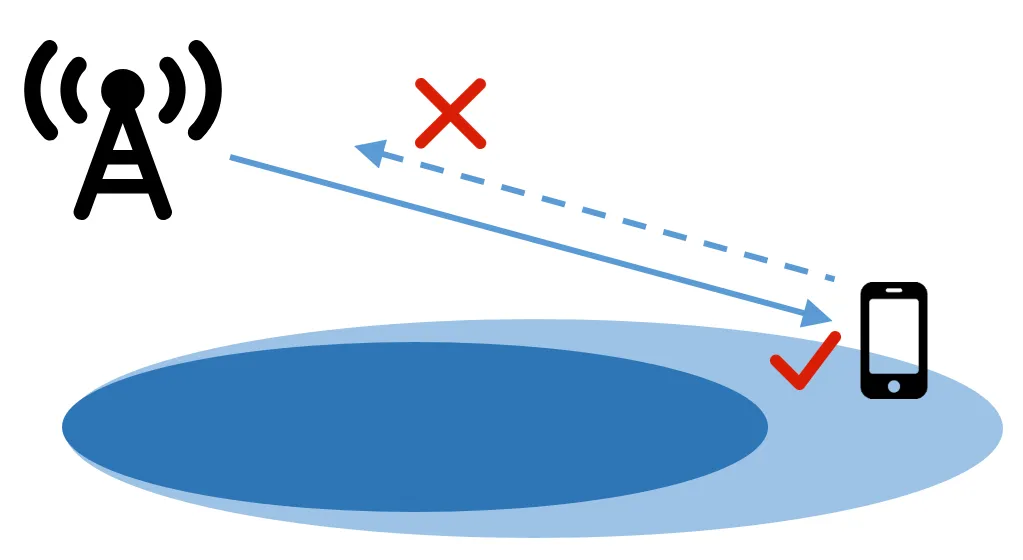
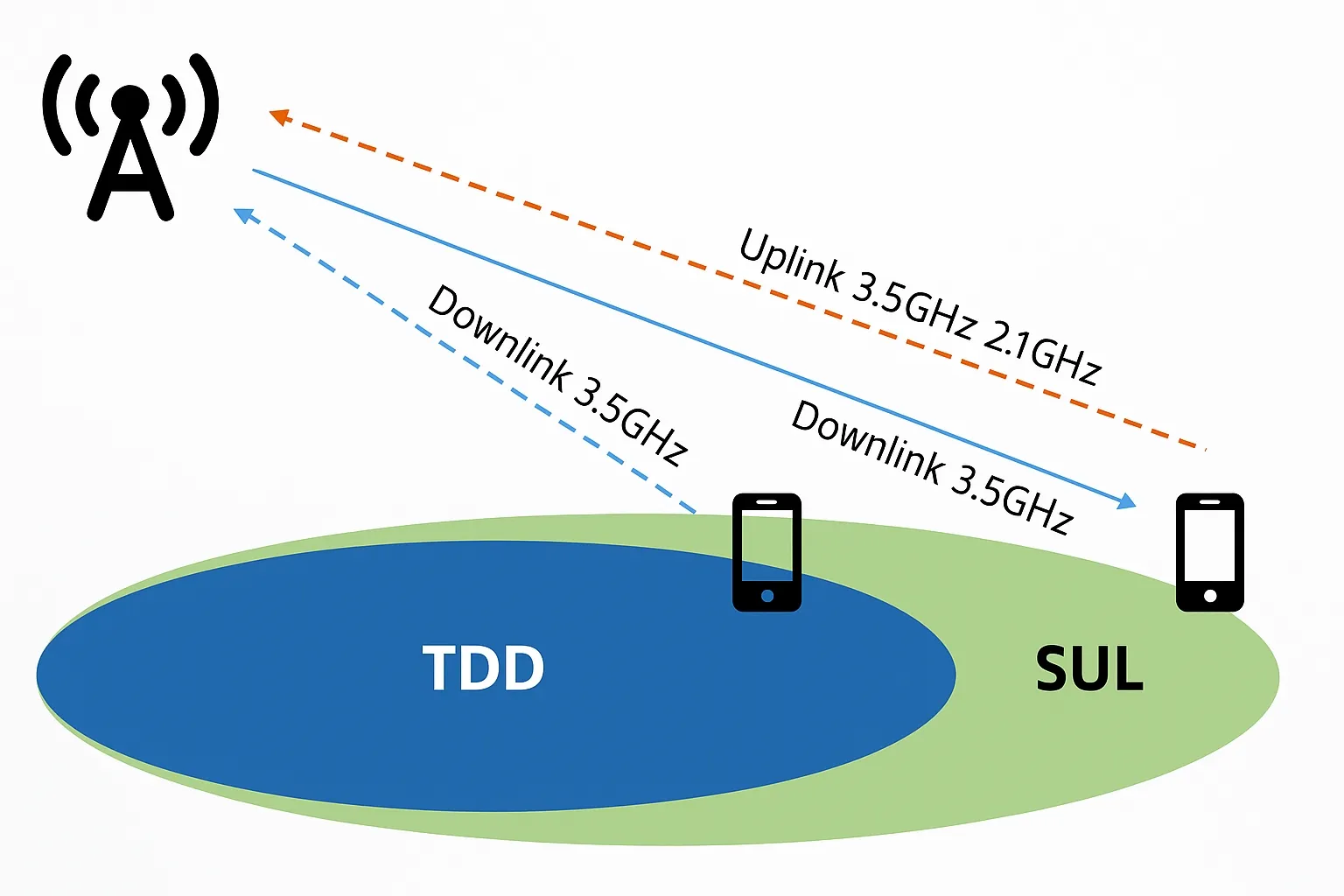
Higher 5G frequency bands such as 3.5 GHz and 4.9 GHz have higher penetration loss and faster signal attenuation than typical 4G bands, making coverage issues more pronounced under TDD. A solution to this problem is uplink/downlink decoupling, implemented as Supplementary Uplink (SUL). The idea is simple: if uplink performance is insufficient at high frequency, supplement it with mid/low-frequency spectrum as an uplink channel.
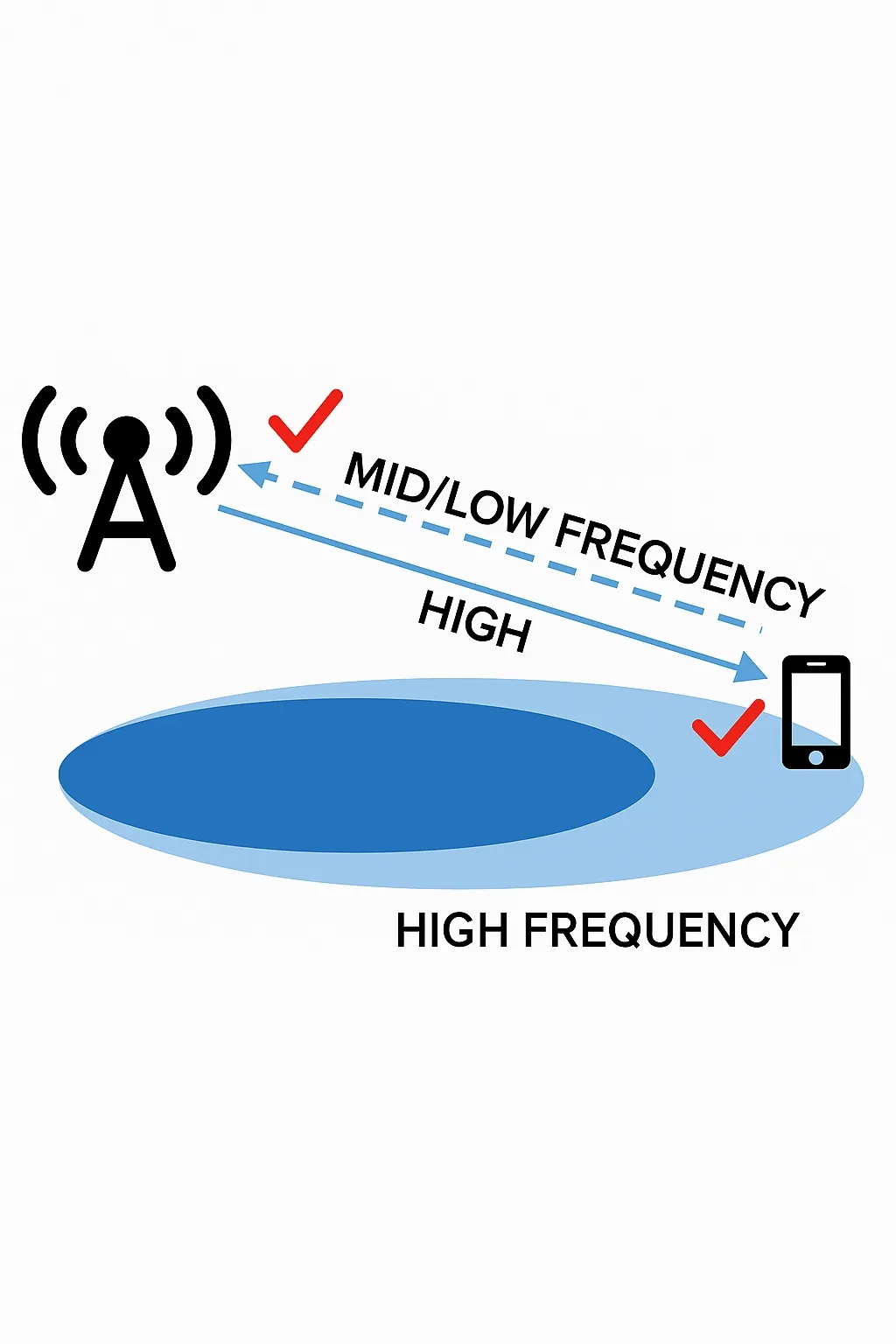
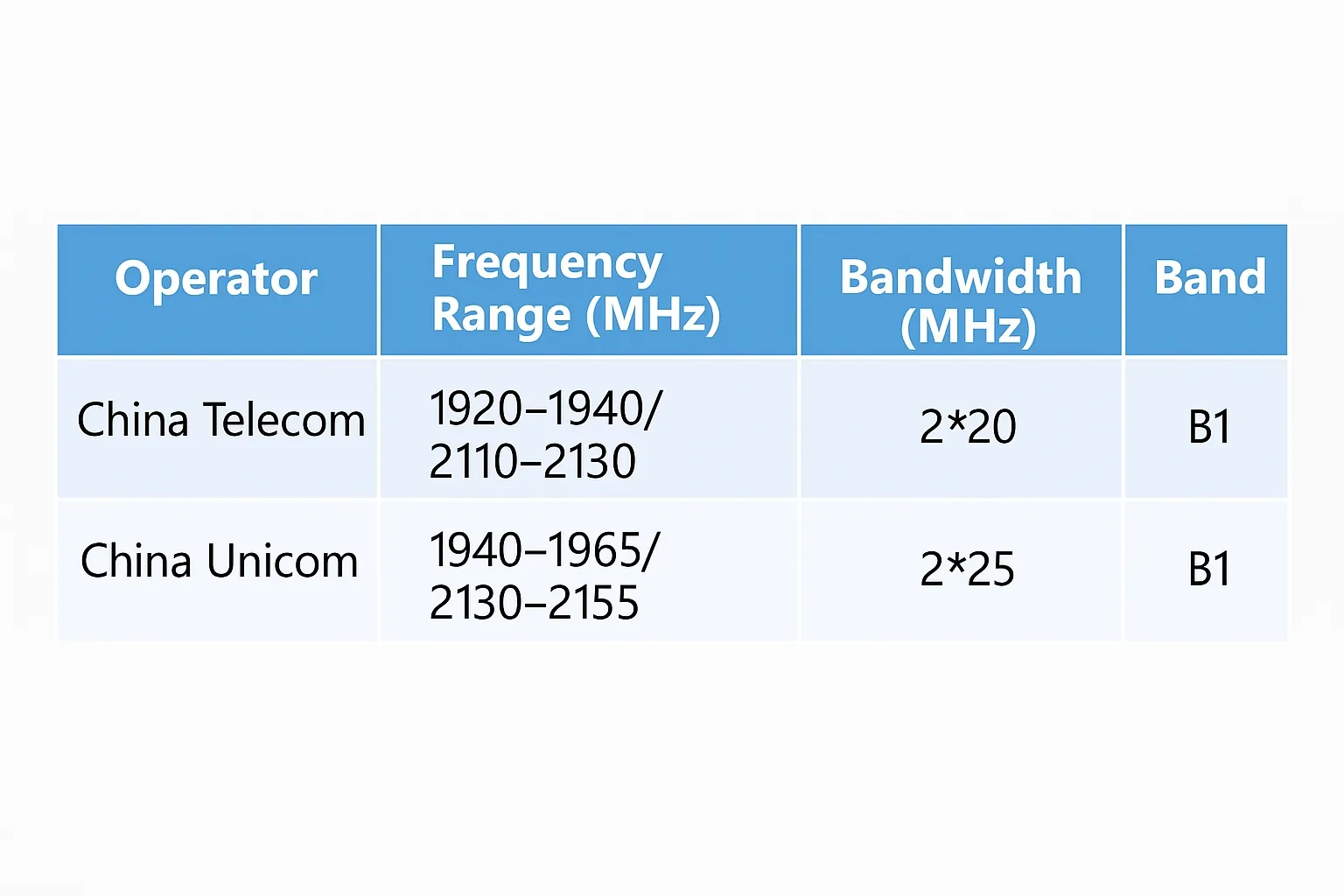
Mid/low frequencies have lower penetration loss and longer propagation distance, which helps extend 5G coverage. Although mid/low bands offer smaller bandwidth and cannot support multi-gigabit peak rates, they are sufficient for most typical mobile scenarios. For example, at 2.1 GHz, some operators currently hold 25 MHz and 20 MHz of spectrum that are occupied by 4G LTE but are good candidates for refarming.
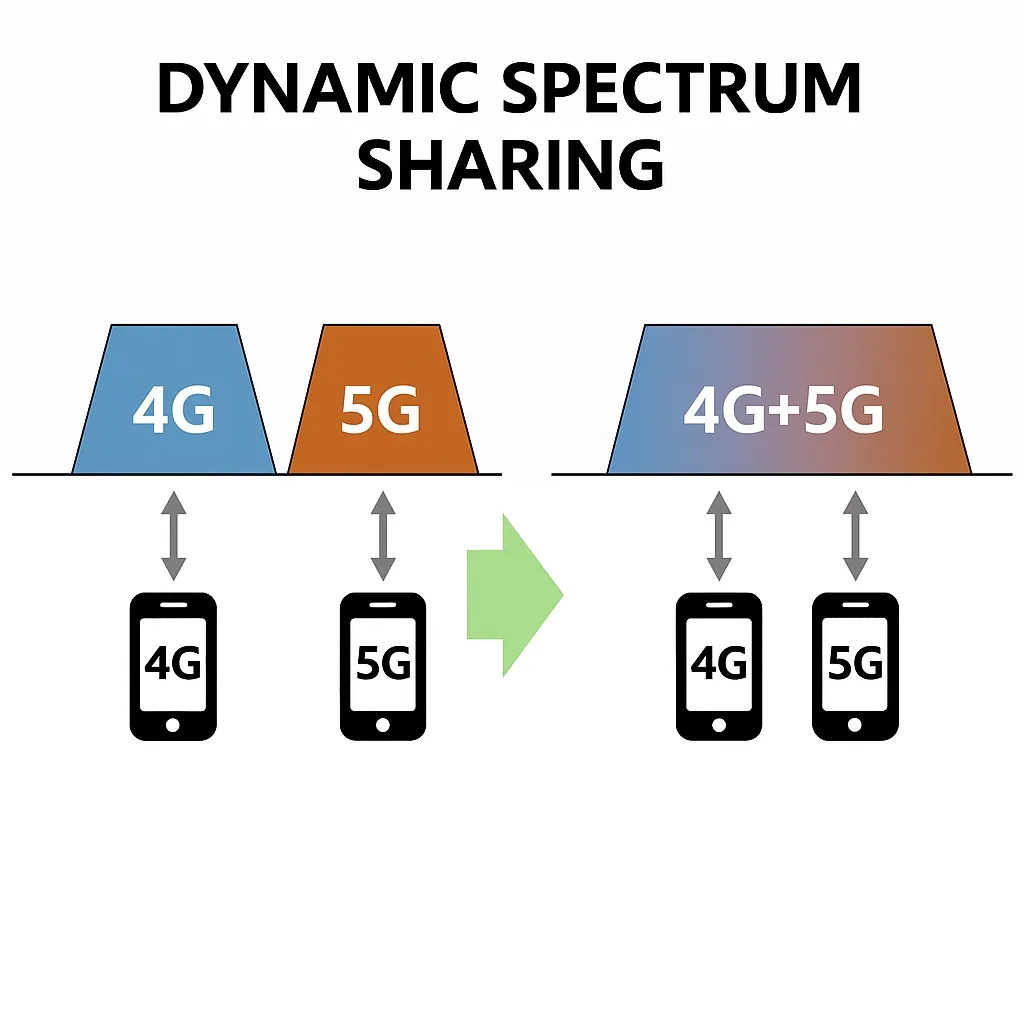
It is not feasible to simply reassign those bands entirely to 5G NR without affecting existing 4G users. Dynamic Spectrum Sharing (DSS) allows 4G and 5G to share the same spectrum, enabling gradual refarming without immediate disruption.
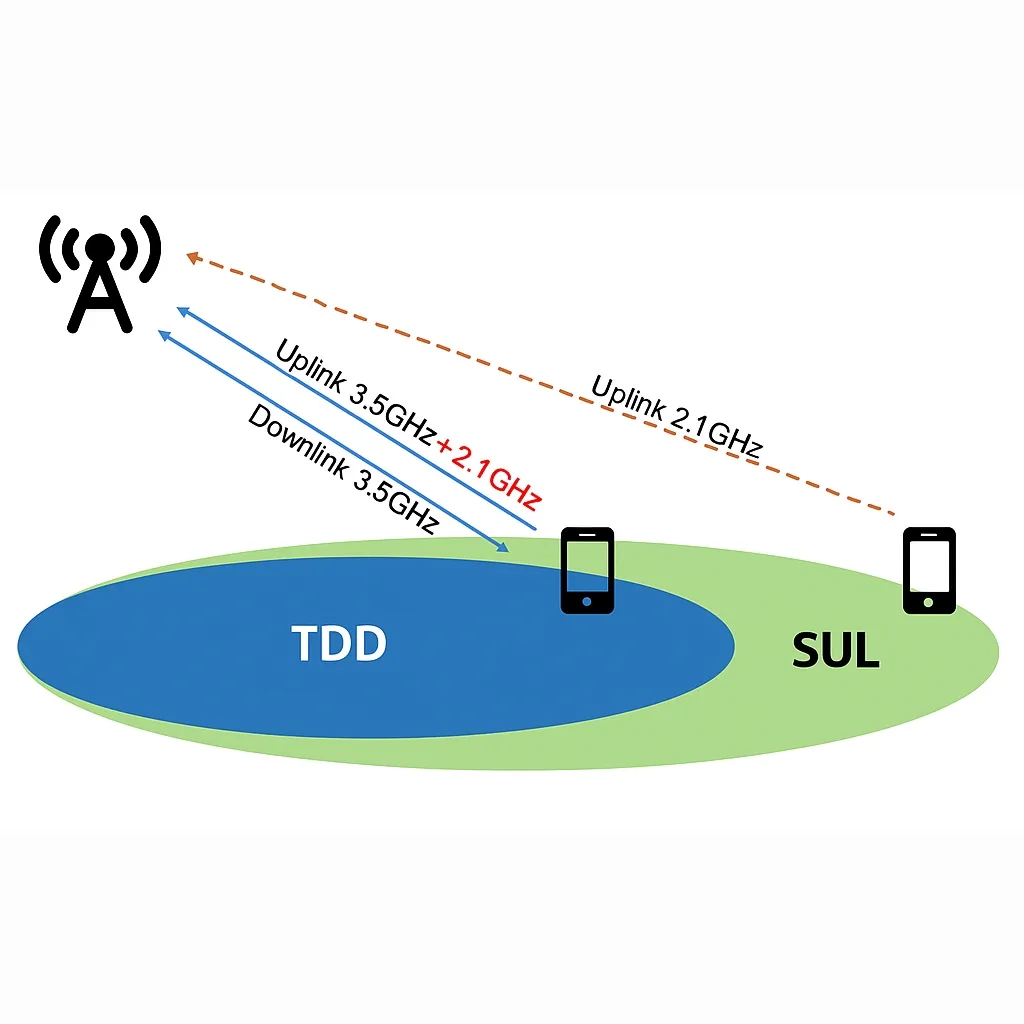
This approach forms a high-low frequency deployment pattern: mid/low-frequency FDD NR combined with high-frequency TDD NR, commonly referred to as high-low frequency networking. In a traditional SUL scenario, 3.5 GHz may serve both uplink and downlink at short to medium ranges; when the uplink at 3.5 GHz becomes insufficient with distance, SUL at 2.1 GHz can be activated to handle uplink.
Since the SUL channel is idle most of the time in medium/short-range scenarios, the concept of "super uplink" was proposed. Super uplink uses the supplementary uplink resources even in medium/short-range scenarios, coordinating transmissions with the TDD primary carrier to increase uplink capacity. This breaks the constraint that carrier aggregation must be limited to contiguous or bundled spectrum.
Other techniques have also been proposed to optimize broadcast channel coverage and beam management. For example, an FDD 5G broadcast channel narrow-beam approach uses multiple narrow broadcast beams in rotation instead of a single wide beam to extend coverage by about 3 dB, improving VoNR coverage depth and breadth. TDD broadcast channel intelligent optimization applies beamforming and beam scanning with AI-based scene and user distribution recognition to select optimal beam combinations and improve user experience and spectral efficiency.
Standards and Device Support
Whether the "mid/low-frequency FDD NR + high-frequency TDD NR" network model can be widely deployed depends on standard support and device compatibility. Although TDD NR has been the preferred option for many operators and vendors, FDD NR enhancements remain in the standards. The 3GPP Release 16, frozen on July 3, 2020, included comprehensive enhancements for 5G scenarios, including FDD NR improvements.
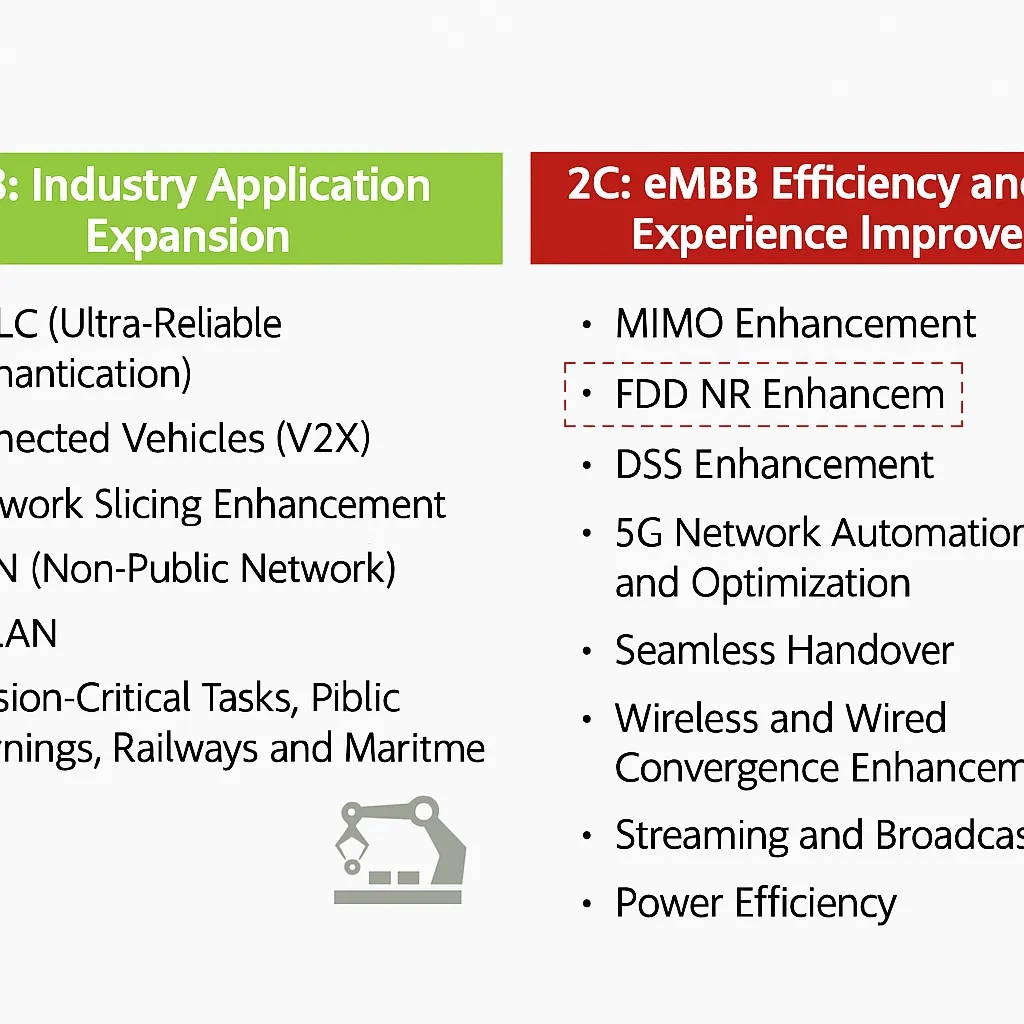
Standardization for NR/DSS FDD large bandwidth cases is complete, including 2.1 GHz NR FDD and 700 MHz NR FDD. Work on large-bandwidth downlink carrier aggregation (CA) for FDD and supplementary uplink (SUL) is in progress. On the device side, major chipset vendors have added support for NR in bands such as 3.5 GHz, 2.6 GHz, 2.1 GHz, and 1.8 GHz, with some devices supporting 700 MHz NR as well. Broad support for large-bandwidth FDD NR and SUL in 5G chipsets is expected to become more common in the near term.
Role of High-Low Frequency Networking
For different deployment scenarios such as urban centers and suburban or rural areas, a practical 5G strategy is to use TDD NR for high-bandwidth capacity and FDD NR to supplement coverage and improve uplink performance. FDD NR not only compensates for TDD NR's uplink limitations and extends rural coverage but also improves deep indoor coverage in urban areas. Combining high and low frequencies at macro sites can raise outdoor coverage rates and reduce the need for indoor small-cell deployments, saving deployment cost.
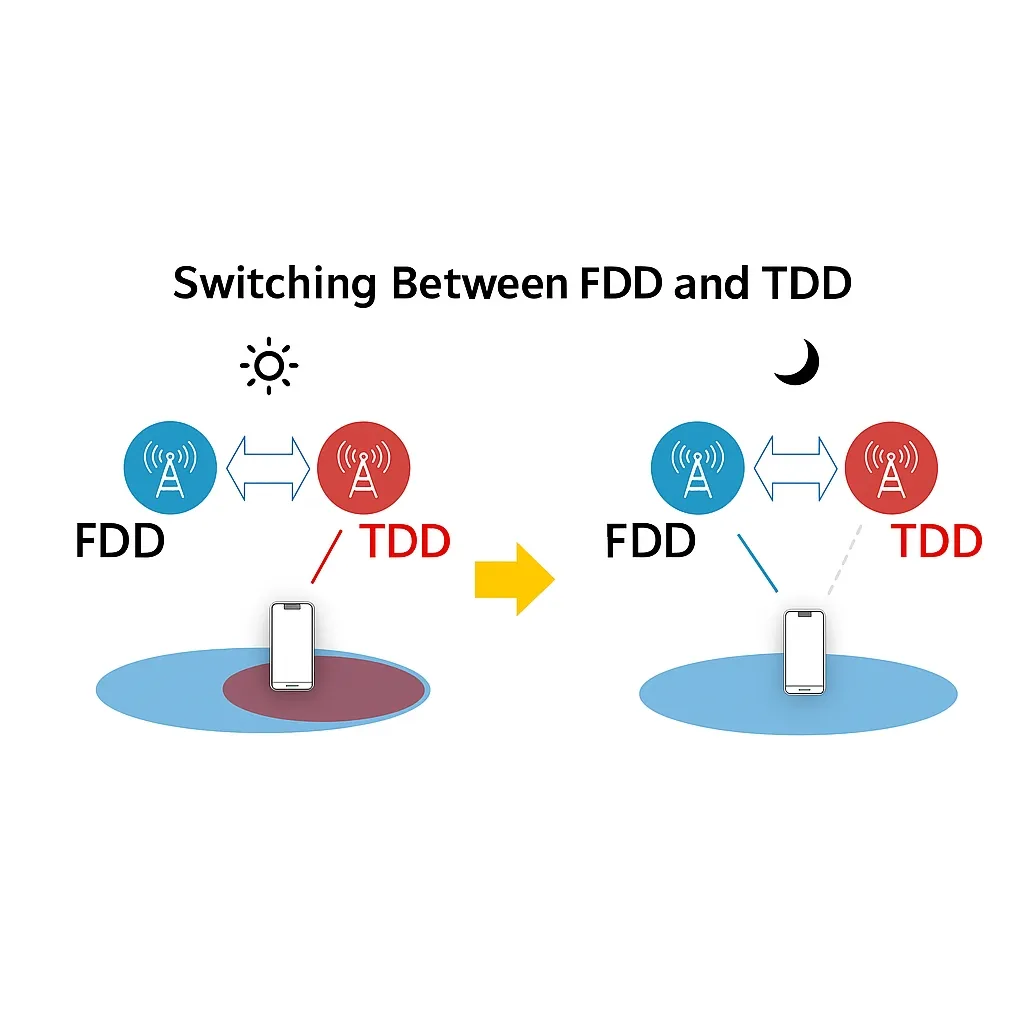
Cooperative operations can also enable energy savings. For example, during low-traffic periods it is possible to put parts of the network into sleep mode while maintaining key performance indicators such as KPI stability.
Conclusion
High-low frequency networking combines the wide bandwidth capacity of TDD with the long-range coverage of FDD. It is a pragmatic 5G deployment strategy that balances throughput and coverage requirements across diverse scenarios.