ALLPCB


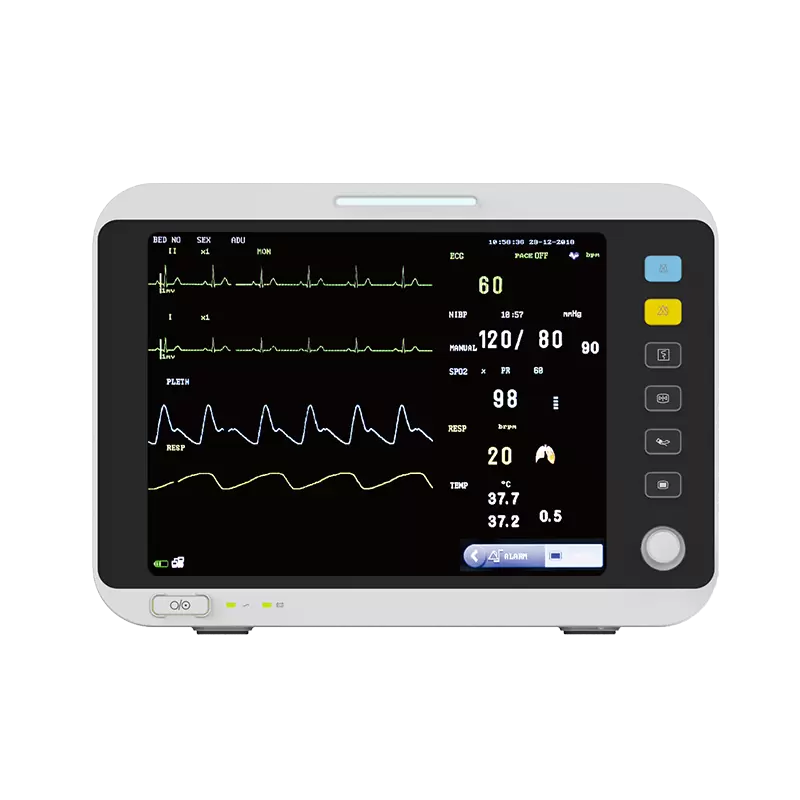
Modern medical devices incorporate increasingly complex electronics to support monitoring, display, assistance, and patient alerts. The latest generation of medical electronics is smaller and more compact while integrating more monitoring functions. A major design challenge is how to effectively reduce interference from external electromagnetic waves.
Experience developed for military and satellite systems in addressing EMI and cable-noise control in confined spaces has helped pave the way for medical-device EMI management. Mature cable and connector practices from those industries can help the medical sector adopt safer cabling and connector implementations.
Experience from cables designed for military and satellite systems is important because many newer ICU instruments rely on digital signals operating at gigahertz speeds and are placed close to other electronic equipment.
This experience helps determine whether cables routed inside an instrument rack will be susceptible to external electromagnetic interference, acting as unwanted EMI receivers, or whether the cables themselves might emit EMI noise that propagates to other equipment. In either case, EMI noise can cause severe performance degradation or reduce instrument accuracy.
Medical cable designers have several solutions to control EMI noise in medical instruments. The main approaches are listed below.
1. Selective filtering circuits
One option is to identify the interfering frequency and add selective filtering circuits on the instrument circuit board or install filters in the connectors of the cable harness. Film capacitors and resistors can be used to shunt unwanted signal noise to ground near the noise source. However, cables and connectors must be small enough; if they are too large they can limit the performance of coaxial filter circuits and reduce overall EMI mitigation effectiveness.
2. Overall shielding
For isolating equipment from external electromagnetic environments, braided shielding on cables is a mainstream method. Industry experience indicates that braiding is often the best shielding solution, capable of providing up to 85 dB of isolation from external noise.
To reduce the number of lines entering or exiting a system, medical devices can use hybrid cables and connectors that combine power, signal, and trigger lines into a single connector and cable assembly. Inside the connector, power pins are separated from signal pins, and, importantly, the cable from each metal circular connector to the main interface connector is covered by a braided shielding layer.