ALLPCB


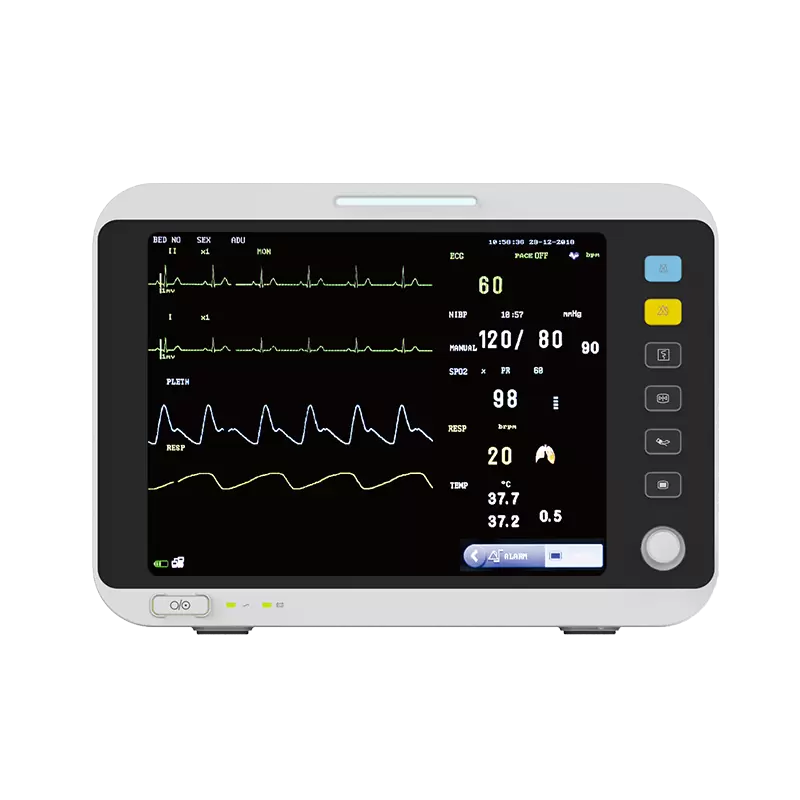
The abdominal cavity is a closed space; increases in organ volume beyond a certain limit can lead to intra-abdominal hypertension. Monitoring intra-abdominal pressure aims to observe pressure changes after abdominal surgery and in critically ill patients to provide objective data for timely intervention and care. Current clinical practice commonly measures bladder pressure by inserting a urinary catheter, instilling about 50 ml of saline, and measuring the pressure as fluid drains from the bladder. This method is simple and can reflect intra-abdominal pressure, but it has a major drawback: each measurement requires a saline instillation. Clinical staff cannot continuously instill saline, so measurements are typically performed at intervals of 4-12 hours. This intermittent sampling can delay awareness of pressure changes and may postpone optimal rescue interventions. To address these limitations, this design uses an MCU-based approach to provide an economical, practical device for continuous intra-abdominal pressure monitoring. The device enables painless, noninvasive continuous measurement, dynamic data acquisition, storage, and display so clinicians can track patient status in real time.
Measurement Principle
The system block diagram is shown in Figure 1. An infusion pump injects saline into the patient’s bladder via a dual-lumen urinary catheter. The infusion pump delivers saline through one lumen at a controlled rate of 4 ml/h while a pressure sensor in the other lumen measures the pressure of the outflowing fluid. The pressure sensor converts pressure changes into a small voltage signal (0–75 mV). That signal is transmitted over a twisted, shielded cable to an amplifier, which scales it to approximately 0–4.5 V. An MCU controls an A/D converter to sample the analog voltage; the MCU processes the digital data and sends results to a display. With continuous infusion and continuous sensing, the display is dynamically refreshed, enabling long-term dynamic monitoring.
Compared with the traditional bolus infusion method, this approach provides two main improvements.
First, a dual-lumen urinary catheter replaces the single-lumen catheter used in conventional methods. A dual-lumen catheter allows continuous infusion through one channel while measuring pressure through the other. With single-lumen catheters, infusion and measurement cannot be performed simultaneously: typically, clinicians instill about 50 ml, remove infusion equipment, then connect measurement equipment to record bladder pressure.
Second, this design uses an AT89S52 microcontroller to manage dynamic operation. The AT89S52 controls the A/D converter for continuous data acquisition, processes pressure data in real time, and updates the display continuously. Conventional single-measurement methods generally do not use a microprocessor for dynamic management, so those devices have simpler hardware and software.
System Hardware Design
The system uses the AT89S52 MCU as the main controller to manage data acquisition, computation, and display. The pressure sensor is an NPC1210 high-precision pressure sensor that outputs a small voltage signal of 0–75 mV. The sensor output is carried via twisted, shielded cable to the amplifier. The amplifier uses an ICL7650 high-precision operational amplifier, which offers low input bias current, low offset, high gain, strong common-mode rejection, and low cost. The amplifier circuit is shown in Figure 2.
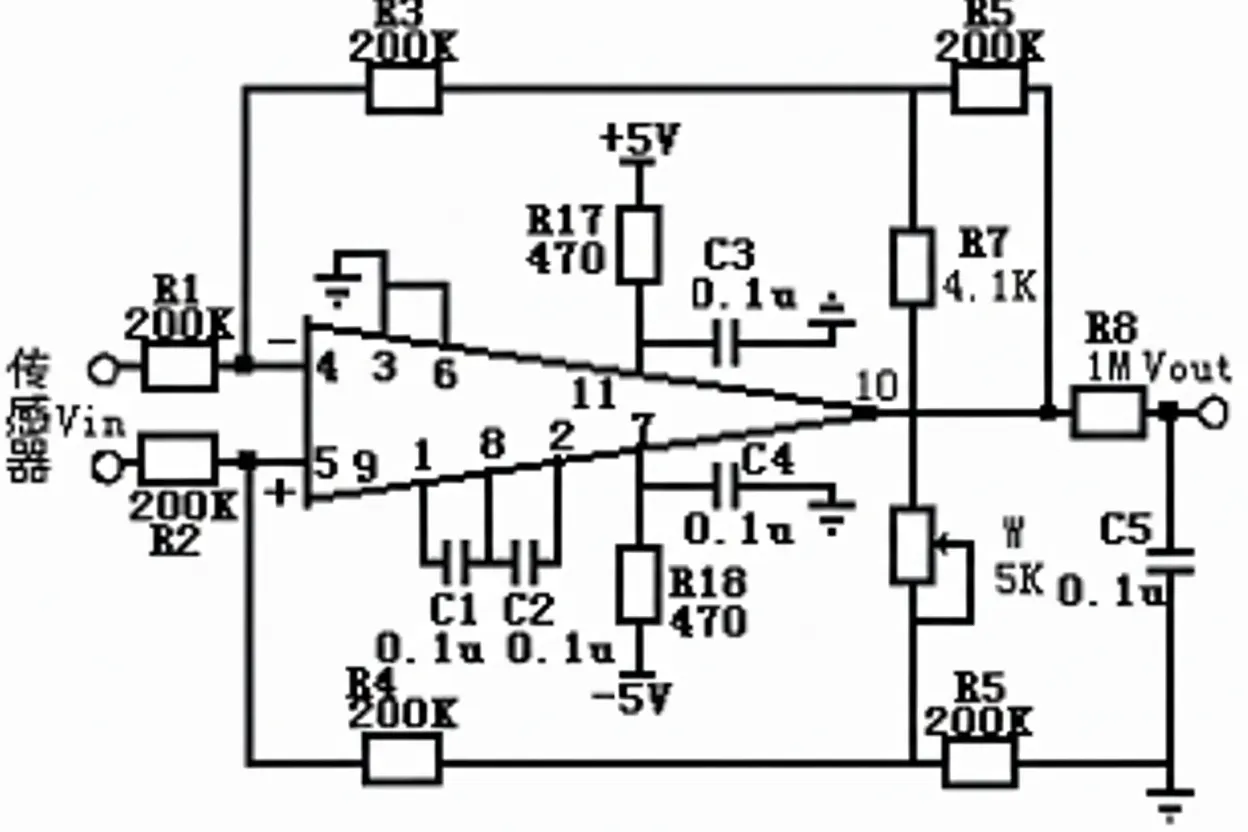
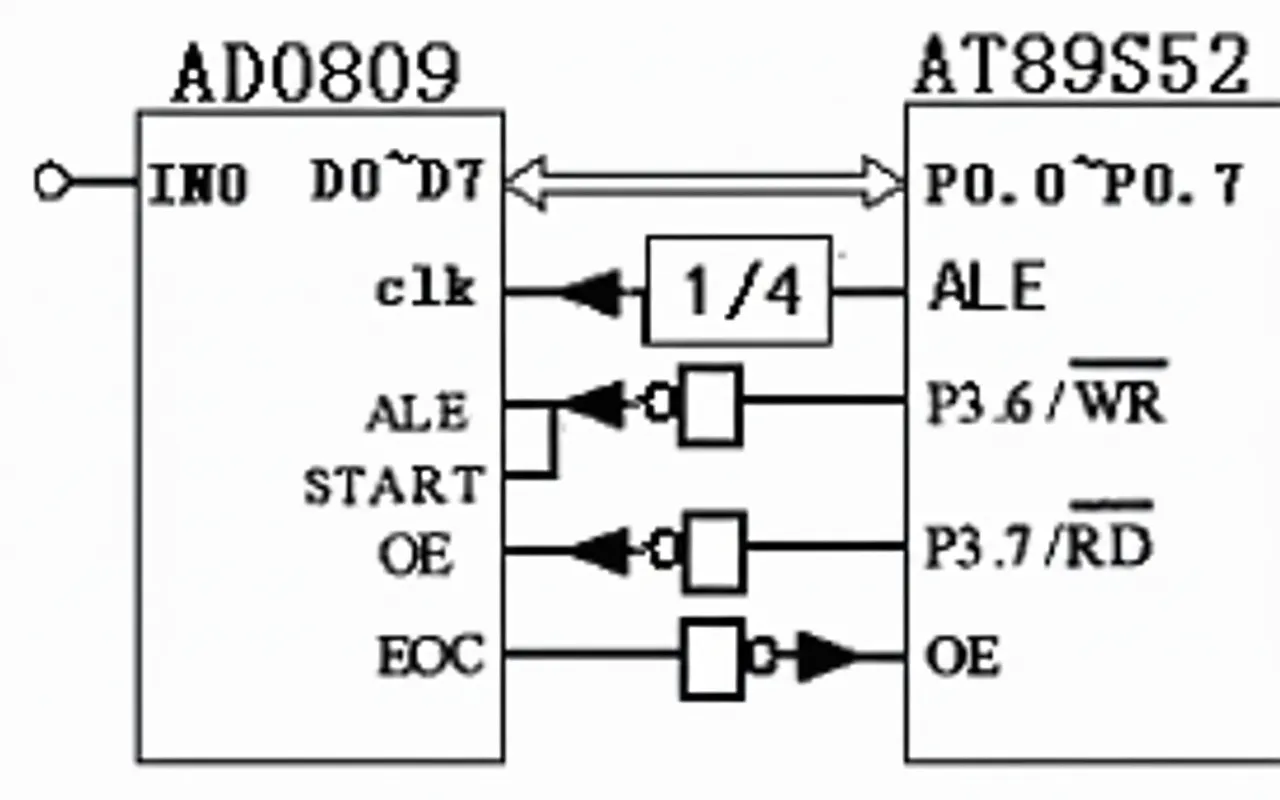
The weak sensor signal is amplified by approximately 60 times and delivered to the A/D converter. An 8-bit A/D converter, the AD0809, converts the analog signal to digital. The AT89S52 controls the AD0809 to sample the amplifier output, which ranges from 0 to about 4.5 V. The interface circuit between the AT89S52 and the AD0809 is shown in Figure 3. The digital result is processed by the AT89S52. The system uses a three-digit common-anode seven-segment display; the MCU outputs segment codes from port P2 and digit select codes from port P1.
System Software Design
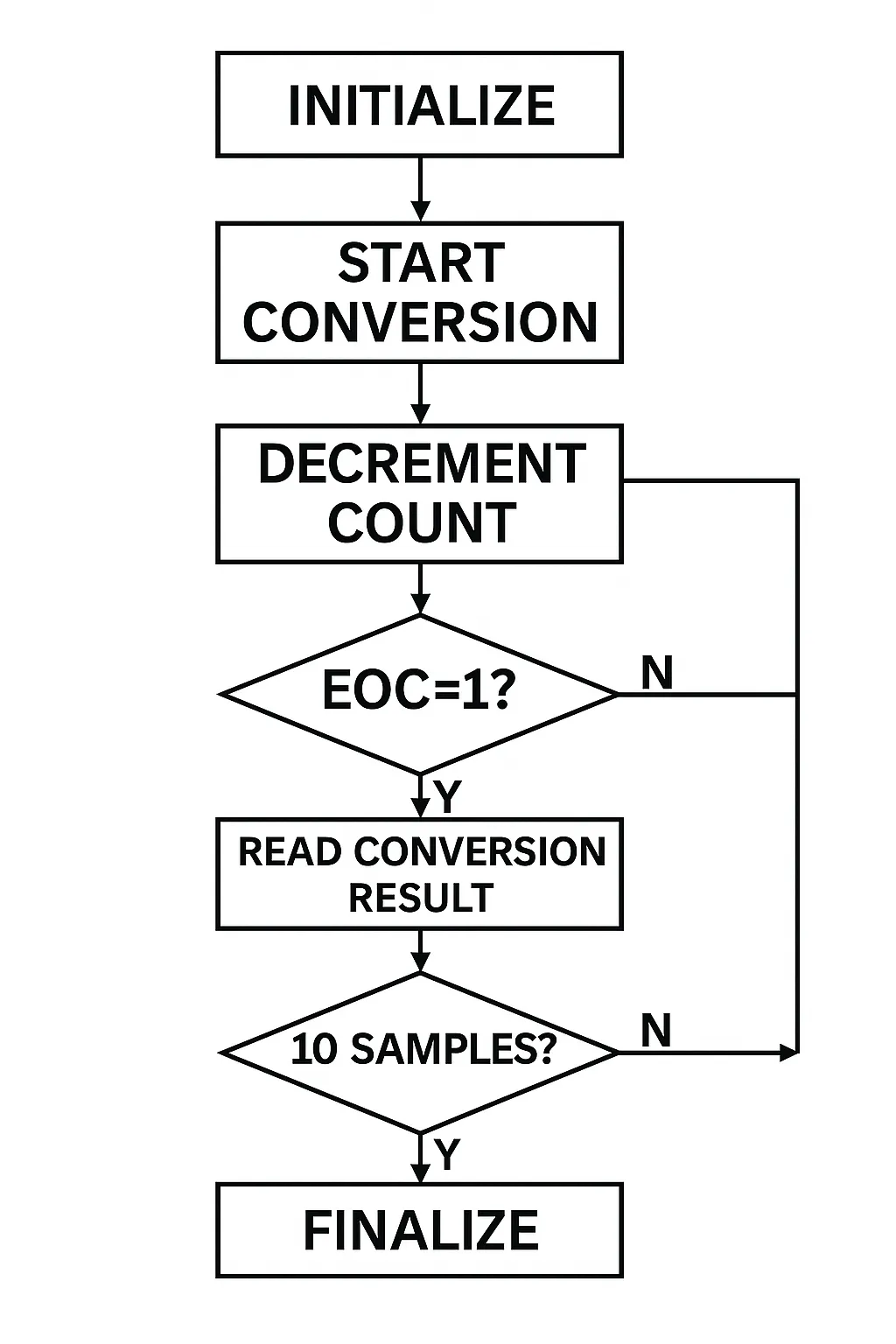
The main software modules are: system initialization, A/D conversion routine, averaging filter subroutine, scaling transformation subroutine, and binary-to-BCD conversion subroutine. The main program flowchart is shown in Figure 4. To reduce the effect of transient pressure spikes caused by coughing or other events, an averaging filter is used to suppress random errors. The averaging filter subroutine is shown in Figure 5. The routine samples the signal 10 times, discards the maximum and minimum values, sums the remaining eight samples, and computes their average. This averaged value is the effective sample value stored in the transmit buffer.
Interference Suppression Considerations
Because this system is intended for monitoring critically ill patients, reliability is a key design concern. Using a high-precision pressure sensor makes suppression of interference signals critical. The main design measures are:
- Increase decoupling capacitors, use shielding enclosures, and include power-supply filter circuits to suppress noise caused by power supply voltage fluctuations.
- Tie unused inputs of logic chips to defined logic levels or ground according to logic requirements to reduce susceptibility to external interference.
- Place the clock signal source close to the CPU and use short, thick routing for the clock traces.
- Shield weak-signal lines; route power lines separately from signal lines to avoid crosstalk.
- Use proper grounding: separate digital and analog grounds and connect them to the power-supply ground; maximize analog ground area and use wide ground traces to prevent ground potential variations that could destabilize timing signals. The system clock operates at 11.0592 MHz.
- Avoid creating loops in signal routing; keep traces short and straight; minimize vias; use 45° bends rather than 90° bends.
- Route clock traces perpendicular to I/O traces where feasible to reduce I/O line interference to the clock circuit.
- Keep analog input lines and reference-voltage lines physically distant from digital signal lines.
- Apply software averaging filtering to reduce random measurement errors.
Conclusion
This design implements a dynamic intra-abdominal pressure monitoring system using a dual-lumen urinary catheter with continuous infusion and continuous measurement. A low-power 8-bit microcontroller, the AT89S52, performs real-time analysis and processing of pressure data from the sensor. The device includes a seven-segment display to present measured intra-abdominal pressure in real time. The system improves on traditional equipment and methods by replacing periodic manual monitoring with continuous automatic measurement, enabling more timely clinical awareness of pressure changes in critically ill patients.