ALLPCB


Overview
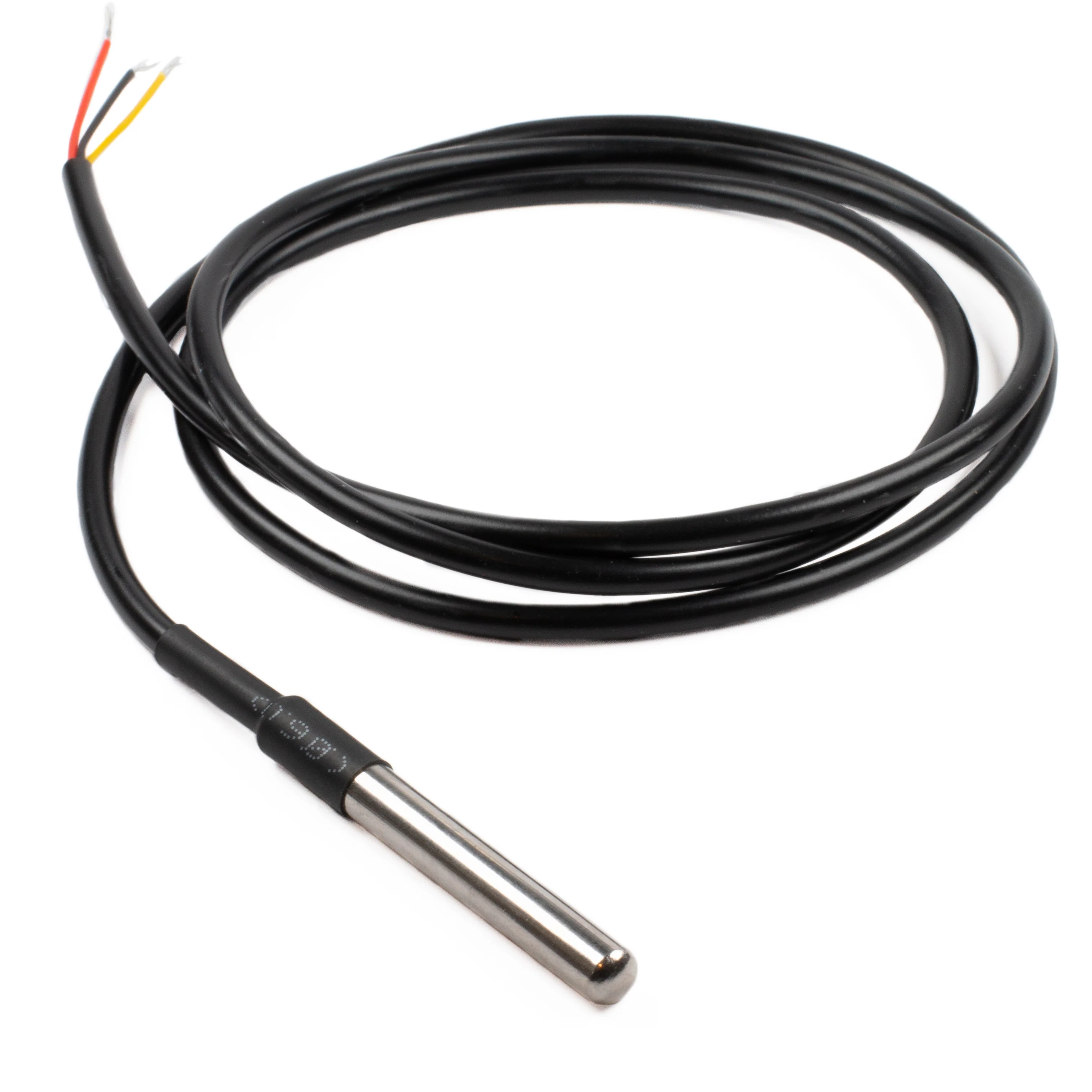
As a digital temperature sensor, the DS18B20 has the following advantages:
Advantages
- High accuracy: Typical accuracy is ±0.5°C.
- Digital interface: Uses a one-wire digital interface, requiring only a single data line for communication.
- Multiple operating modes: Supports configurable sampling rates and resolutions.
- Low power consumption: Operating power is very low, typically in the microwatt range, suitable for battery-powered applications.
- Flexible configuration: Settings and modes can be configured via software.
- Programmable registers: Internal programmable registers allow user configuration and control to meet different application needs.
- Common packaging: Typically available in common packages such as TO-92, TO-220, which facilitates installation and PCB layout.
Disadvantages
However, the DS18B20 also has some drawbacks:
- Higher cost: More expensive than some simple analog temperature sensors.
- Limited sampling rate: Maximum sampling rate is 1 Hz, which may be too slow for certain applications.
- Limited temperature range: Typical measurement range is -55°C to +125°C, which may not meet requirements in extreme temperature environments.
- Requires external pull-up resistor: The one-wire bus requires an external pull-up resistor, adding design and layout complexity.