ALLPCB


Overview
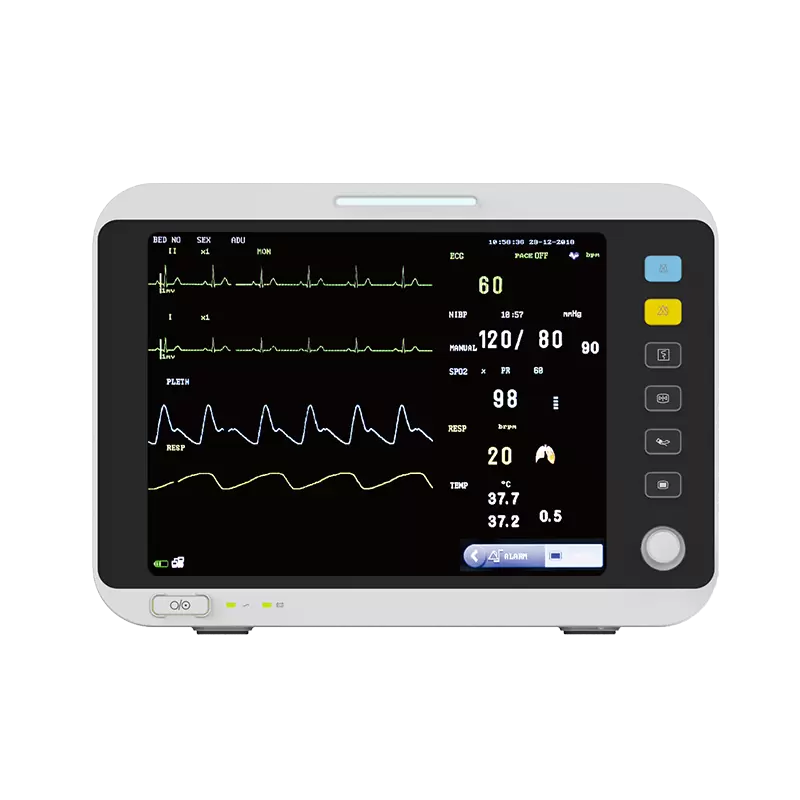
Continuous measurement of vital signs such as heart rate, respiration rate, and blood oxygen saturation (SpO2) is essential for effective care. The ability to measure multiple parameters simultaneously has increased the importance of multiparameter patient monitors.
Electronic patient monitors collect and display physiological data using noninvasive sensors attached to the patient. A key design challenge for multiparameter monitors is maintaining high performance while achieving small size and low power consumption.
Traditional bedside monitors are often bulky, wired, and immobile, which limits their use in mobile care and home-care settings. This has driven demand for compact multiparameter monitors that connect wirelessly to the patient and transfer data wirelessly or via wired links to phones, tablets, or PCs.
Reference Design Components
Texas Instruments (TI) provides a multiparameter patient vital-signs front-end reference design that integrates the necessary front-end components for acquiring vital-signs data with a focus on compact size, low cost, and low power.
The design acquires parameters such as electrocardiogram (ECG), SpO2, heart rate, and respiration rate using AFE4403 and ADS1292R biopotential front-end integrated circuits. It can be combined with a software-configurable pacemaker detection-module reference design to support pacing-pulse detection. Three temperature sensors (TMP117) with 0.1°C accuracy can be connected to measure skin temperature.
Standard wet ECG electrodes are used for ECG measurements, and a transmission-type finger sensor can be used for SpO2. Raw data are transmitted by an onboard MSP432P401 microcontroller over an isolated universal asynchronous receiver-transmitter (UART) interface at 460.8 kbps to a backend processor or PC. Power can be provided via a standard USB port or a USB-charged lithium-ion battery.
Reference Design Block Diagram
Figure 1 shows the reference design block diagram.
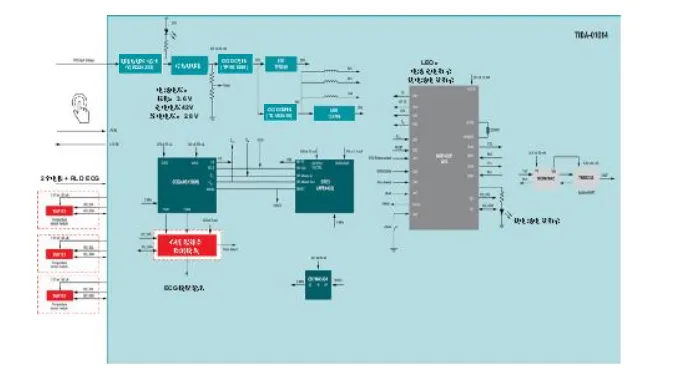
Figure 1: Multiparameter front-end system of the vital-signs patient monitor reference design
Graphical User Interface
The graphical user interface (GUI) displays collected waveforms with a 5-second moving window and applies basic filtering to remove noise sources such as common-mode interference from power and lighting. Figure 2 shows ECG, PPG, respiration, heart rate (beats per minute), respiration rate (breaths per minute), SpO2 percentage, and temperature values on a PC.
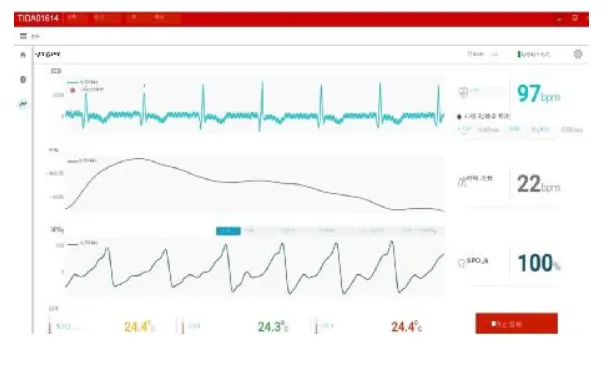
Figure 2: GUI displaying ECG, PPG, respiration, heart rate, and skin temperature
Measured Signals and Pacemaker Detection
Figure 3 shows ECG, photoplethysmogram (PPG), pacemaker activity, heart rate, and temperature sensor data captured on a PC. When a pacing pulse is detected, the pacemaker channel indicates its presence, shown by the top trace in Figure 3.
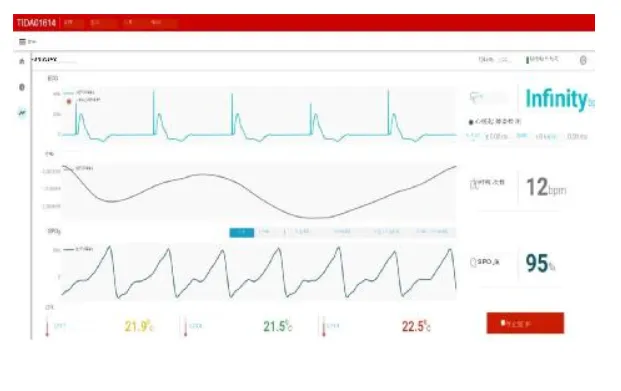
Figure 3: GUI displaying ECG, PPG, pacemaker pulses, heart rate, and skin temperature
Conclusion
This reference design facilitates evaluation of interoperating devices. It includes design guidance, schematics, layout files, and a bill of materials to help accelerate product assessment and development. The design also supports real-time collection of vital-signs parameters.