ALLPCB


According to MEMS Consulting, Anhui Xindong Lianke Microsystems Co., Ltd. (referred to as Xindong Lianke) recently held an investor relations event. Lin Ming, the company's board secretary, participated. Excerpts follow.
1. Company overview
Xindong Lianke was founded in 2012 and was listed on the Shanghai Stock Exchange STAR Market on June 30, 2023 (stock code: 688582). Its main business is the research, testing, and sales of high-performance silicon-based MEMS inertial sensors. The company has developed a product portfolio of high-performance MEMS inertial sensors with independent intellectual property rights, and has achieved volume production and application. It has closed the technical loop across key stages including MEMS inertial sensor chip design, MEMS process development, packaging, and testing, and has established complete business processes and a supply chain.
Xindong Lianke's MEMS sensor chips have reached navigation-grade accuracy and are currently among the best-performing silicon-based MEMS inertial sensors in China. Major technical indicators place the company in the same tier as international mainstream manufacturers, filling a gap in the Chinese market for high-performance silicon-based MEMS inertial sensors.
2. Applications in autonomous driving
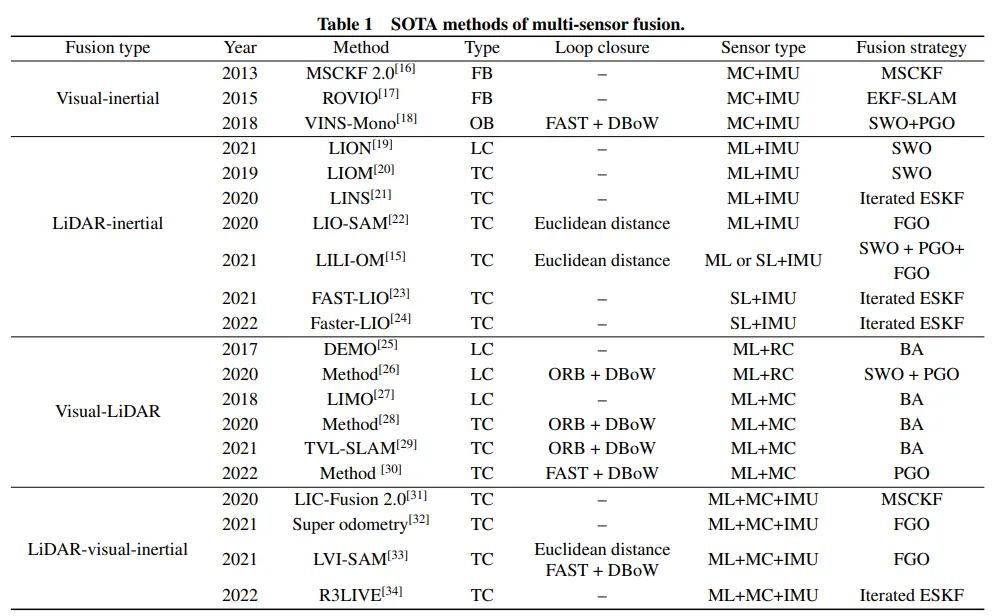
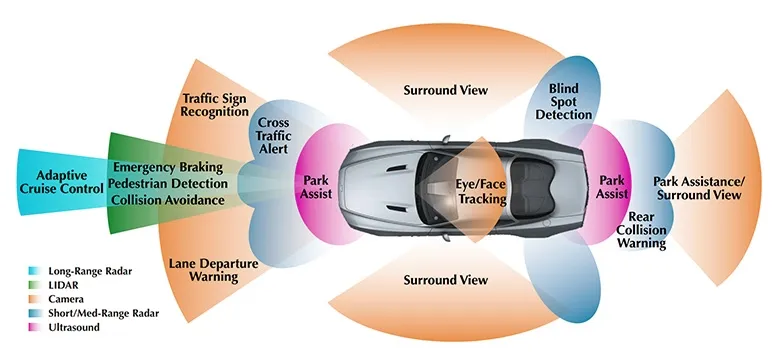
Product introduction cycles in autonomous driving are relatively long. Over the past two years the company has maintained close cooperation and project follow-up with customers in the autonomous driving field. Some customers have entered the sample stage and are conducting factory audits focused on quality and capacity. In non-passenger vehicle segments, the company has secured supplier status with L3 and L4 autonomous driving manufacturers and has begun shipments. In the passenger vehicle segment, supplier qualification is expected later; the company may have several passenger vehicle customer qualifications in 2024.
3. Robotics applications
Humanoid robot development remains at the R&D stage, and technical approaches, sensor selections, performance requirements, and sensor counts have not been fully settled. The company expects humanoid robots to use IMUs for attitude control and navigation and to favor mass-produced, off-the-shelf products. Requirements for cost and performance may be similar to current autonomous driving demands. Therefore, the company's development of inertial chips for autonomous driving positions it for potential applications in humanoid robots once the market's technical routes mature.
4. Vehicle-side samples and pricing for IMUs
The company has already provided vehicle-side samples and expects supplier qualification to follow. Typical IMU usage for autonomous driving is about one unit per vehicle, with significant price variation depending on grade. For L2-level systems, which are currently an advanced driver assistance function, price points may be at several hundred yuan.
5. Gross margin expectations for automotive IMUs
Gross margins in the intelligent driving IMU market generally are not as high as 60%–70%, especially at the L2 level where competition is intense. Specific figures should be based on company disclosures.
6. MEMS pressure sensors and resonant platform
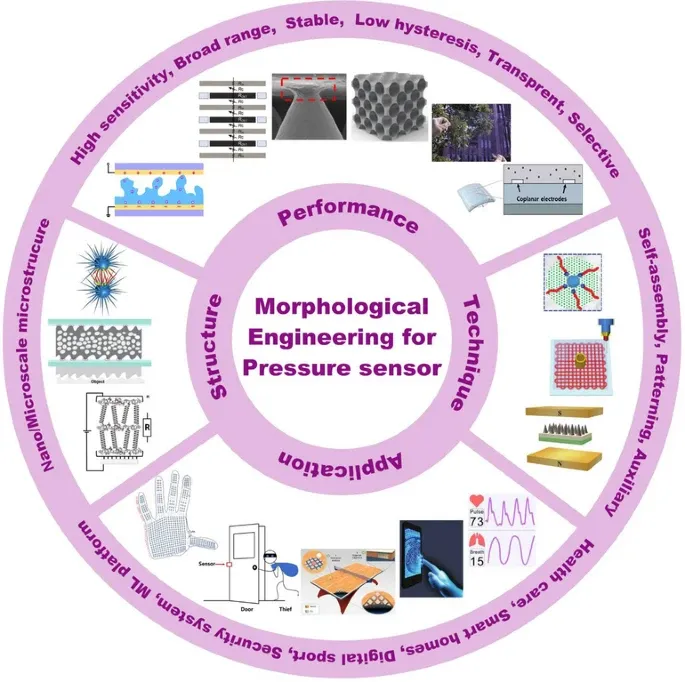
Pressure sensor development has benefited from the company's resonant technology platform used for inertial sensors. The company offers high-performance resonant pressure sensors with accuracy levels on the order of 1e-4 to 2e-4.
High-performance pressure sensors have broad applications in atmospheric measurement, altitude, various industrial fields, and pressure controllers.
The company plans several resonant pressure sensor products: a low-range resonant barometric sensor, a general-purpose wide-range industrial pressure sensor, and a pressure sensor designed for applications such as high-speed rail and harsh environments. The small-range product has reached sample finalization and is being delivered to customers in small batches; work is ongoing to resolve engineering and pilot production for mass manufacturing. Another product has undergone several wafer runs and remains under development.
7. 2023 product downstream split
Revenues are dominated by MEMS gyroscopes. Module (IMU) revenue was about CNY 20 million, MEMS accelerometer revenue was about CNY 16 million, and there was some revenue from technical services.
8. High-reliability applications
MEMS gyroscopes represent a third generation of inertial devices, following mechanical gyroscopes and fiber-optic/laser gyroscopes. From the international trend, MEMS gyroscopes can cover and replace applications except for very high-end niches where cost and volume are not constraints and where mechanical, fiber-optic, or laser gyroscopes remain preferable. Therefore, market prospects are positive.
Beyond high-reliability fields, the company is expanding into unmanned systems (such as unmanned vehicles, drones, and unmanned surface vehicles), marine surveying, and other measurement applications. High-end industrial uses and various unmanned system scenarios can broadly apply MEMS inertial devices.
The company reports a healthy pipeline of projects progressing, and views market prospects for MEMS inertial products as favorable.
9. Product range for high-reliability markets
The company primarily sells standard inertial chips, such as gyroscope and accelerometer chips, but will provide IMU modules to certain customers with specific requirements.
For applications with higher technical complexity that require integrated solutions (for example mining, surveying and mapping, unmanned surface vehicles), the company develops modules and small system-level products for direct delivery to customers.
Overall, IMU module revenue has grown rapidly but still accounts for less than 10% of total revenue, so it is not the company's core business. Module development mainly aims to drive wider adoption of the company's chips across end markets.
10. Chip shipments
Chip shipments were about 120,000 units last year. The company is not providing a specific forecast for this year.
11. Downstream revenue distribution
Because the company cannot fully confirm the end applications of downstream module customers' products, it cannot precisely provide 2023 downstream revenue breakdowns. Based on company statistics and estimates during listing, revenue from high-reliability fields accounts for about 70%, while unmanned systems and high-end industrial applications together account for about 30%.
12. Technical barriers for MEMS inertial sensors
An inertial sensor assembly includes a MEMS chip and an ASIC. High technical difficulty exists across MEMS chip design, process development, ASIC design, algorithms, packaging, and calibration/testing. Any weakness in these areas can affect overall sensor performance, so the product's technical barriers are multifaceted.
13. Wafer fabrication outsourcing
Front-end wafer fabrication requires significant investment. The company currently does not plan to invest in front-end manufacturing and will continue to outsource wafer production.
14. Criteria for front-end foundry selection
The company's products include two chips: a MEMS chip and an ASIC. ASICs are standard CMOS chips and can be manufactured by mature foundries of scale. For MEMS processes, a relatively complete foundry ecosystem already exists globally. The company prefers partners experienced in inertial device foundry services and currently maintains several stable supplier partnerships while continuing to expand its supplier base.
15. Long-term storage and recalibration
Chips are calibrated and tested at the wafer level before shipment. Downstream module manufacturers perform secondary calibration at the module and system levels. In general, systems do not require recalibration after long-term storage when reactivated.
16. MEMS replacing earlier gyroscope technologies
The trend of MEMS gyroscopes replacing earlier generations is clear. Last year's shipment of 120,000 chips corresponds to about 40,000 module sets, which indicates that many projects have moved beyond trial and validation into production. Several projects have reached the thousand-chip shipment level, demonstrating technical validation and production ramp-up, though many application areas remain at earlier stages of replacement.
17. Chip value share in navigation systems and pricing pressure
The core components may account for about 50% of a navigation module's value, though this varies by module maker.
On pricing pressure, the company applies tiered pricing with volume discounts. Module manufacturers sometimes absorb price pressure and compress margins. From an industry perspective, MEMS-based solutions are more competitive than fiber-optic or laser alternatives: MEMS allows costs to fall into an acceptable range for wider adoption.
18. Module strategy
Xindong Lianke positions itself primarily as a sensor chip company. In many vertical segments, downstream module makers and end customers have tight relationships—such as in oil exploration—so the company focuses on selling standard chips while letting customers handle module production.
However, as some application areas scale (for example autonomous driving) and OEMs prefer shorter supply chains, the company is developing and directly selling modules. For new application areas without established channels or integrators—such as unmanned surface vehicles and certain surveying markets—the company also develops dedicated IMU modules and integrated navigation solutions for customers.
In summary, the company focuses on two IMU directions: fields with good prospects but no established channel partners or industry solutions, and high-volume segments with high module integration requirements where OEMs prefer direct engagement with chip suppliers, such as autonomous driving.