ALLPCB



Advances in sensors, controllers, and power
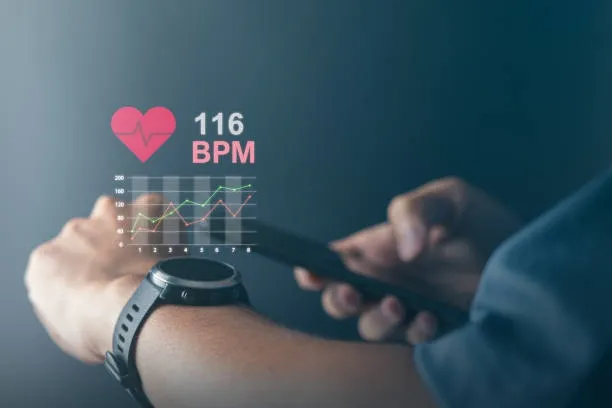
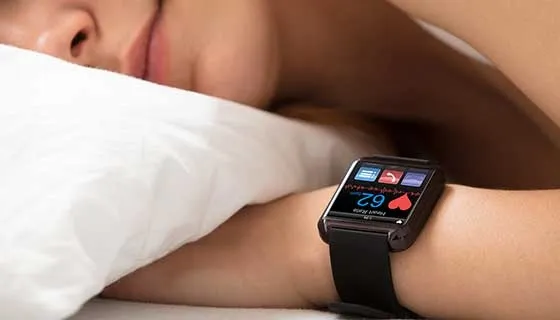
The development of ultra-low-power analog biosensors, digital microcontrollers, and novel power and battery-management circuits is driving growth in wearable healthcare products. Applications have expanded from activity tracking to continuous monitoring of blood oxygen, blood glucose, body temperature, and other metrics. Wearable devices can now capture almost all physiological signals traditionally monitored in clinical settings, often with comparable accuracy at much lower cost.
According to market-research firm IHS, global shipments of wearable devices exceeded 200 million units in 2019, doubling over six years.
Nevertheless, before wearable devices become an integral part of more people's daily lives, multiple issues related to reliability and accuracy must be addressed. These devices need high dependability because readings may be used to adjust lifestyle or serve as early warnings of disease. To achieve this, biosensor designs must overcome measurement challenges caused by harsh environments, sweat, motion, and ambient light.
Connectivity requirements
Connectivity is a key requirement for any wearable device. Seamless wireless links are now a standard feature in modern wearables. Wireless transmission allows data to be sent to larger displays or remote collection devices. Low-energy Bluetooth (BLE) is the emerging standard suitable for this purpose. In addition, near-field communication (NFC) provides short-range wireless links well suited for brief data transfers such as configuration and record retrieval.
When developing a product like a new fitness band, engineers must consider how much data needs to be transmitted, how frequently, and over what range. If data volumes reach megabytes, designers may consider classic Bluetooth or Wi-Fi.
Range is another factor. BLE typically supports line-of-sight communication up to about 30 meters. Usage scenarios also affect the choice, for example whether the device communicates with a smartphone to forward data to cloud services for analysis.
Built for real-world use
Many wearable systems are designed to be worn during exercise and other high-intensity activities. Durability is relative: the requirements for a life-saving device differ from those for a sports monitor worn by cyclists.
Real-world reliability means operating in environments where electronics are not usually expected to perform. Components include low-power analog front-end (AFE) solutions for multi-parameter monitoring and embedded analog building blocks such as operational amplifiers, current-sense amplifiers, filters, and data converters—all necessary to connect real signals to digital systems.
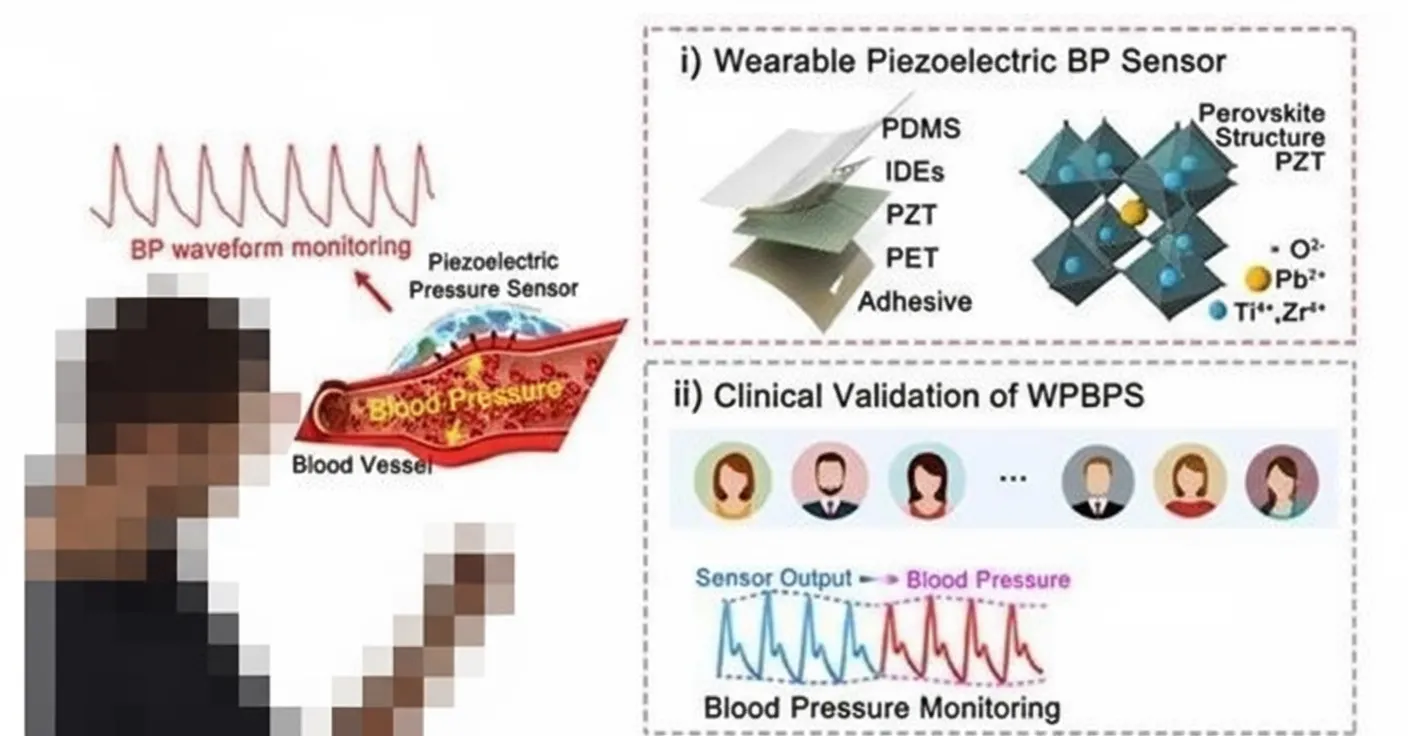
Notably, the electrical output amplitude from physiological sensors is very low, measured in millivolts and microvolts. For this reason, many sensors suitable for wearable health applications integrate amplification and conversion circuits on a single die or within the same package to output higher-level analog signals or serial digital data.
Example: handling flicker
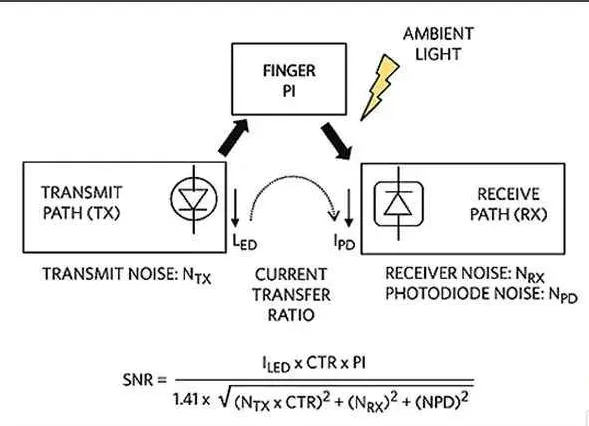
To mitigate these effects, advanced PPG ICs now use intelligent signal-path techniques. Algorithms have also become more sophisticated. As a result, designers can deploy PPG in various form factors, including earbuds, rings, necklaces, headbands and armbands, wristbands, watches, and smartphones.
Wearable sensors must reliably operate while overcoming common noise and error sources. Environmental noise in PPG sensors is typically divided into two main categories: optical noise and physiological noise.
Optical noise refers to changes in the light path detected by the sensor that are unrelated to the blood-volume absorption being measured. Physiological changes can also alter blood flow and tissue volume, which in turn affect the PPG signal.
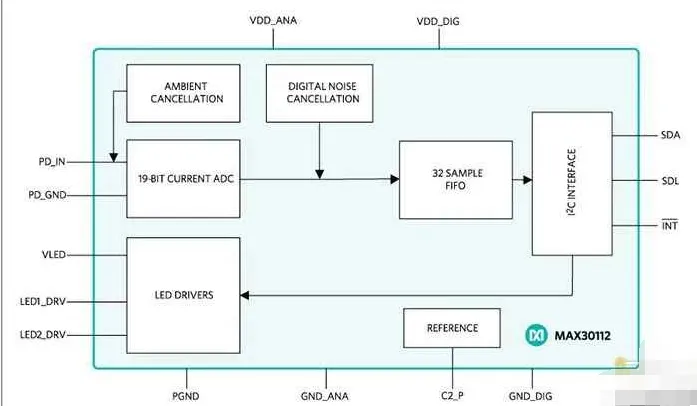
Maxim's MAX30112 wrist application heart-rate detection solution implements advanced correlated sampling techniques designed to attenuate various 50 Hz/60 Hz flicker components, reducing flicker-related degradation of the PPG signal. It operates from a 1.8 V main supply and includes an independent 3.1 V to 5.25 V LED driver supply. The device supports a standard I2C-compatible interface and offers a software-controlled shutdown mode with near-zero standby current while keeping power rails supplied.
Development tools that save time
Wearable medical devices are autonomous, noninvasive systems that perform specific biomedical functions. These devices track heart rate, body temperature, blood oxygen, and electrocardiogram (ECG) signals. Sensors respond to a physical input and generate a signal, usually in the form of voltage or current. That signal is conditioned, corrected, sampled at an appropriate rate, and then converted into a format readable by a processor.
Meeting all these requirements makes building wearable healthcare products challenging and time-consuming. Tools such as Maxim's HealthSens or Platform 2.0 provide wrist-worn reference designs and software for monitoring ECG, heart rate, and temperature, reducing development time. Using such tools, wearable products can now access nearly all signals that were traditionally measured in clinical environments.