ALLPCB


Introduction
Electromagnetic interference poses significant risks to electronic systems operating in extreme environments, where factors like intense radiation, elevated temperatures, and corrosive agents amplify vulnerabilities. In space applications and defense applications, reliable EMI shielding becomes essential to prevent signal degradation, system failures, and mission compromises. Advanced materials have emerged to address these challenges, offering superior performance in high-temperature shielding, radiation shielding, and corrosive environment shielding. Engineers designing printed circuit boards for such conditions must select materials that balance electromagnetic attenuation with environmental resilience. This article explores the principles, material options, and practical strategies for implementing effective extreme environment EMI solutions. By understanding these advancements, electrical engineers can enhance system reliability in the most demanding scenarios.
The relevance of advanced EMI shielding extends beyond basic protection to enabling compact, lightweight designs critical for aerospace and military hardware. Unmitigated extreme environment EMI can cause erratic behavior in control systems, communication blackouts, or even catastrophic failures during operations. Standards like IPC-6012DS outline qualification requirements for printed boards in space, emphasizing shielding integrity under thermal cycling and vacuum. Similarly, materials must endure mechanical stresses from vibration and shock common in defense deployments. Engineers prioritize multifunctionality, where shielding also contributes to thermal management or structural integrity. Ultimately, these solutions safeguard mission success by maintaining signal integrity amid harsh conditions.
Understanding EMI Shielding and Its Critical Role in Extreme Environments
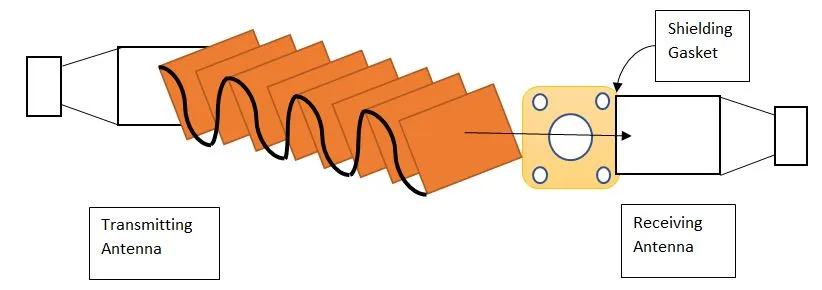
EMI shielding involves using conductive or absorptive materials to block or attenuate unwanted electromagnetic waves, protecting sensitive electronics from interference. Shielding effectiveness depends on reflection, absorption, and multiple internal reflections within the material. In extreme environments, conventional materials like copper foil often degrade due to thermal expansion, oxidation, or outgassing, leading to reduced performance over time. High-temperature shielding requires materials stable above 125 degrees Celsius, while radiation shielding demands resistance to ionizing particles that can displace atoms in lattices. Corrosive environment shielding calls for inert surfaces that resist salt spray or chemical attack without compromising conductivity. For electrical engineers, selecting the right materials ensures compliance with rigorous performance criteria in space applications and defense applications.
The relevance of advanced EMI shielding extends beyond basic protection to enabling compact, lightweight designs critical for aerospace and military hardware. Unmitigated extreme environment EMI can cause erratic behavior in control systems, communication blackouts, or even catastrophic failures during operations. Standards like IPC-6012DS outline qualification requirements for printed boards in space, emphasizing shielding integrity under thermal cycling and vacuum. Similarly, materials must endure mechanical stresses from vibration and shock common in defense deployments. Engineers prioritize multifunctionality, where shielding also contributes to thermal management or structural integrity. Ultimately, these solutions safeguard mission success by maintaining signal integrity amid harsh conditions.
Core Mechanisms of EMI Shielding in Harsh Conditions
Electromagnetic waves interact with shielding materials through three primary mechanisms: reflection at the surface due to impedance mismatch, absorption via ohmic losses in conductive paths, and multiple reflections that further attenuate energy. High conductivity favors reflection, ideal for high-frequency extreme environment EMI, while magnetic permeability enhances low-frequency absorption. In extreme settings, material degradation alters these properties; for instance, thermal expansion can create gaps in layered shields, increasing leakage. Advanced composites mitigate this by incorporating fillers that maintain uniform conductivity across temperature gradients. Engineers model these interactions using skin depth calculations, where thinner materials suffice for higher frequencies but demand precision fabrication. Understanding these principles guides material selection for optimized shielding effectiveness.
For high-temperature shielding, ceramics and metal oxides excel because their crystalline structures resist sintering or phase changes at elevated temperatures. Carbon-based nanomaterials like graphene provide high carrier mobility for broadband absorption without melting. Radiation shielding benefits from dense lattices in materials such as intercalated graphite, which scatter high-energy particles while preserving electrical paths. In corrosive environments, passivation layers on nickel alloys prevent galvanic reactions that erode conductivity. These mechanisms ensure sustained performance, as verified through standardized testing protocols. Electrical engineers leverage simulations to predict long-term behavior before prototyping.
Advanced Materials for Specific Extreme Challenges
High-Temperature Shielding Materials
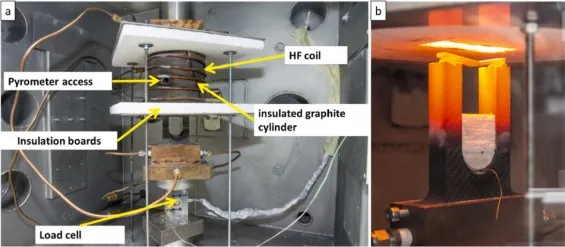
Materials for high-temperature shielding must exhibit thermal stability, low coefficient of thermal expansion, and enduring conductivity. Nickel and nickel alloys stand out for their oxidation resistance and mechanical durability in environments exceeding standard operating limits. Ceramic composites offer dielectric properties with conductive inclusions, suitable for integration into multilayer PCBs. Carbon nanotubes and graphene foams provide lightweight alternatives with exceptional thermal conductivity to dissipate heat alongside EMI absorption. Fluorinated silicones filled with silver-coated particles maintain flexibility and shielding up to demanding thermal profiles. These options allow engineers to design boards that function reliably without delamination or performance drop.
Radiation Shielding for Space Applications
In space applications, radiation shielding counters cosmic rays and solar flares that degrade semiconductors and conductors alike. MXene films, two-dimensional transition metal carbides, deliver ultrahigh conductivity for broadband EMI attenuation while resisting atomic displacement. Polymer composites reinforced with boron or polyethylene fragments attenuate neutrons and protons without excessive weight. Intercalated graphite sheets combine low outgassing with effective particle scattering, critical for vacuum environments. These materials integrate as conformal coatings or embedded foils in PCBs, preserving signal integrity during prolonged exposure. Selection focuses on minimizing secondary radiation while maximizing shielding effectiveness.
Corrosive Environment Shielding Solutions
Corrosive environment shielding demands materials with inherent chemical inertness or protective barriers. Stainless steel and aluminum alloys with anodized surfaces resist salt fog and humidity without pitting. Carbon-based fillers in elastomers offer corrosion-free conductivity, ideal for marine defense applications. Nickel-aluminum particles in silicone binders provide galvanic stability, preventing dissimilar metal reactions. Advanced transparent films like ITO stacks add multifunctionality for optical systems. Engineers apply these via vapor deposition or lamination to ensure seamless PCB integration and long-term adhesion.
Multifunctional Composites for Defense Applications
Defense applications often require shielding that withstands combined stresses of shock, vibration, and electromagnetic pulses. Conductive elastomers with metal plating deliver compression-set resistance and high shielding in gaskets. Hybrid nanomaterials blending MXenes with polymers achieve lightweight, flexible shields for wearable or vehicular electronics. These composites align with environmental testing like thermal shock and humidity cycles. Practical deployment involves overmolding or printing directly onto boards for uniform coverage.
Best Practices for Implementing Advanced EMI Shielding
Engineers should begin with shielding effectiveness requirements based on frequency bands and threat levels, using tools like ASTM D4935 for planar material evaluation. Layered architectures combine reflective metals with absorptive foams to broaden bandwidth coverage. Grounding paths must integrate seamlessly to avoid resonances that amplify interference. For PCBs, incorporate shielding via ground planes, via fences, or filled vias per design guidelines. Environmental qualification includes accelerated aging to simulate service life. Collaboration with fabrication experts ensures material compatibility during lamination and soldering.
Material selection matrices aid decision-making: prioritize low density for space, corrosion resistance for naval defense. Prototype testing validates performance under combined stressors. Post-fabrication inspections confirm continuity and adhesion. These practices yield robust systems compliant with industry benchmarks.
Key Insights from Real-World Applications
In space applications, MXene-infused laminates have enabled compact satellite electronics to withstand Van Allen belt radiation without signal loss. Defense radar systems employ nickel-graphene hybrids for pulse resilience in humid theaters. High-temperature engine controls use ceramic-embedded traces to shield avionics from exhaust proximity. These examples highlight the shift toward nanomaterials for multifunctionality. Engineers adapt these by customizing filler loadings for specific threats.
Conclusion
Advanced materials revolutionize EMI shielding for extreme environments, addressing high-temperature, radiation, and corrosive challenges with precision-engineered solutions. From MXenes and ceramics to corrosion-resistant alloys, options abound for space applications and defense applications. By grasping mechanisms and applying best practices, electrical engineers can design resilient electronics. Prioritizing standards like IPC-6012DS ensures qualification success. Future innovations promise even lighter, smarter shields, elevating system performance in unforgiving conditions.
FAQs
Q1: What materials provide effective high-temperature shielding for extreme environment EMI?
A1: High-temperature shielding relies on ceramics, metal oxides, nickel alloys, and carbon nanomaterials like graphene. These maintain conductivity and structural integrity under thermal stress, preventing gaps or oxidation. Selection depends on operating range and frequency, with testing confirming performance. Integration as coatings or composites suits PCB designs.
Q2: How do advanced composites enhance radiation shielding in space applications?
A2: Composites with MXenes, intercalated graphite, or polymer matrices scatter ionizing radiation while attenuating EMI. Low outgassing prevents contamination in vacuum. They balance weight and effectiveness for satellites. Engineers layer them for broadband protection.
Q3: Which solutions are best for corrosive environment shielding in defense applications?
A3: Nickel-aluminum filled silicones, stainless steel, and carbon-based elastomers resist salt spray and chemicals. Passivation prevents galvanic corrosion. These gaskets and coatings ensure sustained shielding. Durability testing verifies long-term reliability.
Q4: Why integrate standards like ASTM D4935 in EMI material evaluation?
A4: ASTM D4935 standardizes shielding effectiveness measurement for planar materials, enabling consistent comparisons. It accounts for insertion loss across frequencies. Compliance aids qualification for extreme uses.
References
IPC-6012DS — Qualification and Performance Specification for Rigid Printed Boards Designed for Space Application. IPC.
ASTM D4935 — Standard Test Method for Measuring the Electromagnetic Shielding Effectiveness of Planar Materials. ASTM International.
IEC 61000-4-3 — Electromagnetic compatibility (EMC) - Part 4-3: Testing and measurement techniques - Radiated, radio-frequency, electromagnetic field immunity test. IEC.