ALLPCB


Overview
The Internet of Things (IoT) is built on cloud computing and networks of sensors that collect data via mobile, virtual, and real-time connections. IoT has penetrated many industries, from factory automation to on-demand entertainment and wearable devices, and is expected to become a multi-trillion dollar market. IoT is driving development in the semiconductor and embedded systems sectors, creating demand for several enabling technologies, including:
- Next-generation ultra-low-power ICs
- New wireless communication protocols
- New data analytics and cloud processing techniques
As exabytes of data flow across networks, IoT increases demand for low-power, high-performance memory with small pin counts and compact form factors. Microcontrollers have adapted by offering special low-power modes such as deep sleep and standby. Their performance, including clock speeds and feature sets, continues to improve with successive generations. Memory designers must continuously adjust designs so customers do not have to compromise between performance and power consumption.
Retail IoT and Wearables
Retail is a prominent IoT growth area. Large stores are using IoT to interact with customers and deliver personalized shopping experiences. Devices across a store can be connected to each other and to cloud resources, enabling use of collected data to drive sales, manage inventory, and improve operations.
Earlier articles in this series examined two early retail IoT devices: point-of-sale (POS) terminals and electronic shelf labels. Modern smart POS terminals are a primary tool for tracking customer behavior, managing inventory, and running promotions. These terminals tend to be powerful yet compact, often battery-powered and security-focused, imposing strict requirements on the semiconductor components they use. Electronic shelf labels are programmable devices used to update prices and track customer behavior based on promotions and inventory. They automate repetitive tasks and provide analytics at relatively low cost. This article covers a third device type that has already been introduced in several stores and is expected to see wider adoption: wearable devices.
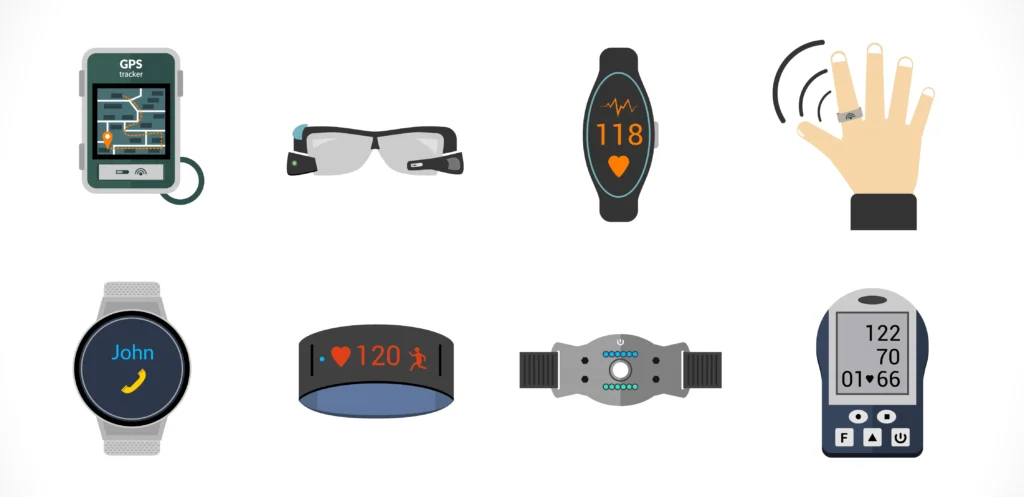
Wearable technology has become one of the most visible IoT segments. Wearables support many daily activities, including fitness tracking, phone calls, and notifications, and they can integrate additional functions. In retail, wearables can offer personalized discounts, facilitate payments, guide shoppers through stores based on shopping lists, and help store staff perform tasks more efficiently. Some wearable applications can simplify inventory management and customer relationship workflows for employees.
Semiconductor requirements for wearables differ from most other smart shopping applications. Key constraints are power, bandwidth, and size, which also drive the requirements for compact, low-power, and high-bandwidth memory.
Typical Wearable Architecture
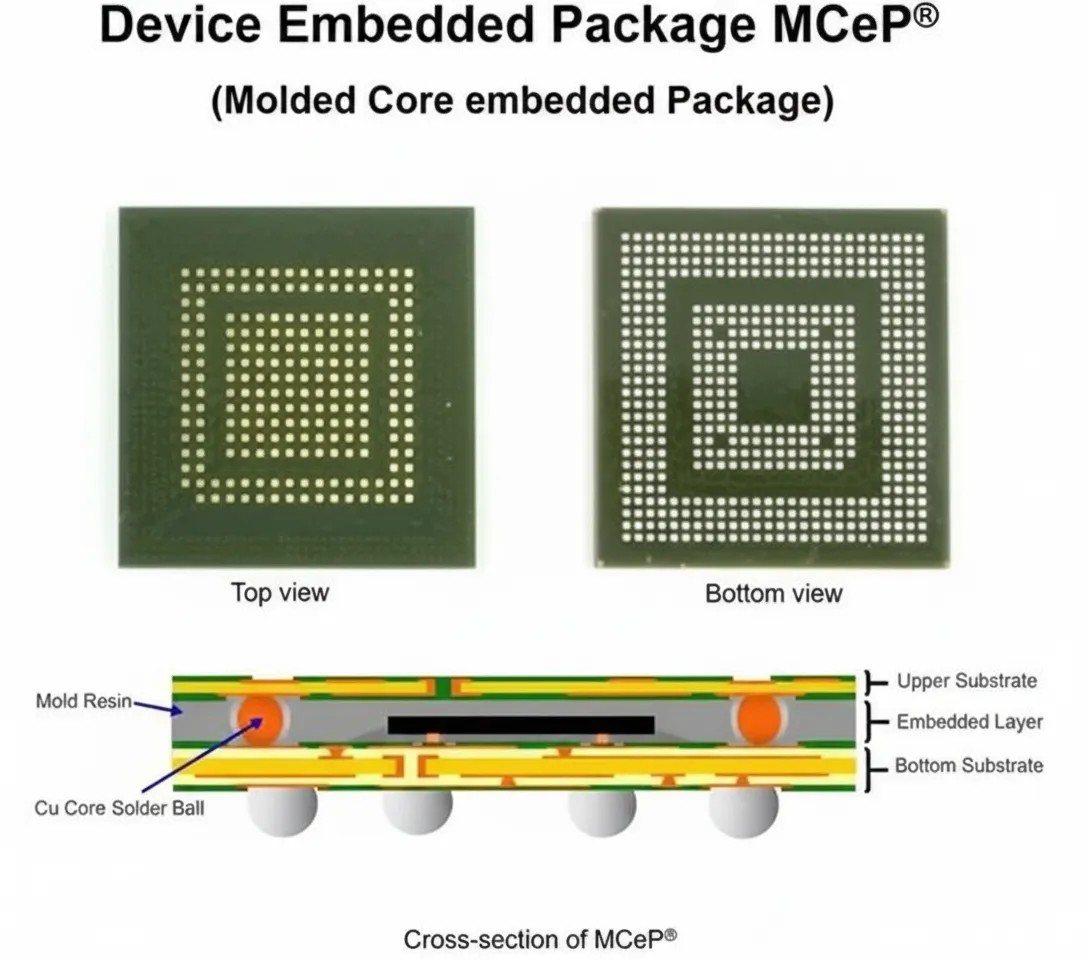
Wearable PCBs are very small and are designed to fit in the palm or on a wrist. This drives a need for the smallest possible memory footprint, often no larger than the bare die. Aside from die-size packages, alternative approaches rarely meet the size requirements. Today's wearables often demand functionality comparable to mobile devices, including high-resolution displays, powerful applications, continuous sensor data acquisition, and extensive background processing. These requirements typically necessitate high-end processors and peripherals.
Because wearables must run high-speed processes from very small batteries, power consumption must be extremely low. For smaller wearables, battery life should be at least one day. Increasing battery size would raise device weight and dimensions, negatively affecting aesthetics.
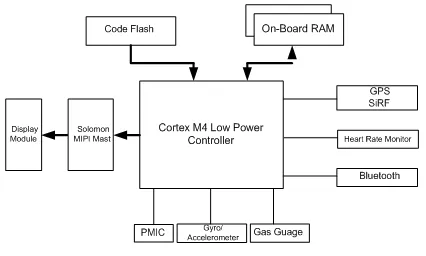
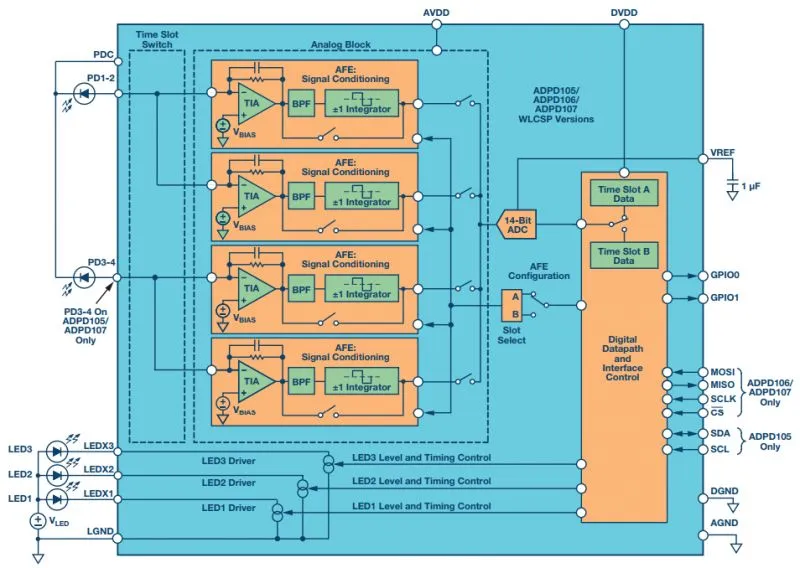
Figure 1: Typical wearable architecture
Figure 1 shows the typical components of a wearable device. The display is usually the largest power consumer, with significant differences depending on whether the display is LCD (highest consumption), OLED, or e-ink (lowest). The remainder of the architecture is similar across wearables. The Cortex-M4 is a commonly used controller with low power consumption and good performance. On-chip RAM sizes for Cortex-M4 controllers range from about 384 KB to 768 KB. Despite their small size, wearables perform complex tasks and collect substantial sensor data. Onboard RAM can retain data with very low standby current, supporting storage of sensor data, building protocol packets for Bluetooth transmission, or storing the current display contents while the screen is off.
Memory and Component Power
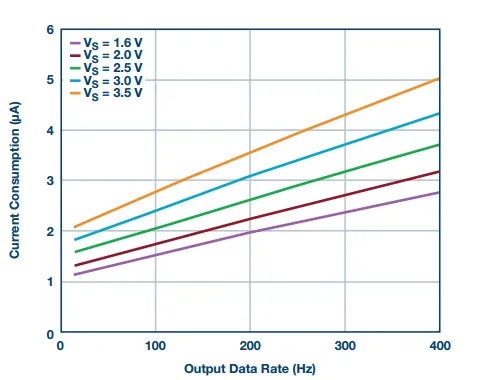
Many activity trackers can display SMS, call, and calendar notifications from a connected smartphone, which requires additional system storage. Low-power external RAM with 4 to 8 Mb capacity (volatile or nonvolatile) can address these needs. The following table summarizes typical current consumption for common wearable components.
Wearables use various memory types for different functions. Nonvolatile memory and RAM are common. Although NOR flash is a commonly used nonvolatile memory type, DRAM and SRAM can be used for random-access tasks such as caching and buffering. High-end wearables, such as large smartwatches, smart glasses, and VR headsets, often use DRAM for its higher density. Smaller devices like fitness trackers and compact smartwatches typically use SRAM to achieve lower power than high-density memories. Because these devices use small batteries and require long runtimes, they avoid DRAM due to its refresh-related power consumption. Choosing between DRAM and SRAM requires trade-offs between capacity and power consumption.
Outlook
As these components see broader adoption and their capabilities evolve beyond current use cases, their impact on semiconductor design will be revisited. The fundamental device requirements remain: minimize power consumption, reduce size, and increase reliability without compromising performance.