ALLPCB


Overview
Widespread deployment of the smart grid will require millions of wireless connections to monitor and control devices in homes, business offices, and industrial systems. ZigBee leads in providing many of these connections, but a single technology solution is unlikely. That means multiple alternatives—ZigBee, Bluetooth, and proprietary solutions—will need to interoperate. Vendors provide extensive documentation, application notes, reference designs, and evaluation kits to support development.
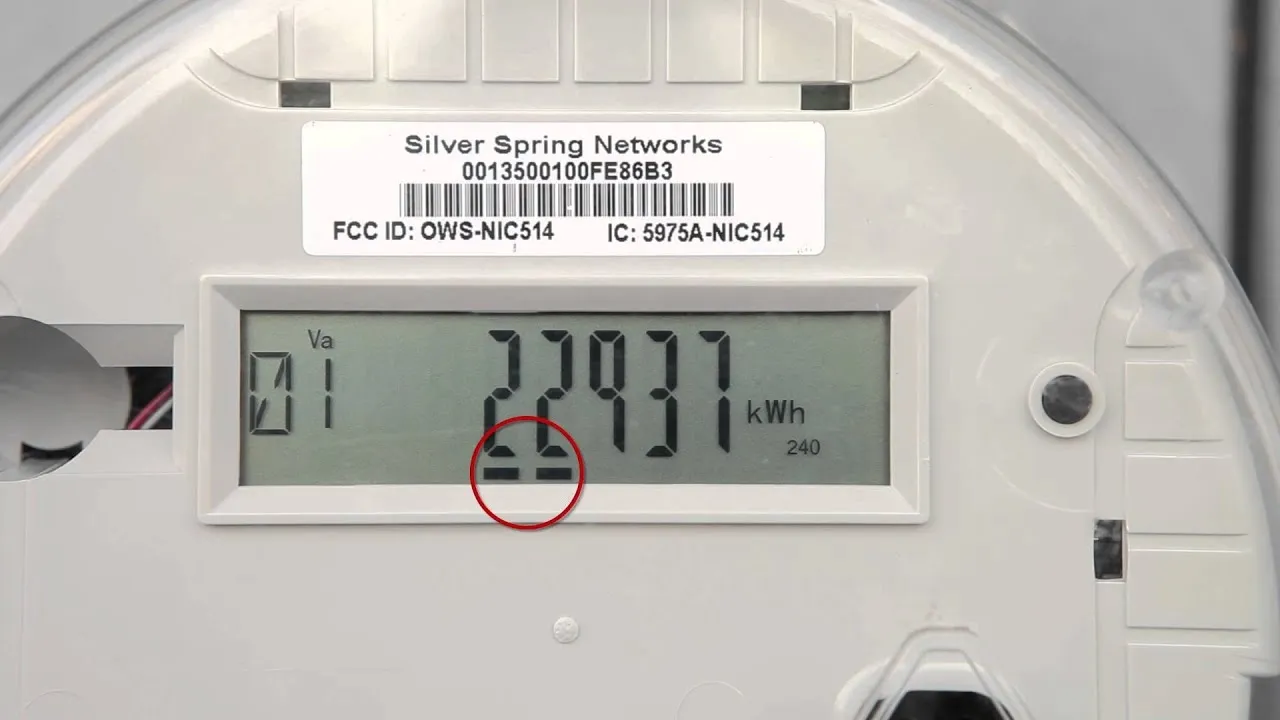
In the residential segment, the data operations required to optimize utility functions will involve in-home wireless home area networks (HANs) and short-range communication between homes and smart meters. ZigBee appears to be the preferred wireless technology for HANs in the US, with more than 50 million ZigBee-based smart meters reportedly contracted.
ZigBee's fast start is due in part to the ZigBee Alliance aligning its Smart Energy Profile with the OpenHAN specification defined by UtilityAMI. UtilityAMI was developed by a working group of the UCA working on advanced metering infrastructure.
Designers should note that ZigBee will almost certainly need to exchange information with Bluetooth, Wi-Fi, and proprietary products in the home automation market. A single winner-takes-all outcome is unlikely because home automation use cases vary widely in network requirements.
Certifications and Early Products
The ZigBee Alliance has certified roughly a dozen products that conform to its Smart Energy Profile, including ZigBee-to-Ethernet bridge products from Black and Decker, LG Electronics, and NetGear. Although the ecosystem is still maturing, ZigBee chip vendors are publishing application notes and adapting development tools for smart meter designs and home energy gateways.
Design Resources
Freescale Semiconductor provides video training modules that introduce ZigBee design concepts. The sessions outline IEEE 802.15.4 and ZigBee technologies and discuss their features and tradeoffs.
Reference Platform
Freescale recently introduced a comprehensive home energy gateway reference platform that uses Freescale's MC13224V ZigBee radio chip as a key component. The platform is intended to support quick-start HAN designs and includes an i.MX283 application processor–based control board that handles interfaces to smart meters, home automation systems, broadband IP networks, user interfaces, and microgrid generation units.
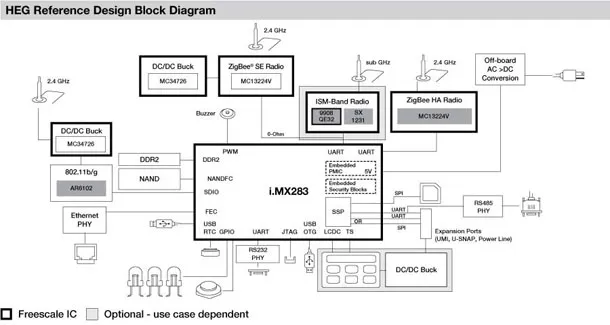
Figure 1: Freescale's home energy gateway platform includes a microgrid interface.
TI and Other Chip Vendors
Texas Instruments' HAN strategy includes the ZAP (ZigBee Application Processor) framework to help designers develop ZigBee Smart Energy applications more quickly. A key element is TI's second-generation ZigBee system-on-chip solution, which includes the ZigBee Pro stack and exposes several API interfaces to the host processor for stack configuration and data transfer.
Other vendors supporting ZigBee-based home designs include Atmel, Jennic, and Microchip Technology. Their approaches may suit more limited-scope designs. NXP Semiconductors (following its acquisition of Jennic) offers a number of modules based on ZigBee radio chips; an example module is JN5139-001-M/00R1T, which includes an antenna.
Atmel has published application notes and reference designs, including a reference that demonstrates antenna diversity using the AT86RF231 transceiver. Microchip has released several ZigBee application notes and documentation for its ZigBee/IEEE 802.15.5 transceiver family, including the MRF24J40.
Other Protocols and Alternatives
It would be incorrect to assume ZigBee will be the only wireless protocol used in home automation. For example, Z-Wave is a proprietary mesh system from Sigma Designs that offers similar functionality. Its third-generation single-chip solution, ZW-0301, embeds the Z-Wave mesh stack. Flash memory options enable OEMs to embed their own application software.
HANs (where ZigBee is strong) will also be complemented by personal area networks (PANs) for use cases such as phone-initiated HVAC control when a person enters a room. In these phone-initiated applications, Bluetooth low energy is likely to dominate.
Competition also comes from at least one wired technology. IEEE approved the IEEE 1901 broadband powerline (BPL) specification, which is less affected by RF interference and physical barriers such as walls. Its broadband throughput (up to 500 Mbits/s) exceeds typical HAN requirements, but installation cost is low and it requires no visible wiring.