ALLPCB


In the world of PCB design, ensuring signal integrity for high-speed circuits is a top priority. One technique that often comes into play is serpentine routing—a method used to match trace lengths and manage signal timing. But what exactly is serpentine routing, and how does it impact PCB trace design, length matching, and signal skew? In short, serpentine routing involves creating meandering patterns in PCB traces to equalize lengths, minimize timing differences, and reduce issues like electromagnetic interference (EMI) and impedance discontinuities. This blog post dives deep into the details of serpentine routing, exploring its role in differential pairs, layout challenges, and best practices for achieving optimal performance in high-density designs.
Whether you're designing for USB, HDMI, or other high-speed interfaces, understanding how to use serpentine routing effectively can make or break your project. Let's explore the ins and outs of this technique and how it ties into critical aspects like layout density and signal integrity.
What Is Serpentine Routing in PCB Trace Design?
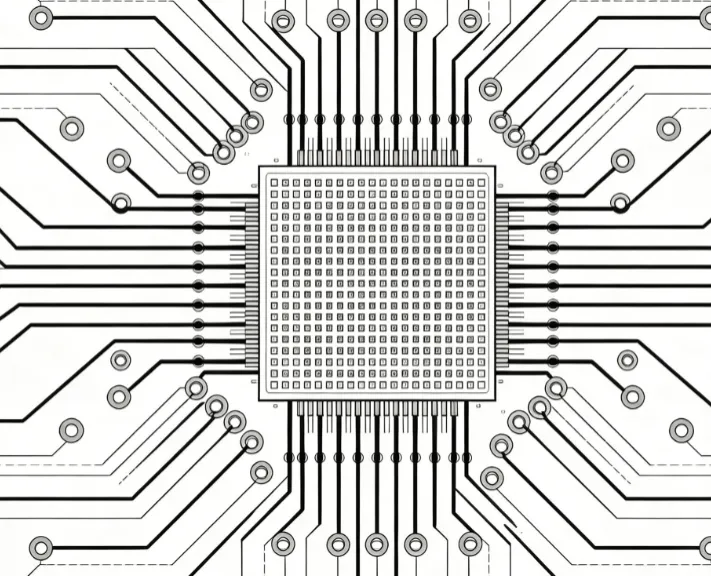
Serpentine routing, often referred to as meanders, is a PCB layout technique where traces are intentionally designed in a zigzag or winding pattern. The primary goal of this method is to increase the length of a shorter trace to match it with a longer one, ensuring that signals traveling along different paths arrive at their destination simultaneously. This is especially crucial in high-speed designs where even a slight delay—known as signal skew—can cause data errors or system failures.
In PCB trace design, timing mismatches can occur when traces of unequal lengths carry related signals, such as in differential pairs used for protocols like PCIe or Ethernet. Serpentine routing addresses this by adding controlled loops or bends to the shorter trace, effectively delaying the signal to align with its counterpart. However, while this technique solves timing issues, it introduces other challenges like potential impedance discontinuities and increased EMI, which we'll discuss later.
Why Length Matching Matters in High-Speed PCB Design
In high-speed PCB layouts, length matching is a non-negotiable aspect of maintaining signal integrity. When signals travel along traces of different lengths, they arrive at their destinations at different times. This timing difference, or signal skew, can disrupt data transmission, especially in systems operating at frequencies above 1 GHz. For instance, in a differential pair, if one trace is just 100 mils longer than the other, it could introduce a skew of several picoseconds—enough to cause errors in protocols requiring tight timing tolerances.
Serpentine routing is a go-to solution for achieving precise length matching. By adding controlled meanders to the shorter trace, designers can ensure that both signals in a pair travel the same distance. A common guideline is to keep length mismatches below 5 mils for high-speed signals like USB 3.0, though this can vary based on the specific protocol and data rate. Without proper length matching, issues like bit errors or signal distortion can compromise the entire system.
Serpentine Routing and Differential Pairs: A Perfect Match?
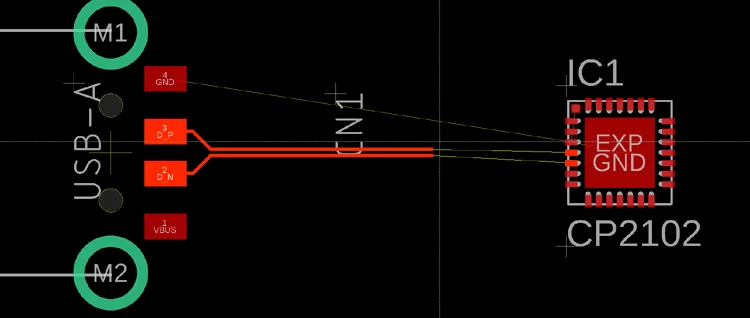
Differential pairs are widely used in high-speed designs to transmit data with better noise immunity. These pairs consist of two traces carrying complementary signals, and their performance relies heavily on symmetry. Any mismatch in length or spacing between the traces can introduce signal skew, degrading the signal quality and increasing susceptibility to noise.
Serpentine routing plays a critical role in maintaining symmetry in differential pairs. When one trace in the pair is shorter due to layout constraints, designers use meanders to extend its length while keeping the spacing between the traces consistent. However, care must be taken to avoid tight bends or uneven spacing in the serpentine pattern, as these can create impedance discontinuities. A typical recommendation is to maintain a minimum bend radius of at least three times the trace width (e.g., for a 5-mil trace, use a 15-mil bend radius) to minimize reflections.
Challenges of Serpentine Routing: Impedance Discontinuities and EMI
While serpentine routing solves timing issues, it isn't without drawbacks. One significant concern is the risk of impedance discontinuities. Each bend or loop in a meandering trace can act as a point of reflection, disrupting the signal's characteristic impedance. For high-speed designs targeting a 50-ohm impedance, even a small deviation caused by tight bends can lead to signal reflections and loss of integrity.
Another issue is the potential for increased electromagnetic interference (EMI). The loops in serpentine traces can behave like small antennas, radiating or picking up noise. This is particularly problematic in dense layouts where traces are packed closely together. To mitigate these risks, designers should:
- Keep the serpentine bends smooth and avoid sharp angles (90-degree turns are a no-go).
- Place a solid ground plane beneath the traces to provide a low-impedance return path, reducing EMI.
- Space the meanders at least twice the trace width apart to minimize coupling between adjacent segments.
By following these guidelines, you can balance the benefits of length matching with the need to maintain signal quality and reduce interference.
Layout Density and Serpentine Routing: Finding the Balance
In modern PCB designs, layout density is often a limiting factor. As components and traces are squeezed into smaller spaces, finding room for serpentine routing can be a challenge. Meandering traces take up more board real estate than straight ones, potentially increasing the layer count or board size, which drives up costs.
To optimize layout density while using serpentine routing, consider these strategies:
- Use switchback routing (a variation of serpentine routing with tighter, more compact bends) when space is limited, but ensure it doesn't compromise impedance control.
- Route traces on inner layers if surface space is constrained, provided you maintain a reference plane for return paths.
- Prioritize critical high-speed signals for serpentine routing, while less timing-sensitive traces can remain unmatched if permissible.
Balancing layout density with the need for precise length matching requires careful planning and often the use of advanced PCB design software to simulate and validate the layout before manufacturing.
Best Practices for Implementing Serpentine Routing
To make the most of serpentine routing in PCB trace design, follow these best practices tailored for high-speed applications:
- Match Lengths Precisely: Use design tools to calculate and match trace lengths within the tolerance specified by your protocol. For example, DDR3 memory signals often require length matching within 25 mils.
- Maintain Consistent Spacing: For differential pairs, keep the intra-pair spacing uniform, even through meanders, to avoid skew and coupling issues. A common spacing is 8 mils for a 6-mil trace width.
- Avoid Overuse of Meanders: Excessive serpentine routing can increase trace length unnecessarily, leading to higher signal loss. Only add meanders where length matching is critical.
- Simulate for Signal Integrity: Before finalizing the design, run simulations to check for impedance discontinuities and EMI issues caused by the serpentine pattern.
- Reference Planes Are Key: Ensure a solid ground or power plane is adjacent to the signal layer to provide a stable return path and reduce noise.
These practices can help you achieve a design that balances timing accuracy with overall signal quality, even in complex layouts.
Related Reading: Trace Clearance for Differential Pairs: Best Practices for High Speed Signals
Tools and Techniques for Serpentine Routing
Modern PCB design software offers built-in features to simplify serpentine routing and ensure accurate length matching. Many tools allow you to define length constraints for individual traces or nets, automatically generating meanders to meet those requirements. Some even provide real-time signal integrity analysis to flag potential impedance discontinuities or EMI risks.
When working with differential pairs, look for software that supports automatic length tuning and spacing rules. These features can save hours of manual adjustment and reduce the risk of human error. Additionally, consider using field solvers to simulate the electromagnetic behavior of your traces, especially if your design operates at frequencies above 5 GHz.
Related Reading: Differential Pair Routing: Techniques for High-Speed PCB Layouts
Real-World Applications of Serpentine Routing
Serpentine routing is a staple in industries where high-speed data transmission is critical. For example, in telecommunications, it ensures that signals in Ethernet interfaces remain synchronized, preventing packet loss. In consumer electronics, it's used in USB and HDMI designs to maintain tight timing between differential signals. Even in automotive systems, where reliability is paramount, serpentine routing helps manage signal timing in advanced driver-assistance systems (ADAS) operating at high frequencies.
Consider a practical scenario: designing a board for a 10 Gbps Ethernet interface. The differential pairs carrying the data must be matched within 10 mils to avoid skew exceeding 1 picosecond. Serpentine routing allows you to fine-tune the shorter trace, adding just enough length through smooth meanders to meet this requirement, all while maintaining a 100-ohm differential impedance.
Conclusion: Mastering Serpentine Routing for Better PCB Designs
Serpentine routing is a powerful technique in PCB trace design, offering a practical solution for length matching and minimizing signal skew in high-speed circuits. By carefully implementing meanders, especially in differential pairs, designers can ensure timing accuracy and maintain signal integrity. However, challenges like impedance discontinuities, EMI, and layout density constraints must be addressed through best practices and proper planning.
Whether you're working on a compact consumer device or a complex industrial system, understanding the nuances of serpentine routing can elevate your design quality. By balancing the need for precise timing with the practicalities of PCB layout, you can create boards that perform reliably even at the highest speeds. Keep these principles in mind, and leverage the right tools to tackle the unique challenges of your next project.