ALLPCB


eWiseTech recently disassembled the Little Genius Q1A kids' smartwatch. As children's watches add more features and apps, requirements for the watch processor in terms of integration, thinness, and power control are increasing. This teardown focuses on the device architecture and the main processor used in the Q1A.
Overview
The Little Genius Q1A is offered in two colors and weighs about 51 g including the strap. Key features include HD video calling, up to seven days standby, AI-assisted high-precision positioning, 4G two-way calling, IPX8 waterproofing, and real-time voice chat.
Teardown steps
The strap is TPU and is secured with locking screws. The strap uses a dual-hole design for better breathability.
The SIM card cover on the back is opened with the included ejector. A waterproof gasket surrounds the card cover and a graphite sheet is placed at the SIM area for thermal management.
No external screws were visible on the watch exterior. The screen module and rear cover are bonded, so a pry tool was inserted between the screen module and rear cover to separate them. A ring of waterproof foam is present around the rear cover.
The speaker is glued to the rear cover and connects to the mainboard via a short adapter flex. The speaker is protected by a waterproof membrane. The charging contacts have a waterproof label, and two magnets are placed under the charging contacts to secure the charging dock.
The battery is a 700 mAh lithium polymer cell from ATL, rated at 3.85 V. The battery is glued to the mainboard assembly; the mainboard is fastened with screws. Foam adhesive, conductive tape, and white potting adhesive secure the battery to the board.
After removing the camera fixed by a white plastic spacer, the screen is separated from the case using a heating plate. A foam gasket around the screen provides additional waterproofing. Antennas are integrated into the watch case.
Mainboard details
A waterproof label is attached near the SIM card slot, and the microphone opening includes a waterproof membrane. A large copper thermal foil is attached to a shield can, and thermal grease is applied over the processor and front-end module area.
The Q1A's main application processor is the UNISOC W317, implemented in a UNISOC UWS6131 chipset package. The chipset integrates 2G/3G/4G, Bluetooth, Wi-Fi, and GNSS. The PCB layout is flexible and can be implemented as a single-sided board. The integrated modem has been field-tested across more than 200 operators worldwide and supports networks that cover over 90% of the global population. The W317 also implements an AI eight-fold positioning technology and provides a high-precision positioning SDK, enabling robust AI-assisted positioning.
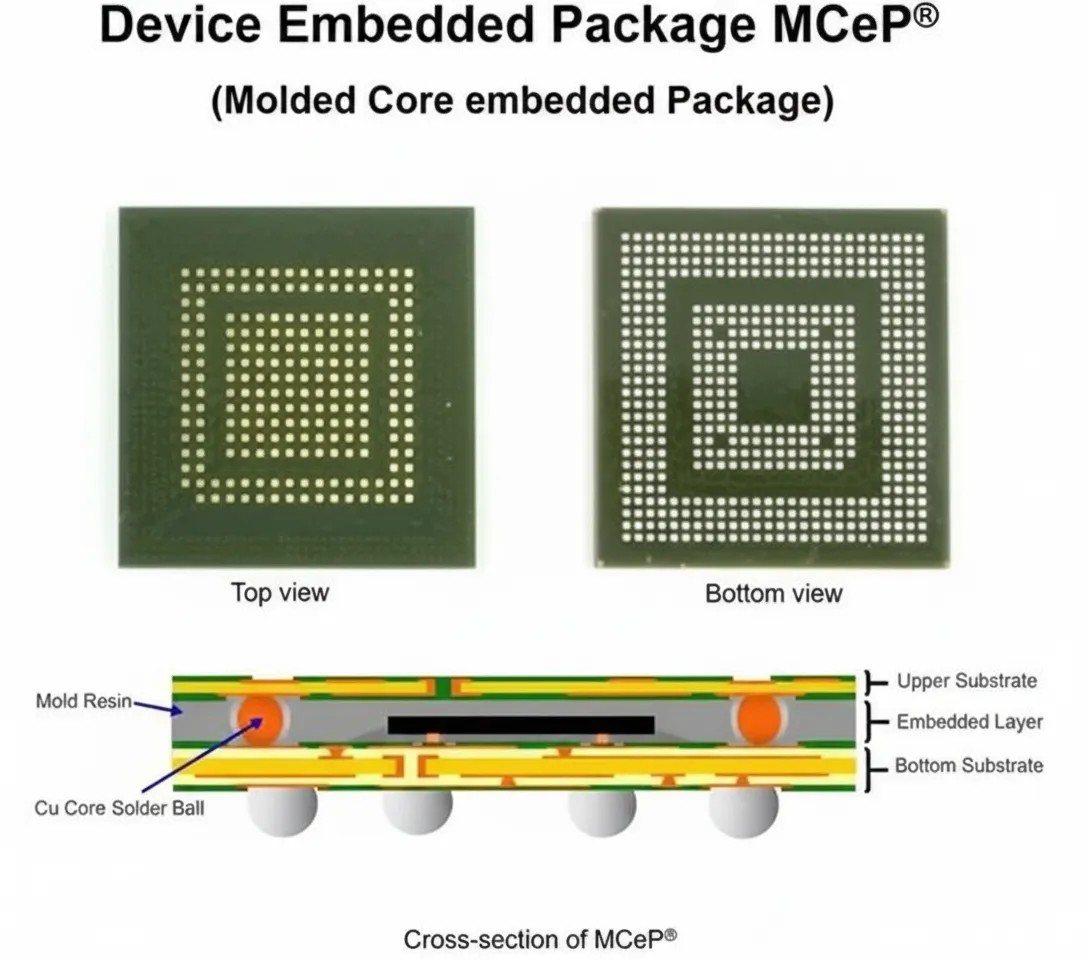
Further analysis of the UNISOC UWS6131 package revealed four dies including the UNISOC W317 processor, with integrated LPDDR and NAND.
Positioning of the main ICs on the front of the mainboard:
- 1: UNISOC UWS6131 – includes UNISOC W317 processor
- 2: Spreadtrum SC2721G – power management chip
- 3: Spreadtrum SR3595D – RF transceiver
- 4: Ruishi Chuangxin RR88916-81 – front-end module
- 5: Microphone – Knowles
Positioning of the main ICs on the back of the mainboard:
- 1: Ruishi Chuangxin RR88643-21 – front-end module
- 2: STMicroelectronics LIS2DS- – accelerometer
Summary
The Q1A teardown is relatively straightforward. The 51 g total weight implies a compact internal layout with few redundant components. Due to the waterproof design, the internal assembly includes multiple waterproofing measures and shock protection. Large graphite heat spreaders are used on the mainboard to manage thermal performance.
The UNISOC W317 is designed for low-power operation on a lightweight MOCOR RTOS, offering an architecture that reduces power consumption by over 20% compared with the previous generation. Combined with the W317's AI eight-fold positioning capability, the Q1A supports GPS, BeiDou, Wi-Fi positioning, cellular base station positioning, camera-assisted positioning, accelerometer-assisted positioning, A-GPS, and indoor positioning modes. With AI algorithms, positioning accuracy improves over time.